Full Article
about Alcalà de Xivert
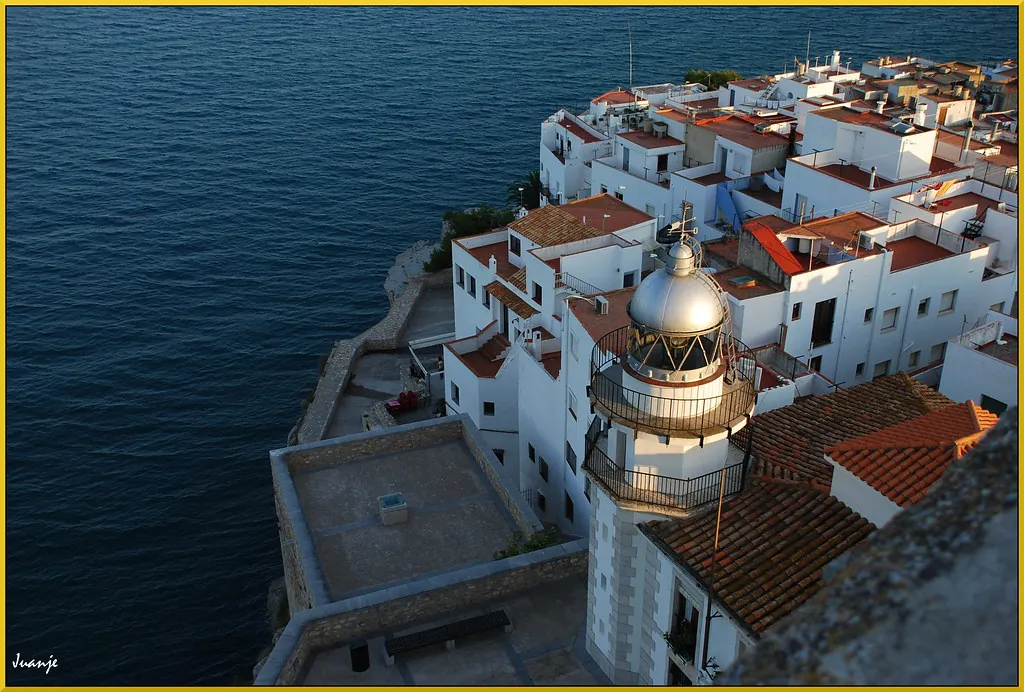
A town that blends history with coastline, home to the beach resort of Alcossebre. Its standout features are the striking bell tower and the Templar castle overlooking the Sierra de Irta and the Mediterranean.
Hide article Read full article
An inland town with a view of the sea
At around five in the afternoon, when the sun begins to drop behind the Sierra de Irta and the mountains take on a deep violet tone, the bells ring out across Alcalà de Xivert. The sound carries far, bouncing off pale façades and reaching almost every corner of the town centre. The tower itself stands tall and visible from a distance when approaching by road, setting the rhythm of daily life here since the eighteenth century. Around that hour, shutters lift again and the square by the church starts to fill with movement.
Alcalà sits just inland from the coast of the Baix Maestrat, only a few kilometres from Alcossebre. That position shapes everything. Inland, there are vegetable plots and almond trees. When the wind shifts, the smell of salt drifts in from the Mediterranean.
Up to the Castell de Xivert
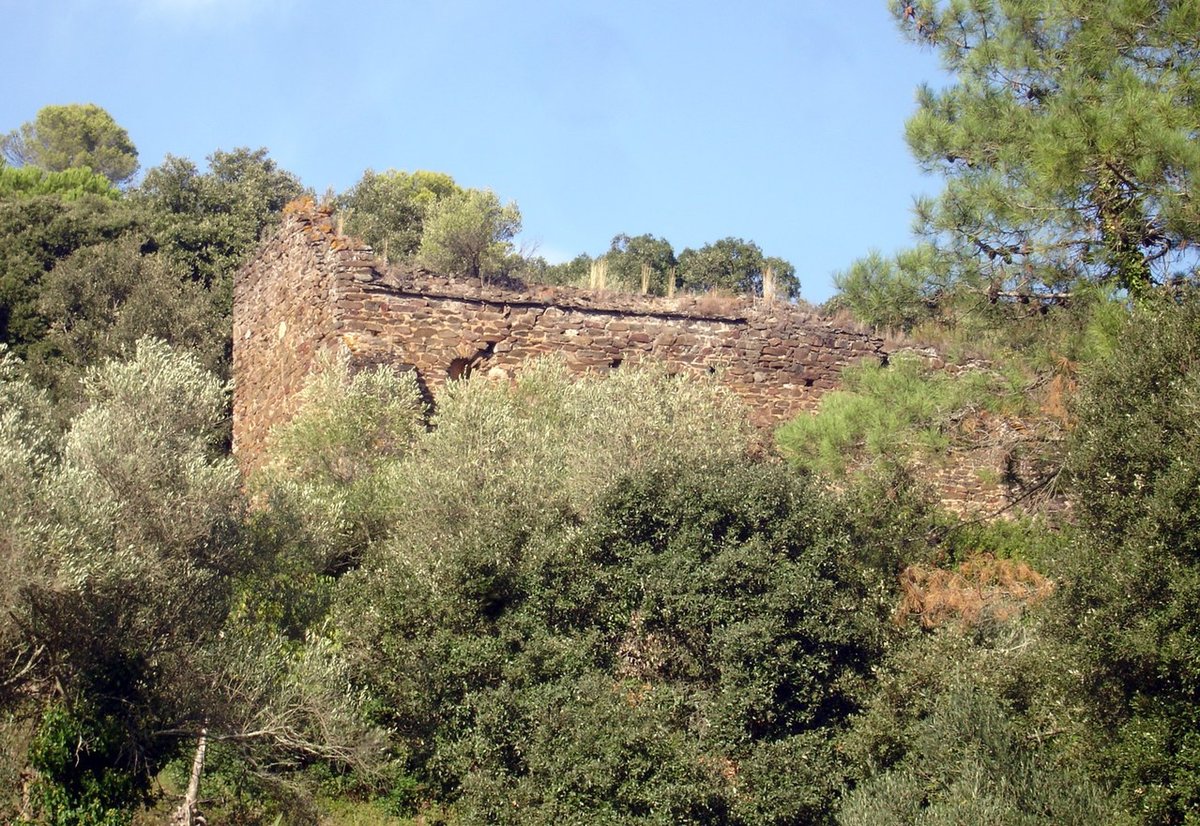
The Castell de Xivert appears well before reaching the town, outlined against the ridge. From below it looks close, though the climb tells a different story. The route from the town covers roughly four kilometres, starting on a paved track and continuing along a stretch of loose gravel.
The path rises steadily through Mediterranean scrub. Rosemary and gorse grow low to the ground, while small pines creak when the wind picks up. On clear autumn days, when the air sharpens the horizon, the view opens across the valley of Alcalà. Beyond it, the Mediterranean shows as a muted blue-grey strip.
The castle itself has two clearly distinct enclosures. The lower section dates back to the Andalusi period. The upper part was strengthened after the Christian conquest, when the Order of the Temple controlled this area of the Maestrat. Walking among the walls reveals these different stages of construction, visible as layers of stone laid over time.
On the lower esplanade, panels point out the presence of rock art on some of the surrounding stones. These paintings are not always easy to spot, yet the setting alone justifies a pause. From this point, another structure stands out on a nearby hill: the Torre de Cap i Corb. This watchtower once formed part of the coastal defence system.
A walk to the tower takes about an hour there and back. The hillside offers little shade, so water is essential. The sun falls directly on the slope for much of the day.
Paths through the Sierra de Irta
The Sierra de Irta begins almost at the edge of the municipality and runs down towards the sea, with long stretches free from development. The first impression here is often the smell: rosemary, lentisk, and sun-warmed earth after a long day.
One of the shorter routes passes through the area known as Roca Grossa. The trail itself is not long, though the terrain encourages a slower pace. Cliffs appear suddenly between the pines, dropping to the water below. Waves break against the rock, and the wind carries salt upwards.
Access to some of the coves requires leaving the car at designated نقاط and continuing on foot. In summer, especially on Sundays, the paths fill with families carrying cool boxes and umbrellas.
Cala del Pebret often keeps its water clear even in the height of August. Early in the day, before the heat builds and traffic increases, the sound of waves against the rocks stands out with little else around.
Streets that fill with celebration
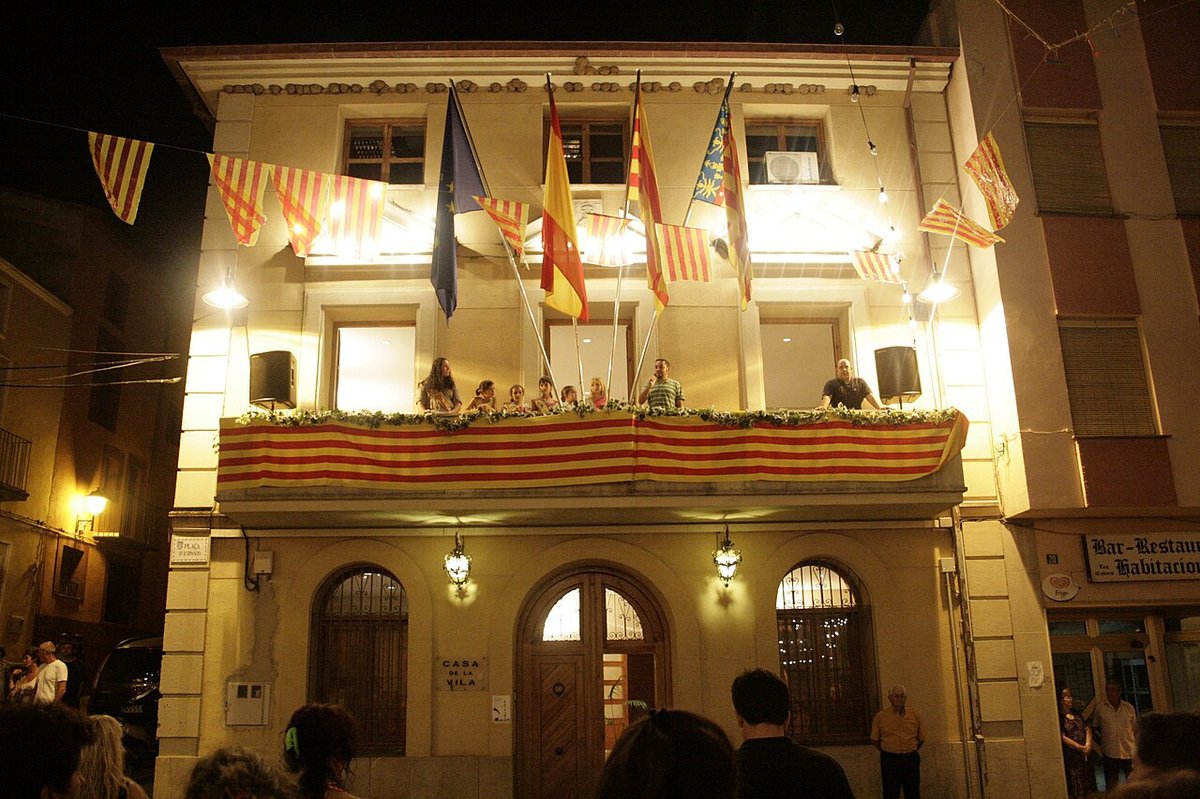
Festivities in Alcalà take place out in the open. Towards the end of summer, during the patron saint celebrations dedicated to San Juan Bautista and the Sagrado Corazón, wooden structures known as carafals appear. Local groups and associations build them and place them along several streets in the centre.
At night, music mixes with the smell of grills and the steady hum of conversation that stretches late. Children move between tables while older residents sit on plastic chairs, watching the flow of people passing by.
Winter brings a different atmosphere. The pilgrimage of Santa Lucía, held in December, climbs to the hermitage set on top of a hill with wide views towards the coast. Part of the route follows a forest track by car, while the final stretch is usually completed on foot. Once night falls, the wind at the top becomes more noticeable, and bonfires offer welcome warmth.
From oven and field
Cooking in Alcalà still follows the rhythm of the seasons.
During the colder months, dishes become more substantial. Olla de la plana is a typical example, made with white beans, vegetables from local gardens, and pork, all simmered over several hours. Around the same time, traditional ovens prepare rosquillas linked to San Blas, fried and coated in sugar.
When temperatures rise, the food shifts as well. Many households prepare coca de sardinas, a thin dough topped with tomato and oily fish, baked until the skin turns crisp. Summer also brings claudias, small green plums grown in this part of the Maestrat. They are notably sweet, though their season is short, usually from July to the end of summer.
The local agricultural cooperative sells honey made from rosemary or thyme. Many jars still appear with simple labelling, sometimes just the weight written by hand. Over time, the honey thickens and becomes denser in texture.