Full Article
about Castell de Cabres
The smallest municipality in the province, set in rugged mountains; perfect for total isolation and direct contact with untouched nature.
Hide article Read full article
A village that moves at its own pace
As the sun begins to dip behind the sierras, Castell de Cabres falls almost completely silent. Wind moves through the tops of the pine trees and the sound carries clearly to the square. At its centre there is a well and a small cluster of stone houses. Tourism in Castell de Cabres often begins with that first impression: the sense of having arrived somewhere that runs to a different rhythm.
The village sits at more than 1,000 metres above sea level, at the northern edge of inland Castellón in the Comunidad Valenciana. Very few people live here throughout the year. The streets can be crossed in a matter of minutes, yet leaving quickly rarely feels right. All around rise slopes covered in pino laricio, a type of black pine, and deep ravines that open the land towards the Maestrazgo, a historic and mountainous region in eastern Spain.
There are no grand landmarks waiting at every corner. Instead, the atmosphere is shaped by height, distance and the quiet presence of the surrounding hills.
The hill of the old castle
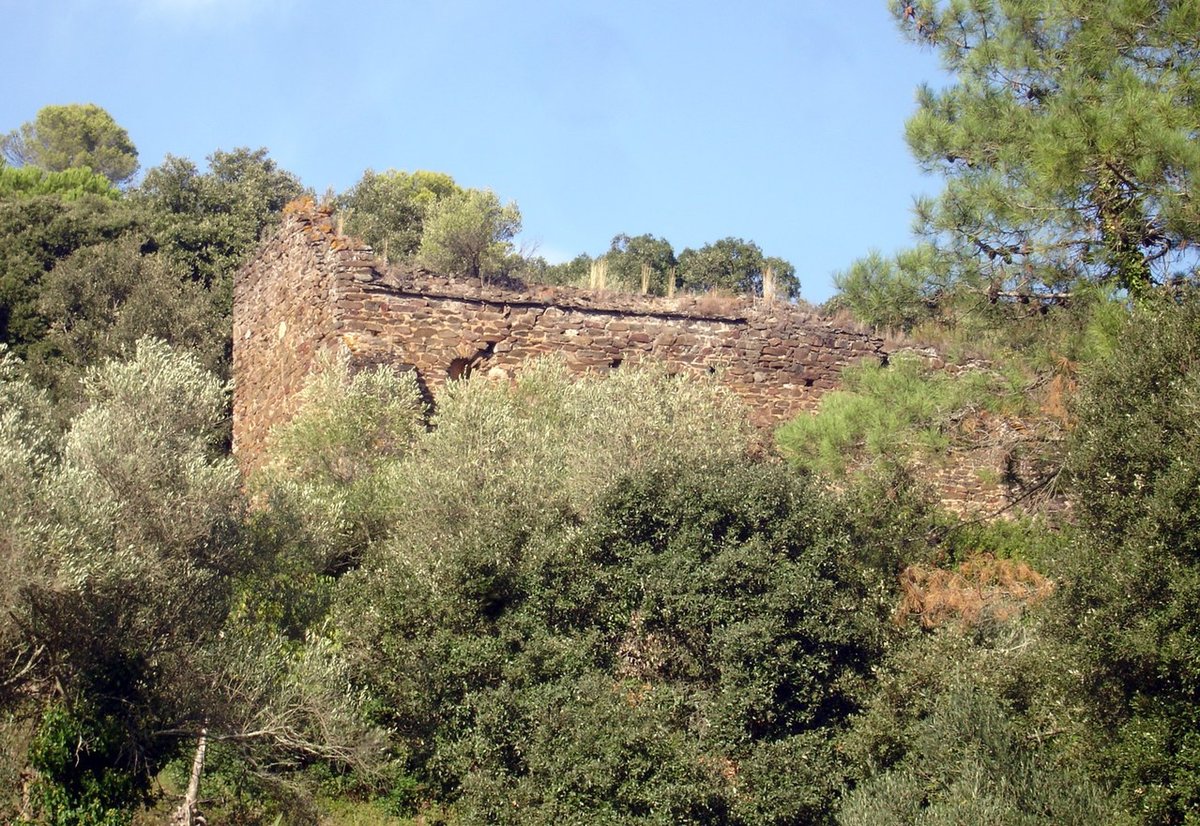
Above the houses stand the remains of the former castle. It is not a vast fortress. The site functioned more as a watchpoint, built in a position that commands the landscape. The surviving stones trace the outline of the hilltop and make it easy to understand why this location was chosen.
For centuries this territory lay close to shifting borders between different kingdoms. From the top, the view stretches across kilometres of wooded hills and forest tracks that wind between ridges. On clear days, the horizon extends far beyond what might be expected on arrival.
The ruins do not overwhelm the setting. They sit quietly within it, marking a long history of vigilance in a place defined by its isolation and its strategic height.
San Antonio and village life
A short walk away stands the church dedicated to San Antonio. It is built from pale stone and follows simple lines. From the outside, nothing draws particular attention. Yet when late afternoon light filters through the small windows, the interior takes on a warm, almost golden tone.
Important dates in the local calendar often bring neighbours together in this area. Before certain celebrations, it is still common to see people cleaning or tidying the surroundings. That custom survives in many small villages across the Maestrazgo, where communal spaces remain closely linked to shared events.
Life here unfolds quietly. With so few residents, everyday routines are visible and unhurried. The church and the square form the social heart of a place where activity is measured and modest.
Pine forests, ravines and mountain paths
Landscape sets the tone in Castell de Cabres. The slopes are covered with pino laricio and low mountain scrub. In autumn, colours deepen and the ground becomes carpeted with dry needles. Winter often brings snow. When it does, the forest seems to lose its voice entirely.
From the main track, smaller paths descend towards ravines such as the Barranco de l’Infern, or lead to small springs that emerge from the limestone rock. Some routes continue on to old masías, traditional rural farmhouses scattered across the municipality. Not all of these paths are clearly marked. Anyone planning to walk beyond the immediate surroundings of the village should carry a map or have the route downloaded on a mobile phone.
After rainfall, the earth releases a metallic, damp scent that is characteristic of these sierras. It lingers in the air and clings to the pine trunks and stones. The terrain shifts constantly between wooded slopes and sudden drops into barrancos, shaping a landscape that feels both open and enclosed.
The appeal lies less in specific viewpoints and more in the act of walking itself. The terrain demands attention, whether under summer light or in the muted tones of colder months.
Darkness and a wide sky
Night changes Castell de Cabres completely. Lighting is minimal, and the altitude helps to keep the sky clear. On cloudless evenings, the Milky Way often appears with notable clarity.
A short distance from the centre is enough to notice the difference. Silence becomes so complete that any car climbing the road can be heard long before it comes into view. The darkness is not dramatic or theatrical. It is simply present, wrapping the village and the surrounding hills in a deep, uninterrupted black.
For visitors unused to such low levels of artificial light, the effect can be striking. The sky feels close, and the outlines of the sierras fade into shadow.
The road up and the right moment to visit
Reaching Castell de Cabres requires patience at the wheel. The road crosses mountain terrain and includes narrow stretches with bends. On colder days, fog sometimes appears. This is not a place to pass through quickly.
Within the village there are no shops open continuously and services are limited. Anyone intending to spend several hours walking in the area would do well to bring water and some food in the car.
Each season alters the experience. Spring often brings clear days and very green hillsides. In autumn, the landscape shifts in colour and there is less movement in the area. Summer offers long afternoons, though nights cool down noticeably due to the altitude. Winter can be intensely cold, and some tracks become difficult if ice or snow sets in.
Castell de Cabres does not offer major monuments or constant activity. Its value lies beyond its streets, in the paths that lead into the hills and in the sense of isolation that this corner of the Baix Maestrat still preserves. Visitors tend to slow their pace here, listening to the wind in the pines and watching the light change across the ridges.