Full Article
about La Salzadella
Known as the cherry capital of the province; farming town with an interesting old quarter and remnants of walls.
Hide article Read full article
A Small Village with More Than One Layer
Some villages can be understood in half an hour. Others need a little time on foot before they start to make sense. La Salzadella belongs to the second group, even if the map suggests otherwise.
This village in the Baix Maestrat, with around 670 residents, looks small at first glance. Yet once the car is parked and the walk uphill begins, it becomes clear that there is more going on than its size implies. The streets rise gently, the houses press close together, and the rhythm of daily life feels steady rather than staged.
Tourism in La Salzadella revolves around a place that still works as an agricultural village. It is not a backdrop created for visitors. Tractors come and go. People greet each other by name. There is a particular kind of quiet that only appears where traffic is limited and routines have not been rearranged for outsiders.
Life Around San Miguel Arcángel
The centre of La Salzadella is organised around the parish church of San Miguel Arcángel. It is large for a village of this size, one of those churches that can be spotted from the road as you approach through fields. Built in stone, with a solid presence and a tower that acts almost like a land lighthouse, it anchors the settlement both physically and visually.
The name La Salzadella is usually linked to the Arabic “Al‑Saltella”. This part of eastern Spain formed part of a shifting patchwork of territories during the Middle Ages, changing hands more than once. That layered past can still be sensed in the irregular layout of some streets.
There is no grand monumental old quarter here. The interest lies in everyday details: whitewashed façades, iron balconies that look as though they were installed decades ago, wooden doors worn by years of sun. It is the sort of place where a simple doorway can hold the eye for longer than any designed showpiece.
The village feels built out of necessity rather than strict planning. Houses adapt to the slope of the land. Corners appear unexpectedly. Turn one way and you are back near the church or the main square without quite realising how you got there.
Short Streets, Gentle Slopes
Walking around La Salzadella does not take long. On a quiet morning the entire centre can be explored without effort. The distances are short and the inclines are soft enough to manage at an easy pace.
There are no wide avenues or expansive plazas. Instead, the layout follows the terrain, with streets that rise and dip in small variations. The effect is intimate rather than dramatic. The village reveals itself gradually, through small shifts in height and perspective.
With everything within walking distance, wandering without a fixed route makes sense. A casual turn down a side street often leads back towards the heart of the village. The scale encourages slow exploration, the kind where attention falls on textures and traces of daily use rather than on major landmarks.
Olive Trees and Rural Tracks
Step beyond the built-up area and the landscape changes quickly. Fields begin almost immediately, defining the surroundings of La Salzadella. This is typical scenery for this part of the Baix Maestrat: olive trees stretching across the countryside.
Some of these olive trees are very old. Their trunks are twisted and hollowed, shaped by centuries of adapting to the same soil and climate. They stand as living witnesses to the agricultural focus that still shapes the village’s economy.
Almond trees appear among the olives. At the end of winter, when they bloom, the look of the fields shifts noticeably. The contrast between bare branches and blossom gives the area a brief seasonal transformation.
The rural tracks around the village are still used to work the land. They are not signposted trails in the style of a natural park. Instead, they are dirt paths bordered by dry-stone walls and cultivated plots. Because of that, a walk here feels closely connected to everyday agricultural activity. These routes belong first to the farmers who maintain them.
The result is a landscape that is practical rather than curated. What you see is what is used. That simplicity is part of the appeal.
Festive Dates That Mark the Year
In villages of this size, local festivals still shape the calendar. In La Salzadella, celebrations dedicated to San Miguel Arcángel gather much of the year’s activity. They are key moments when daily routines shift and the streets fill more than usual.
The winter tradition of San Antonio Abad is also maintained. This includes the customary blessing of animals and a bonfire, events that are common in many parts of rural Spain but remain rooted in local participation.
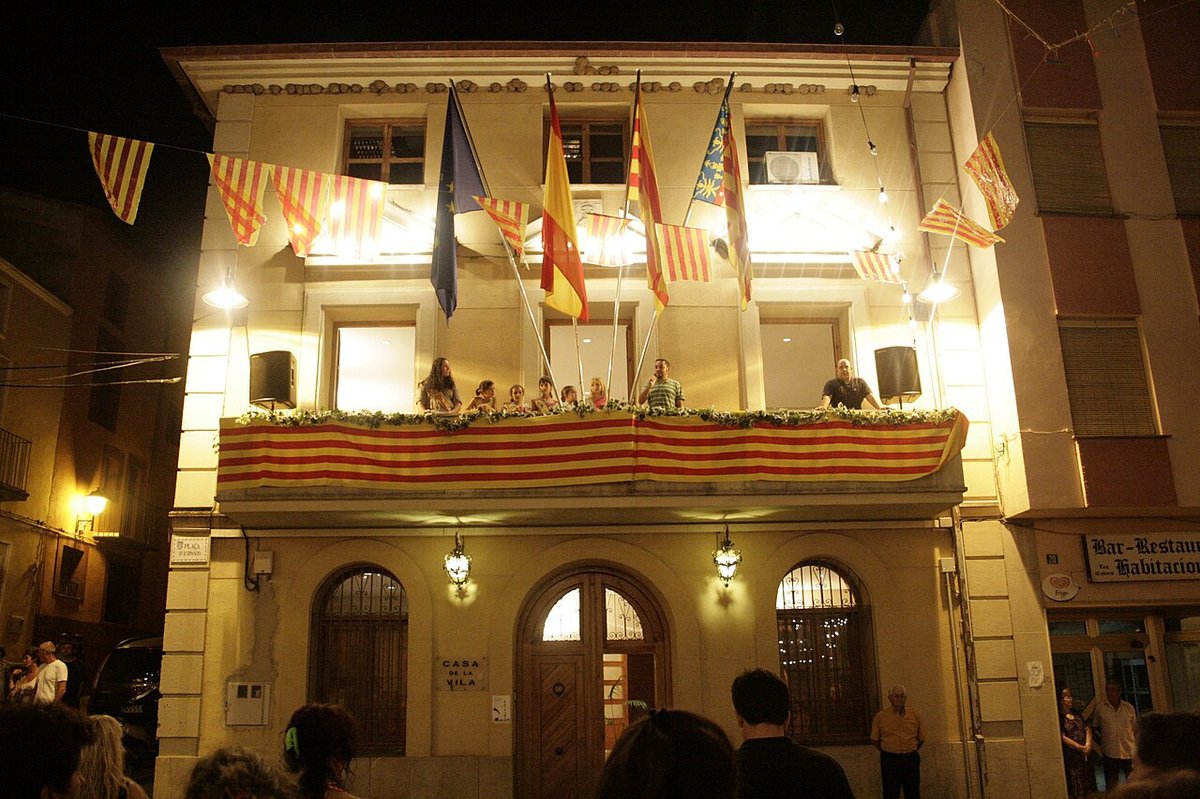
These celebrations are primarily for the residents rather than designed to attract large numbers of visitors. If a visit coincides with one of them, the atmosphere changes. There are more people outside, longer conversations and a stronger sense of community life unfolding in public space. In larger cities, that kind of collective rhythm can be harder to notice.
Reaching La Salzadella and Planning a Visit
La Salzadella lies inland in the Baix Maestrat, around 35 kilometres from Castellón. The approach is by road through an agricultural landscape dotted with other small villages.
A car is, realistically, almost essential. Public transport exists in this area, though it tends to be limited and not especially practical for a short visit.
Spring and autumn are generally the most pleasant seasons for walking in and around the village. In summer, the heat can be intense in open areas. Winter brings a deeper quiet, even by the standards of the comarca.
A Stop That Works Best as Part of a Route
La Salzadella is not a place to fill two full days with scheduled sights, and there is no need to pretend otherwise. It works better as part of a wider route through the inland Baix Maestrat.
Stop for a while. Walk through the centre. Head out towards the olive groves. Then continue on to other nearby villages.
It may not headline travel itineraries, yet time spent here offers a clearer sense of how this part of the province of Castellón functions day to day. Understanding that rural pace and structure adds depth to any journey through the region. In that respect, a brief pause in La Salzadella has its own quiet value.