Full Article
about Santa Magdalena de Pulpis
Town at the foot of the Sierra de Irta, dominated by Pulpis castle; excellent access to the natural park and nearby unspoiled beaches.
Hide article Read full article
A Place You Notice on the Way Somewhere Else
Some towns appear on the map when you are heading somewhere else. Santa Magdalena de Pulpis often enters the story like that. Driving through the Baix Maestrat, you see the turning, slow down, and think it might be worth a look. Tourism here works in much the same way. It is not a place that demands attention from the roadside. Yet if you do stop, there is more going on than first impressions suggest.
This is a small municipality of around 770 inhabitants. It sits just a few kilometres from the sea, although the atmosphere already feels firmly inland. Dry farmland stretches out around it, with gentle hills and a kind of silence that becomes obvious as soon as the car engine is switched off and no one passes by for a while.
Santa Magdalena de Pulpis belongs to the Baix Maestrat, a comarca in the north of the province of Castellón, in the Comunidad Valenciana. The coast is close, but the mood is different here, quieter and more rural.
A Town Centre You Can Understand in Ten Minutes
The heart of the village is easy to grasp. Narrow streets, some on a slope, run between stone houses and simple façades that have changed over the years. This is not a picture-perfect historic quarter. It feels like a lived-in place, shaped by daily routines rather than by postcards.
The main square revolves around the parish church dedicated to Santa Magdalena. The current building dates back several centuries and has undergone various renovations, something quite common in towns across this part of Spain. The bell tower still marks the rhythm of the day. Spend a little time in the square and the pace becomes noticeable, the hours passing with a different tempo.
One of the advantages of Santa Magdalena de Pulpis is that there is no need for a plan. Park the car, walk for ten minutes, turn a corner or two, and you have a clear sense of how the town fits together. It does not try to overwhelm visitors with monuments or museums. What it offers is straightforward and easy to read.
The Landscape of the Interior Baix Maestrat
Step beyond the edge of the urban area and the countryside begins almost immediately. Olive trees dominate, joined by carob trees and the occasional almond tree scattered among terraced plots. This is the typical landscape of the interior Baix Maestrat: dry soil, low stone walls and agricultural tracks linking one parcel of land to another.
Climb a little along any of these paths and the village remains below, with an open view across the surrounding comarca. The scene is not dramatic, but it is recognisable to anyone familiar with this part of Castellón. The shapes are soft, the fields ordered but irregular, and the horizon stretches without interruption.
Towards sunset, the light often softens the colours. Browns and greens blend together and the overall effect becomes gentler. It is at that time of day that the area shows its more subtle side, without the need for grand viewpoints.
Easy Walks and Old Connections
Santa Magdalena de Pulpis also works well as a starting point for uncomplicated walks. Rural tracks leave almost from the edge of the village and lead straight into the fields.
Some of these routes connect with longer paths that traditionally linked nearby towns in the Maestrat. In the past, these were the ways people moved between communities. Today they offer simple routes for those who prefer walking without haste, passing terraces and the occasional isolated masía, the traditional farmhouse typical of this region.
It is worth bringing some sense of direction. Many of the agricultural tracks look similar, and it is easy to take a longer detour than intended. Part of the appeal lies in that slight uncertainty, though the layout of fields and walls can make everything seem deceptively alike.
Inland Cooking with a Coastal Influence
Food in Santa Magdalena reflects the usual mix found in this area. There is nearby market garden produce, olive oil and recipes that have been repeated for generations. Stews made with pork or lamb continue to appear in many family kitchens, especially in the cooler months.
At the same time, the proximity to the coast leaves its mark. Rice dishes are common across the Baix Maestrat, and arroz a banda is one of the plates that regularly features in the wider area. For readers unfamiliar with it, arroz a banda is a rice dish traditionally cooked with fish stock, typical of the Valencian coast.
Local olive oil and honey from beehives scattered across the hills also form part of the village’s gastronomic identity. They are products closely tied to the surrounding landscape, where olive groves and low vegetation shape both the scenery and the table.
Festivities and the Rhythm of the Year
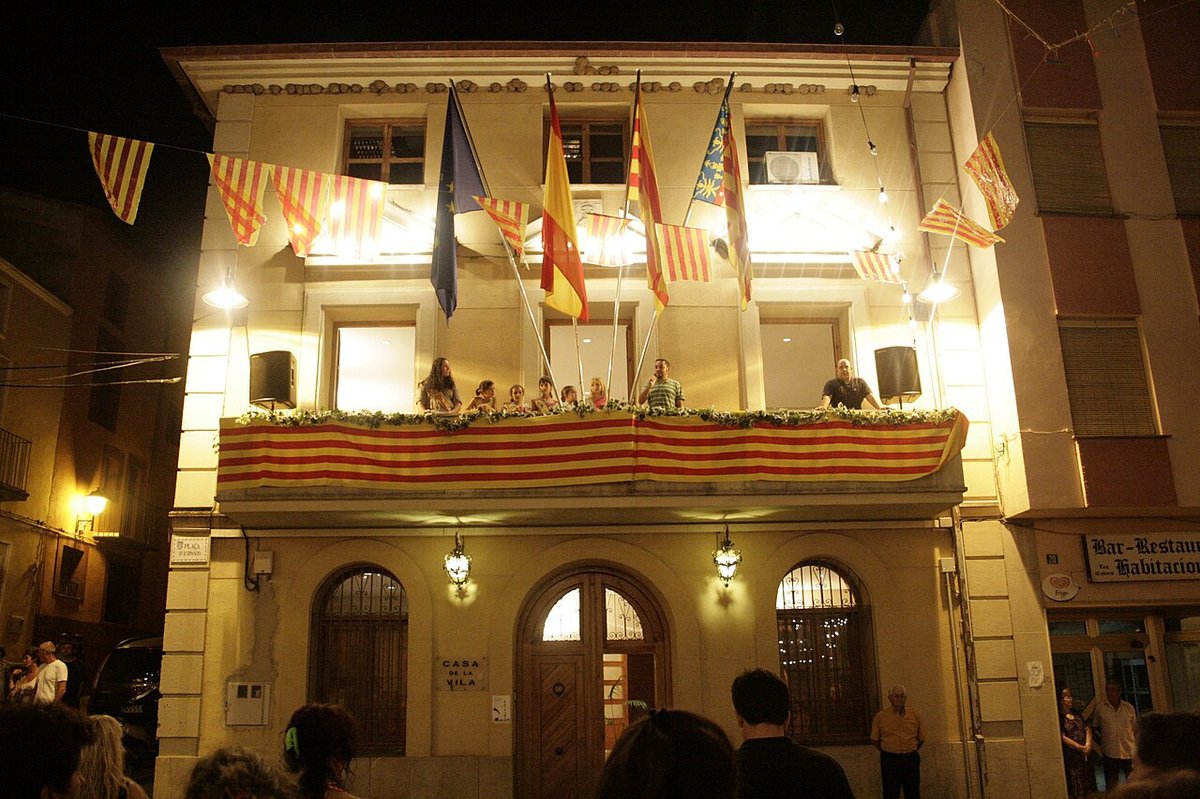
The main celebration revolves around Santa Magdalena and usually takes place in summer. During those days there are processions, events in the square and a noticeable increase in activity in the streets.
These are not festivals designed to attract large crowds from far away. The feeling is that they are organised for residents and for those who return to the village at that time of year. The atmosphere tends to be familiar rather than spectacular.
Throughout the year there are also romerías, traditional pilgrimages, and smaller celebrations linked to the agricultural calendar. This pattern is common in towns across the comarca, where seasonal work in the fields has long shaped the rhythm of communal life.
A Logical Stop on a Baix Maestrat Route
Reaching Santa Magdalena de Pulpis is straightforward from Castellón via the CV‑10 towards Vinaròs, taking the turning for Pulpis. It makes sense as a stop if you are exploring the north of the province or coming from the coast, for example from Peñíscola.
The town works best as a calm pause within a broader route through the Baix Maestrat. A walk around the centre, a short wander along the surrounding tracks, and within a couple of hours the character of the place becomes clear.
Sometimes that is exactly what is needed. A small town without complications, where everyday life in this part of Castellón can still be seen at its own pace.