Full Article
about Elche
City of two World Heritage sites, known for its vast palm grove and the Misteri d'Elx.
Hide article Read full article
A city shaped by palms
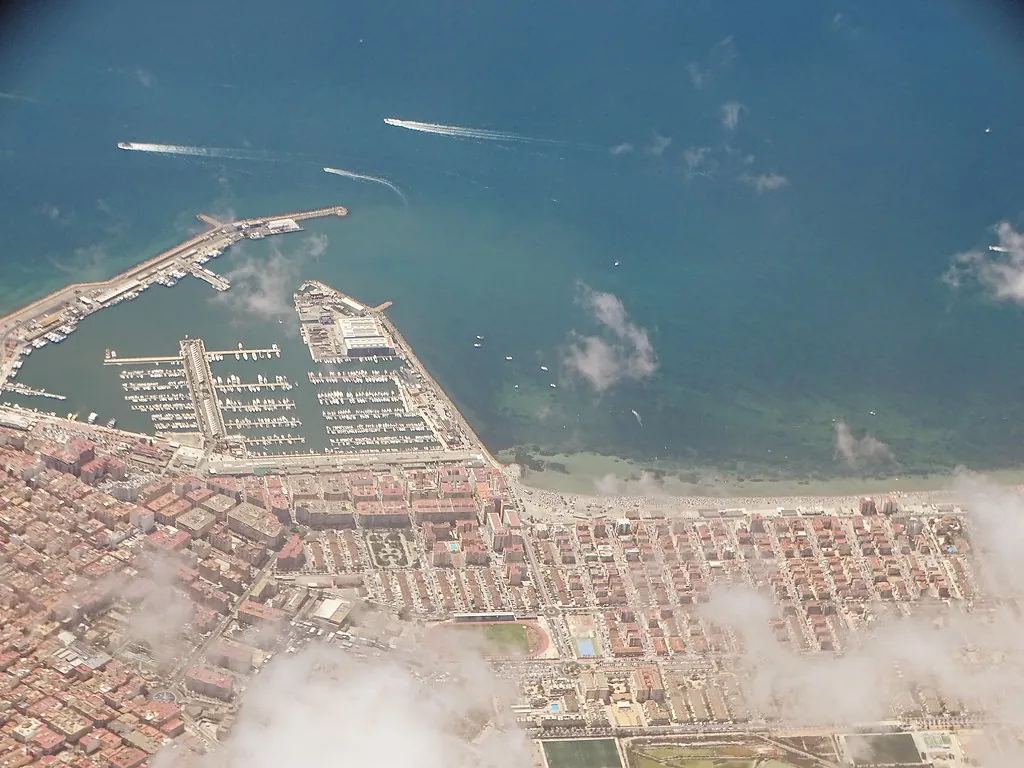
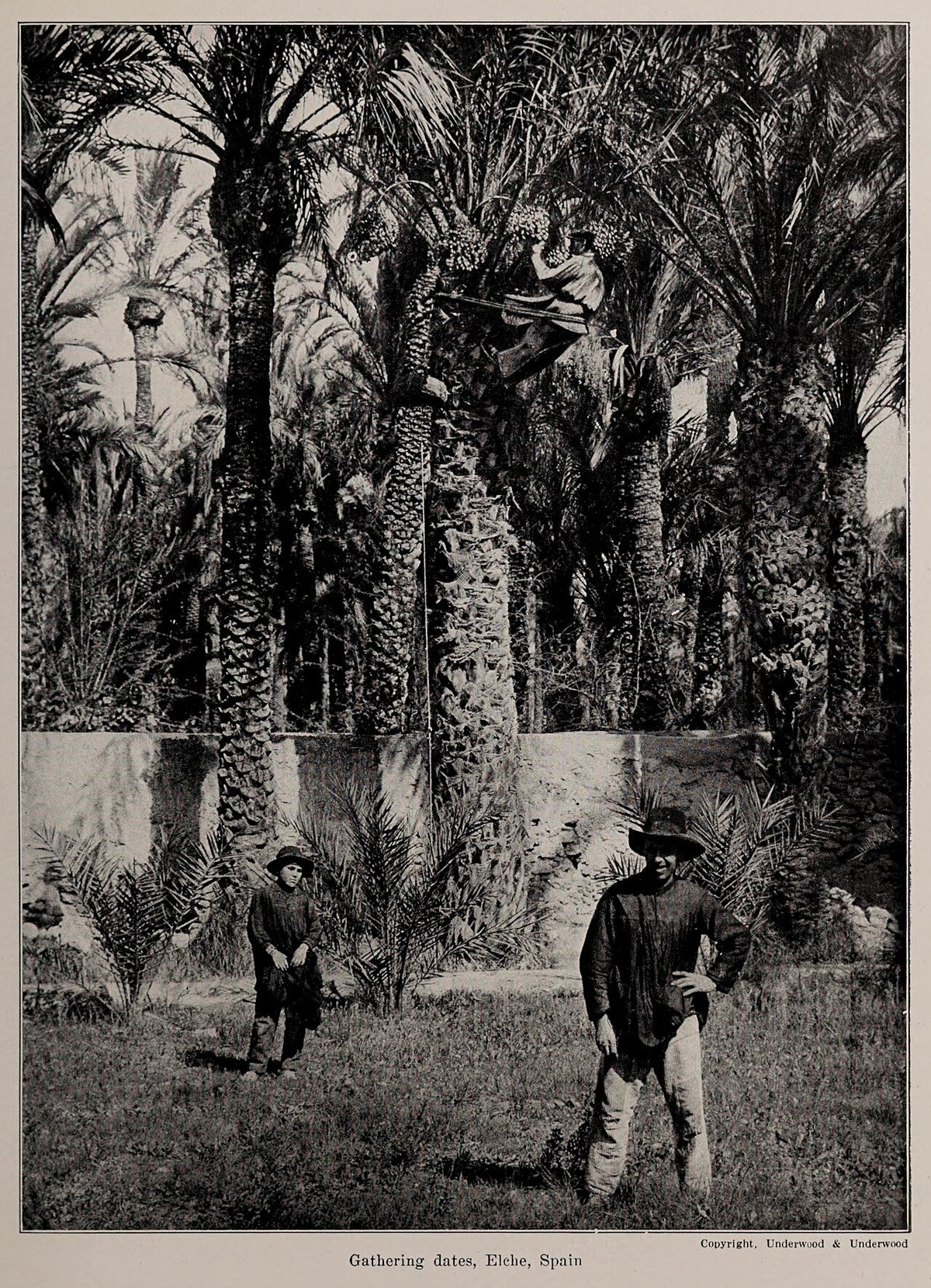
The Palmeral de Elche is not a garden in the decorative sense. It is an agricultural system that still structures the city. More than two hundred thousand date palms, arranged in orchards irrigated by acequias of Andalusí origin, form a network that has endured, with changes, for almost a thousand years. From above, Elche appears like an oasis set in the dry plain of southern Alicante. At street level, the effect is more unusual. The city expanded by blending into this landscape of orchards, so that it is sometimes hard to tell where the urban grid ends and the palm groves begin.
It is considered the largest historic palm grove in Europe. Even so, visitors rarely leave Elche thinking only of its palms. The city also revolves around three specific references: a medieval religious drama still performed inside a church, an Iberian sculpture discovered in a nearby field, and an archaeological site that explains why there was a city here long before the present one.
The Palmeral de Elche was inscribed as a World Heritage Site at the beginning of the 21st century. What makes it distinctive is not just the sheer number of trees, but the organisation of the orchards. Rectangular plots are enclosed by lines of palms and crossed by irrigation channels that distribute water from the Vinalopó river. Much of this system dates back to the Andalusí period, although it has been adapted over time. Some norias, traditional waterwheels, have been preserved and can still be seen operating in certain orchards.
Huerto del Cura is the best known and most prepared for visitors, yet it represents only a small part of the whole. A significant proportion of the palm grove remains in private hands. Within these plots, pomegranates, vegetables and fig trees have traditionally been cultivated, sheltered from the wind by the palms themselves.
During the 20th century, Elche grew rapidly thanks to the footwear industry, which spread across industrial estates around the city. That expansion came close to reducing many orchards, but regulations were eventually approved to protect the historic palm grove.
The medieval drama that still fills a church
Each August, the Basílica de Santa María becomes the stage for the Misterio de Elche, a liturgical drama dedicated to the Assumption of the Virgin. The performance takes place inside the church and is sung almost in its entirety. Medieval music blends with later additions, and the staging has features that set it apart: mechanical devices descend from the dome, children’s choirs take part, and characters move in and out along elevated walkways.
The tradition is usually dated to the Late Middle Ages and has been passed down from one generation to the next. Many of the roles are performed by local residents, and some families have been connected to the Misterio for decades. The drama is divided into two main parts, with the church full and part of the square outside following what unfolds within.
The night associated with these celebrations also brings the Nit de l’Albà. On this evening, the sky fills with fireworks launched from rooftops and from different points across the city. It is not a single, centralised display. Each neighbourhood participates in its own way, and for a time Elche is wrapped in the continuous thunder of rockets.
The Dama de Elche and the memory of Ilici
The best known archaeological piece linked to Elche is the Dama de Elche, an Iberian sculpture discovered in 1897 at the site of La Alcudia, a few kilometres from the town centre. It came to light while work was being carried out on agricultural land. Soon afterwards it left Spain and ended up in the Louvre. Today it is housed in the Museo Arqueológico Nacional in Madrid, while the city continues to call for its return.
Carved in limestone, the bust depicts a female figure with elaborate lateral headdresses whose exact function remains a matter of debate. It probably formed part of a funerary or ritual monument.
La Alcudia itself is more than the place where the sculpture was found. This was the site of Ilici, first an Iberian city and later a Roman colony. Excavations have revealed the remains of streets, houses and public buildings, along with an early Christian basilica usually dated to the 4th century. It is not a monumental site in the classical sense. What can be seen today consists of partial structures and excavated areas that help explain the continuity of settlement over time.
Between the basilica and the orchards
Elche has two fairly distinct zones. One centres on the historic surroundings of the Basílica de Santa María. The other follows a more modern axis stretching towards the station. Between them lie several orchards incorporated into parks and promenades, where palms stand alongside everyday city life.
The simplest way to explore is on foot. From the basilica it is possible to pass by the Torre de la Calahorra, one of the surviving sections of the old town wall, and continue towards the Palacio de Altamira, which houses the municipal archaeological museum. Not far away, Islamic baths have been preserved within a former convent, another reminder of the layers that have shaped the city.
La Alcudia lies a few kilometres from the centre and usually requires a car or local transport to reach it.
Elche’s identity rests on this combination of elements. The palm grove is an agricultural system rather than a decorative park, yet it defines the urban landscape. The Misterio de Elche is not a re-enactment for visitors but a living religious drama embedded in the calendar. The Dama de Elche is no longer physically present, yet it remains central to how the city understands its past. Together with the remains of Ilici and the orchards that still bear fruit, they give Elche a character that is difficult to separate into neat categories of nature, history or tradition.