Full Article
about Albalat dels Tarongers
Town in the Palancia river valley, ringed by nature and close to the Sierra Calderona.
Hide article Read full article
Where the Plain Begins to Fold
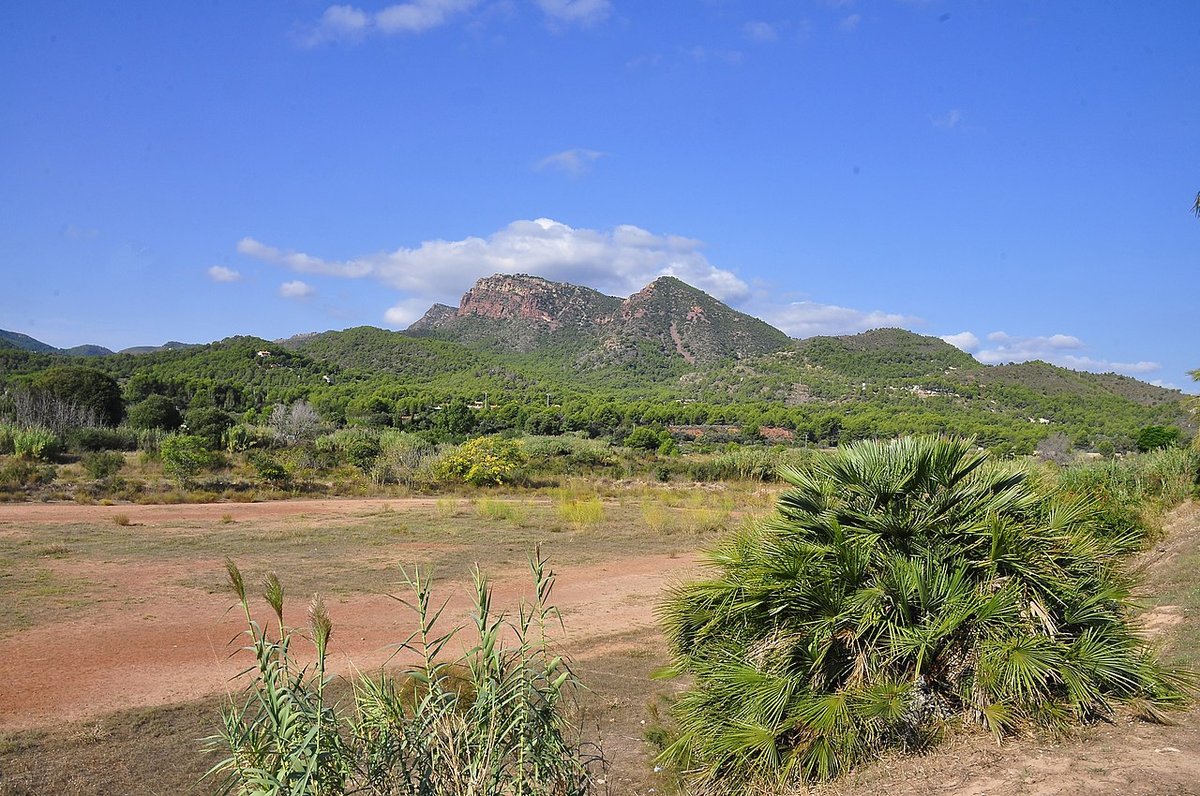
There are places where tourism feels secondary to daily life. Albalat dels Tarongers, in the comarca of Camp de Morvedre, is one of them. It sits a few kilometres from Sagunto, at the point where the flat land facing the sea begins to crease gently before rising into the Sierra Calderona.
The setting is typical of this part of the Valencian Community. Plots of orange trees stretch out in neat rows. Irrigation channels, known locally as acequias, still carry water through the fields. Narrow agricultural tracks link the orchards to the village itself. For decades, oranges have set the rhythm here, and that influence remains clear.
During the harvest season, the air carries the scent of fruit and damp earth. Tractors move slowly along tight lanes. People work steadily and without fuss. Nothing is staged for visitors. Life continues at its usual pace, and anyone passing through simply steps into it for a while.
Albalat dels Tarongers is not far from the coast, yet it feels oriented towards the land. The surrounding plain gradually gives way to the first reliefs of the Calderona. Within a short distance, the scenery shifts from motorway traffic to cultivated fields and low hills. That transition defines the experience of arriving.
A Village Best Explored on Foot
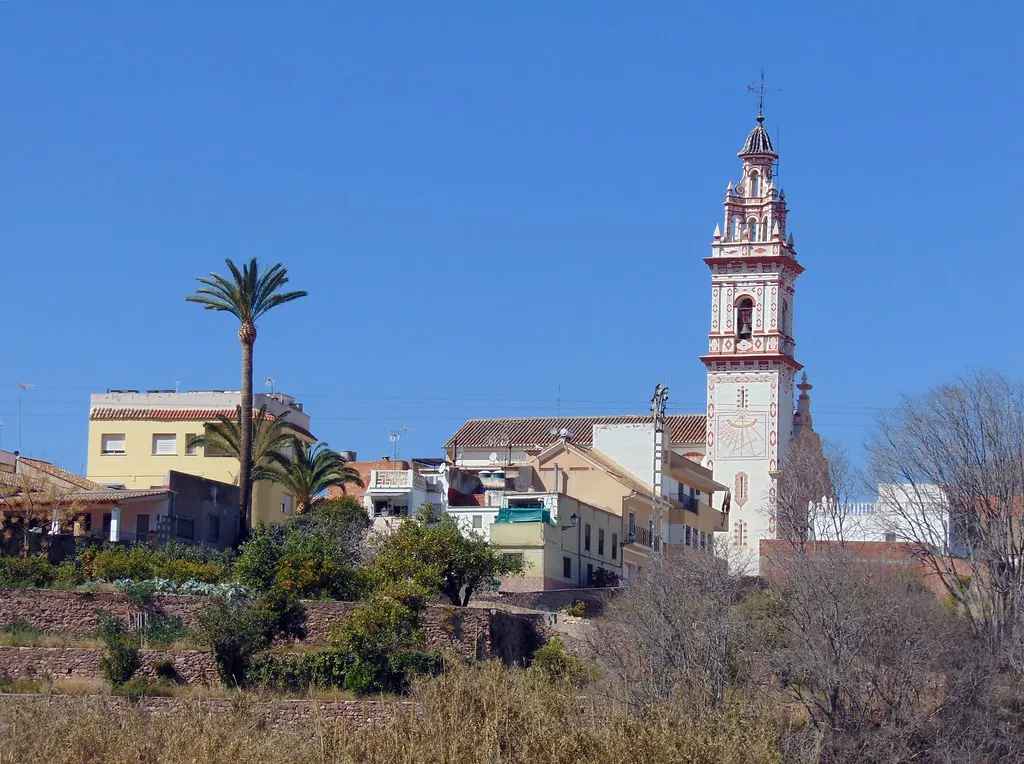
At the centre of Albalat dels Tarongers stands the parish church of San Miguel Arcángel. It is not monumental in scale, yet it anchors village life. The sound of its bells carries across most streets, and the square around it acts as a natural meeting point. By late afternoon, it is common to see neighbours chatting as the day cools.
The old quarter can be covered quickly. Streets are narrow, houses usually rise two storeys, and wrought-iron balconies overlook the pavement. Some façades have been renovated, while others show their age. This is not a preserved historic set piece. Residents live here, park where space allows, and open their windows when the evening air drifts in.
Step beyond the last houses and the countryside begins almost immediately. Rows of orange trees extend in orderly lines. Small vegetable plots appear here and there. The acequias continue to distribute water across the land. A walk along the agricultural paths, something many locals do as part of their routine, offers a direct sense of how the village sustains itself.
The relationship between settlement and farmland is close. There is no long transition from urban centre to rural landscape. One blends into the other within minutes.
Rural Paths and the Scent of Blossom
The area around Albalat dels Tarongers is criss-crossed by uncomplicated rural tracks. These are agricultural routes rather than marked tourist trails. They can be explored on foot or by bicycle and connect with other parts of Camp de Morvedre. Some also lead towards the first slopes of the Sierra Calderona.
At certain times of year, the orange blossom announces itself before the trees come into view. The fragrance spreads across the fields and lingers along the paths. In harvest season, groups of workers are a common sight. Trailers loaded with fruit leave the plots and head towards the village. None of this is arranged as a spectacle. It is simply agricultural work in progress.
Open farmland and cultivated areas attract typical birdlife. There is a steady movement of small birds overhead and among the trees. Nothing here is presented as rare or dramatic, yet the absence of traffic makes these details more noticeable during a walk.
Food in Albalat dels Tarongers reflects the wider traditions of the area. Rice dishes prepared slowly remain central. Cocas topped with vegetables appear regularly. Many recipes are closely linked to what the surrounding huerta, or market garden, provides. This is home cooking rather than showpiece cuisine, rooted in local produce and familiar methods.
Local Traditions Through the Year
The main fiestas take place around San Miguel, towards the end of September. During those days, the atmosphere shifts. Processions move through the streets. Events are held outdoors. The sense that everyone knows one another becomes more visible. For a short period, daily routines give way to shared celebration.
Holy Week also brings smaller processions. These are modest and community-focused. They are not designed to attract large crowds from elsewhere. Participation tends to come from within the village itself, which shapes the tone of the events.
Like many municipalities in the Valencian Community, Albalat dels Tarongers marks the arrival of March with its own version of the Fallas. The scale differs from that of the regional capital, yet the presence of the festival links the village to a wider cultural calendar. Traditions that are well known in larger cities find a more intimate expression here.
These celebrations do not transform the identity of the place. Instead, they reveal it. Agricultural routines may pause briefly, but the underlying character of the village remains consistent.
Getting There and What It Means to Visit
Albalat dels Tarongers lies roughly half an hour by car from the city of Valencia. The usual route follows the A‑7 towards Sagunto, then continues inland along a regional road. The change in surroundings is swift. Multi-lane traffic gives way to roads bordered by fields.
The village has a population of just over 1,500 inhabitants. Its size makes it easy to explore without hurry. Many visitors combine a stop here with time in Sagunto or a walk in the Sierra Calderona. The location allows for that kind of flexible plan, shifting between coast, history and countryside within a small radius.
Expectations matter in a place like this. Albalat dels Tarongers does not attempt to present itself as anything other than an agricultural village that continues to function as one. Tourism exists, but it does not dominate. The appeal lies in observing ordinary routines, in walking among orange groves, and in sitting for a while in a square where conversation flows at its own pace.
Nothing here is designed to impress through spectacle. The interest comes from proximity to everyday life. For those prepared to approach it on those terms, Albalat dels Tarongers offers a clear sense of how land, work and community still intertwine in this corner of Camp de Morvedre.