Full Article
about Alfara de la Baronia
Set in the Palancia valley between the Espadán and Calderona ranges, with historic aqueducts.
Hide article Read full article
Alfara de la Baronia en el Camp de Morvedre
Alfara de la Baronia se encuentra tierra adentro en el Camp de Morvedre, a media hora de Valencia y a una distancia corta de Sagunto y la costa. El pueblo se levanta entre naranjales y bancales, un paisaje que aún determina el ritmo del lugar. Viven aquí poco más de seiscientas personas.
El topónimo Alfara sugiere un origen andalusí, como ocurre con otras alquerías de esta llanura litoral. Tras la conquista cristiana en el siglo XIII, el territorio se reorganizó en señoríos. La referencia a la baronía procede de esa época, cuando la zona quedó vinculada durante siglos a la jurisdicción señorial de Sagunto.
Ese pasado no ha dejado monumentos grandiosos. Lo que perdura es la estructura de un pueblo cuya forma y vida cotidiana siguen ligadas a los campos que lo rodean.
Trazado urbano e iglesia parroquial
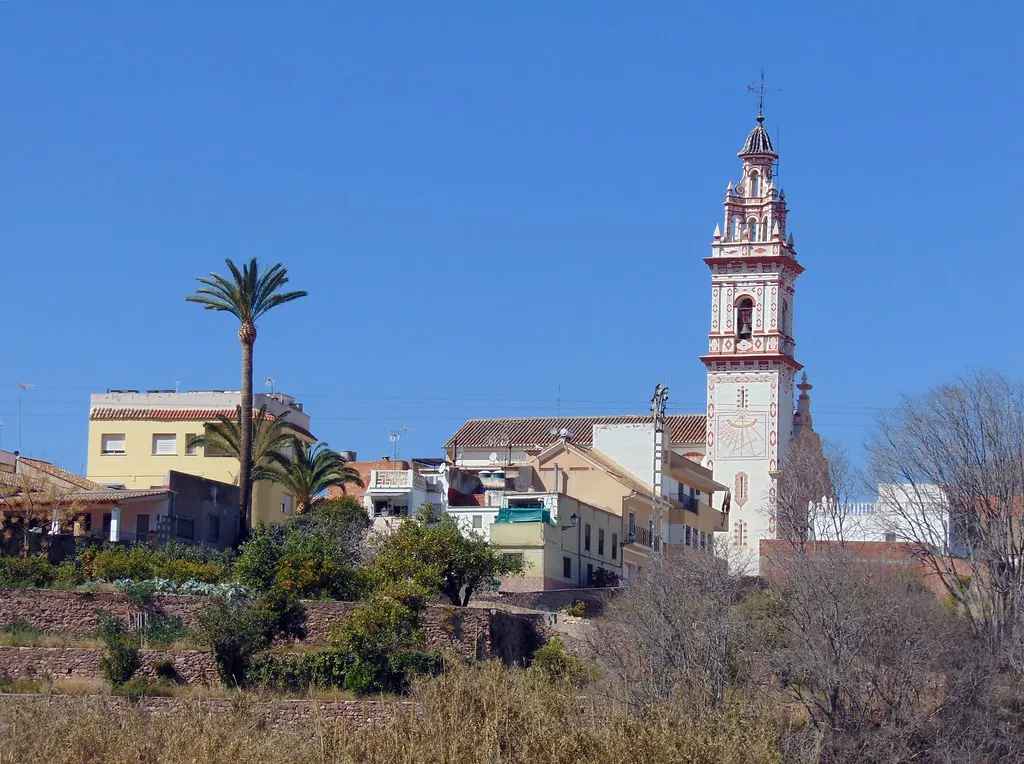
Alfara conserva la escala de una comunidad agrícola. Sus calles son cortas y bastante rectas, confluyendo en la plaza mayor y en la iglesia parroquial, que actúa como referencia visual y social del casco urbano.
El edificio de la iglesia parece resultado de varias reformas. Como ocurrió en muchas poblaciones rurales valencianas, es probable que se ampliara entre los siglos XVII y XVIII, cuando crecía la población dedicada a la agricultura. El interior es sobrio, sin grandes elementos monumentales. Aun así, sigue siendo el principal espacio colectivo de la localidad, escenario de las celebraciones religiosas.
La mayoría de las casas tienen dos plantas. Muchas mantienen patios interiores y tejados de teja árabe, el sistema habitual en la arquitectura tradicional valenciana. En algunas viviendas más antiguas se ven portones amplios y pequeños balcones de forja. Son detalles que hablan de una época en la que la vivienda era también espacio de trabajo, donde se guardaban herramientas o parte de la cosecha.
El interés de Alfara no está en edificios singulares, sino en su trazado y en esa atmósfera que aún conecta lo doméstico con lo agrícola.
La huerta del Camp de Morvedre
Tras las últimas casas aparecen casi de inmediato los caminos rurales. Estos senderos siguen rutas establecidas desde hace tiempo entre los bancales cultivados. No se diseñaron para el paseo, sino como conexiones de trabajo entre campos y acequias.
La huerta circundante se extiende por el Camp de Morvedre. Su configuración actual se consolidó sobre todo entre los siglos XVIII y XIX, cuando se amplió el regadío por buena parte de la comarca. La expansión del cultivo de cítricos llegó después, ya bien entrado el siglo XX.
Caminar por estos senderos agrícolas permite ver cómo funciona aún la huerta. Los bancales están delimitados por márgenes bajos y acequias que distribuyen el agua. En muchas zonas del Camp de Morvedre se mantienen en uso sistemas de riego tradicionales, perpetuando una ordenación del territorio con siglos de antigüedad.
En primavera, el aroma del azahar a veces se desplaza con el aire. No ocurre todos los días ni en todas las parcelas, pero cuando coincide la floración en los naranjales, el paisaje cambia notablemente. En otoño e invierno, la actividad se traslada a la recolección de cítricos, y hay más movimiento visible en los campos durante los meses fríos.
El ciclo agrícola sigue marcando el año. La floración primaveral y la recolección invernal son momentos reconocibles, no eventos preparados, sino parte de una rutina que define el carácter de la zona.
Calendario local y festividades
La cocina local se basa en los productos de la huerta y en el arroz, un elemento común en toda la región valenciana. En muchas casas aún se preparan platos vinculados al calendario agrícola según la temporada. No es algo organizado para quien visita, sino parte de la vida diaria en el pueblo.
El calendario anual incluye las fiestas patronales, que suelen celebrarse en verano, como en muchos municipios valencianos. Estos actos combinan lo religioso con actividades en la plaza mayor. La escala es reducida y el ambiente es marcadamente local, definido más por el encuentro entre vecinos que por un público externo.
La Semana Santa también tiene presencia, aunque de forma discreta. En pueblos de este tamaño, pesa más la participación de los residentes que el espectáculo. Los actos son modestos y comunitarios.
A lo largo del año, es el ritmo agrícola lo que se mantiene más constante. La floración de los naranjos en primavera y la cosecha durante los meses fríos siguen marcando el tiempo de manera visible. Incluso para quienes no trabajan directamente en el campo, estos ciclos influyen en el pulso del lugar.
Cómo visitar Alfara de la Baronia
Se llega a Alfara desde Valencia por la A‑23, tomando después las carreteras locales que conectan los pueblos del valle. Su proximidad a Sagunto y a la costa facilita combinarla con otras paradas en el Camp de Morvedre.
La visita al núcleo urbano es breve. En una hora aproximadamente se puede recorrer el centro a paso tranquilo. La iglesia parroquial, la plaza mayor y las calles aledañas dan una idea clara de su escala.
Lo que da mayor sentido a la visita es salir del casco y caminar por los senderos agrícolas que parten del pueblo. Estos caminos, aún utilizados para las labores del campo, ponen en contexto todo lo visto en las calles. Las casas, la iglesia y la plaza cobran más sentido ante el telón de fondo de los naranjales y las acequias.
No hay aquí una colección de monumentos para tachar de una lista, ni miradores espectaculares. Alfara de la Baronia muestra más bien una imagen directa de la vida rural en el Camp de Morvedre, condicionada por siglos de cultivo y por su vínculo histórico con la antigua baronía de Sagunto.
Para alojamiento, lo habitual es buscar opciones en Sagunto o en otros municipios cercanos del Camp de Morvedre. Alfara en sí sigue siendo un pueblo residencial pequeño, donde la agricultura aún influye en el paisaje y en la rutina.
Al final, Alfara de la Baronia se entiende mejor como parte de una llanura agrícola más amplia que como una atracción aislada. Sus calles, iglesia y casas reflejan una comunidad que creció desde la tierra que la rodea, y esa tierra aún enmarca cada aproximación al pueblo hoy.