Full Article
about Benavites
Known for its medieval Torre de Benavites and surrounding market gardens.
Hide article Read full article
The light over the orange groves
At five in the afternoon the light tilts across the orange trees. The air carries the scent of damp orange blossom. From the Torre de Benavites, a block of stone rising above the green of the orchards, the Valle de Segó opens out towards the east. The sea is not visible, yet it makes itself known in the Levante wind that slips inland and sets the leaves in a steady murmur.
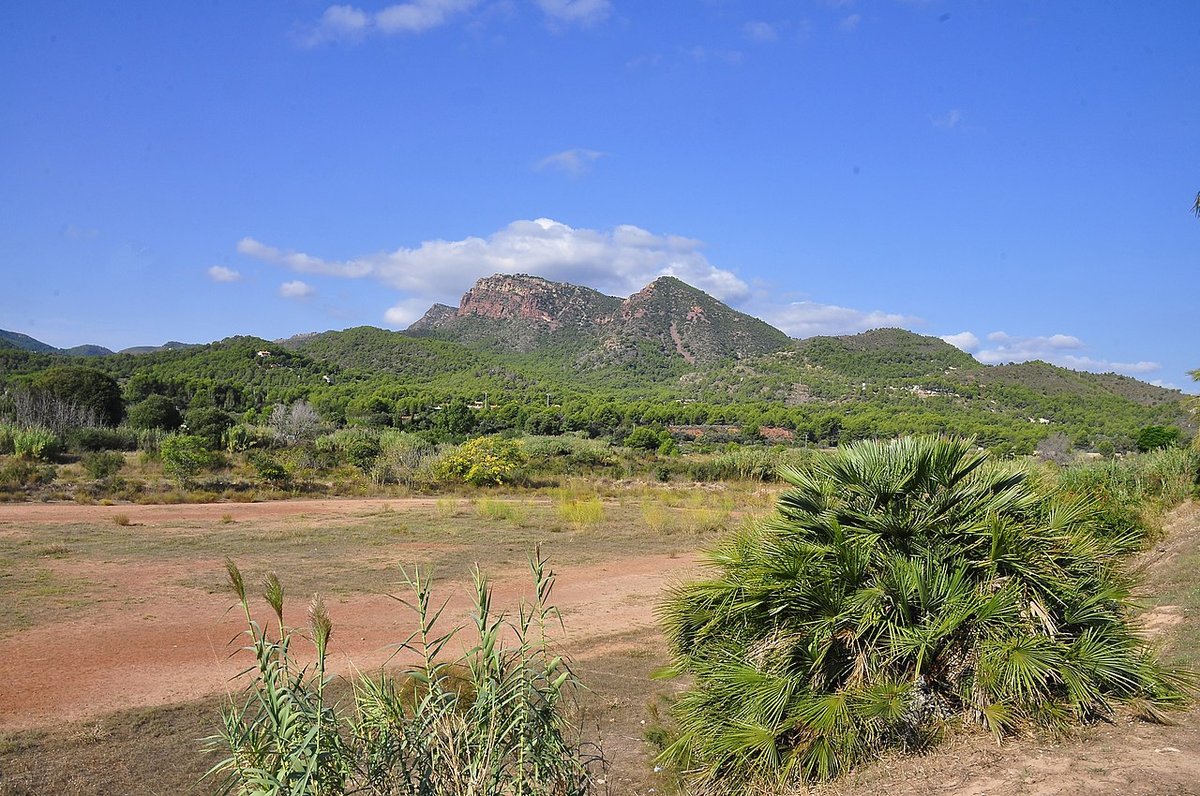
This is a landscape defined by cultivation and breeze. The geometry of irrigation channels and plots stretches across the valley, and the horizon settles into the pale outline of the Sierra de la Calderona on clear days. There are locals who say that when the air is especially clean, a bell tower in Sagunto can be picked out in the distance.
A tower with older stories
Climbing the limestone steps of the Torre de Benavites feels like entering an open archive. It was declared a National Monument in 1981, although the structure has been watching the same fields for much longer. It began as a watchtower in the Andalusí period, later passed into seigneurial hands, and ended up being used as a granary.
At its base, several stone slabs carry Hebrew inscriptions. They come from the former Jewish cemetery of Morvedre and were reused as building blocks after the expulsion of 1492. The letters are still there, worn yet readable when the light falls at an angle. Even in summer, the stone holds a cool touch.
At the top, the terrace acts as a natural lookout over the valley. Irrigation lines and citrus plots form a careful pattern below. The view does not rely on height so much as on clarity, the sense that everything is laid out in quiet order.
A village shaped by its huerta
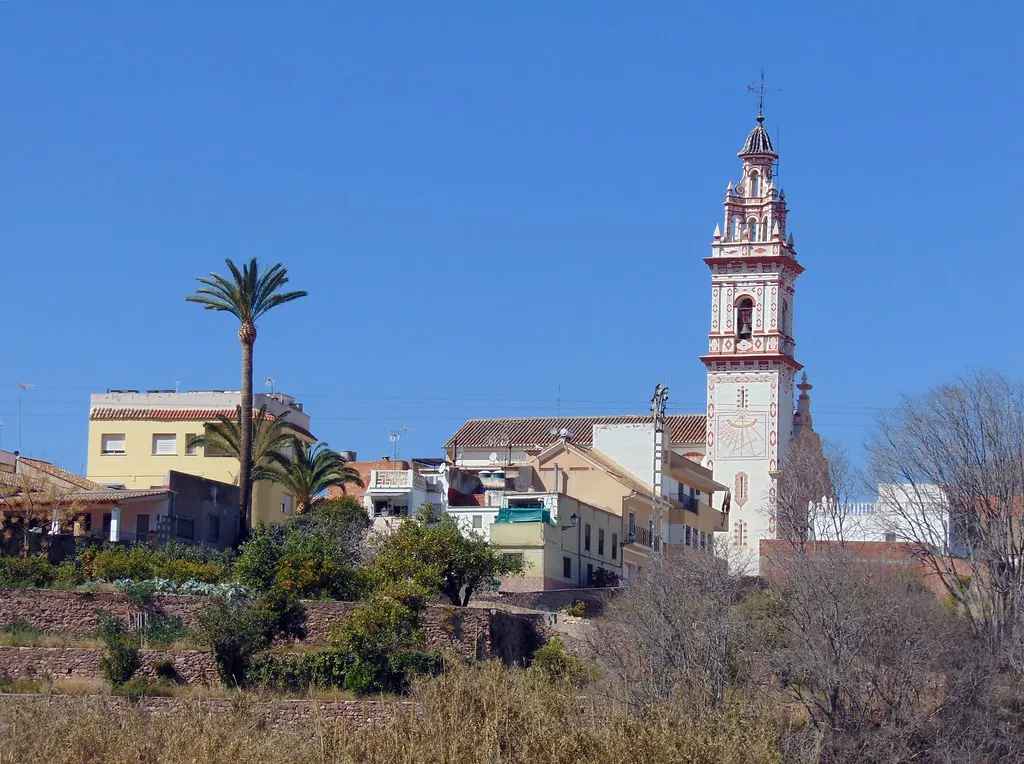
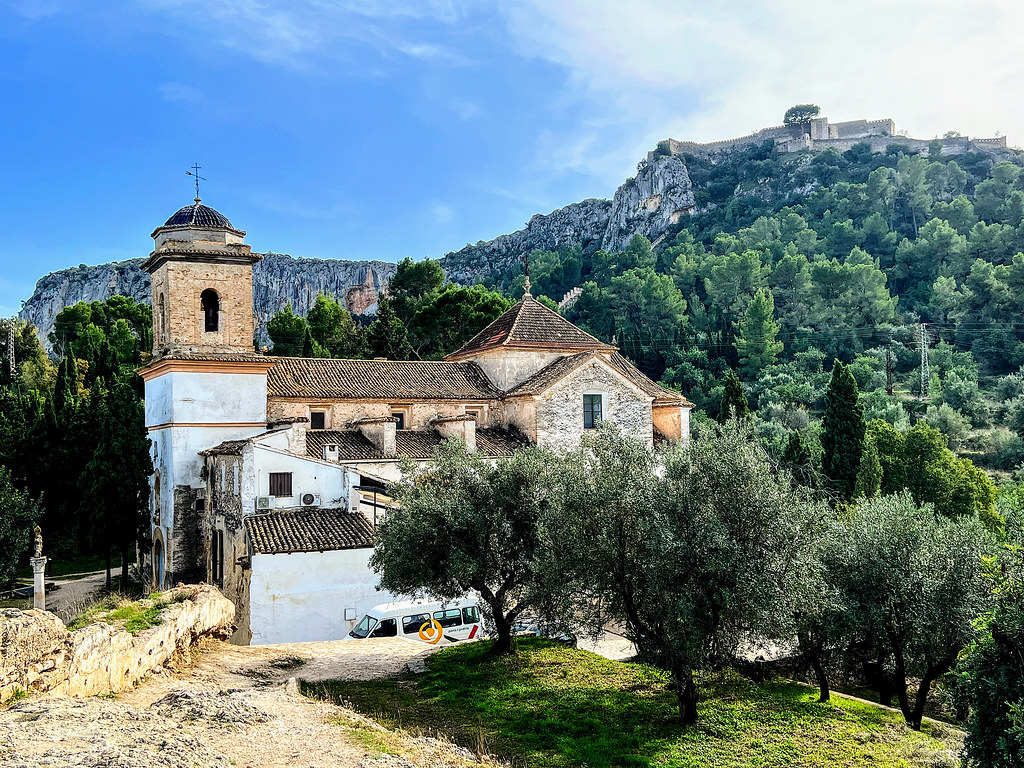
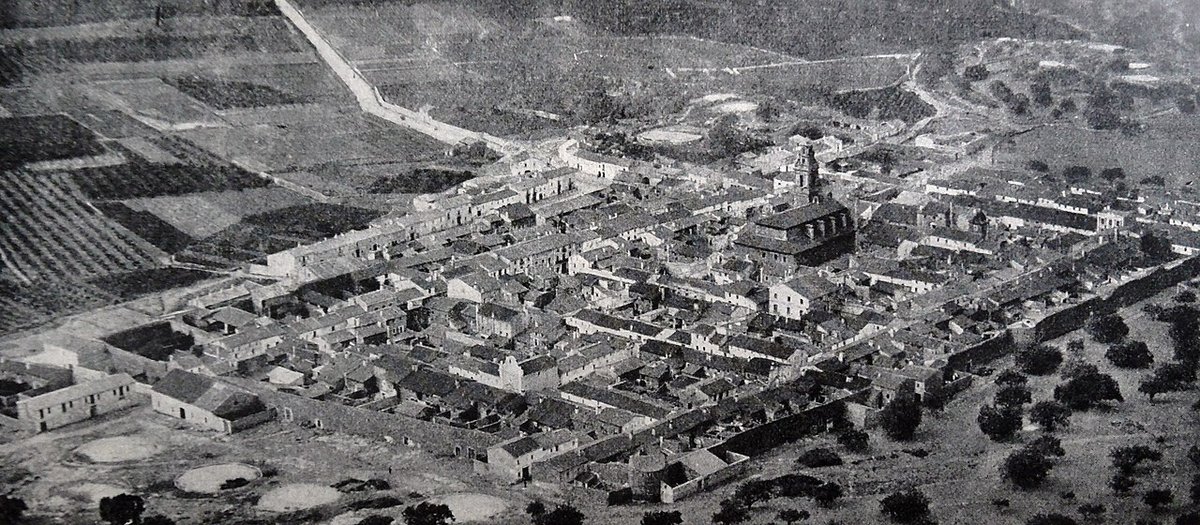
Benavites has 652 inhabitants, and its scale becomes clear straight away. The streets cluster around the Plaza Mayor. There stands an 18th-century neoclassical church, its façade restrained and pale when the afternoon sun reaches it.
Around midday, sound fades. A shutter rolls down somewhere, bees hum around jasmine on window grilles, a car passes slowly. The pace is not arranged for visitors; it simply follows the routines of those who live here.
From the end of carrer Major, a path leads out that many locals know as the route through the orchards. It is not a mountain trail but a network of agricultural tracks winding between orange and mandarin trees. In March, when the trees are in bloom, the scent clings to clothes.
Farmers are often at work along these tracks, pruning with long shears. Some are well into their eighties and continue with the same steady gestures. Conversations tend to circle back to winter frosts. Each person names their own year, 1956, 1985, 2012, recalling it as one might point to a scar.
Low-key celebrations
At the end of June, festivities are usually held in honour of the Virgen de los Ángeles and San Pablo. The procession moves through the narrow streets of the centre, while people sit on folding chairs outside their homes to watch it pass. There is also a large paella prepared at the football ground. Families arrive with portable tables, and bottles of horchata, a traditional drink made from tiger nuts, are passed from hand to hand.
In March, Benavites also marks the Fallas, the well-known Valencian festival involving sculptural monuments that are later burnt. Here it takes place on a smaller scale, with a handful of monuments set up around the village and an early cremà, the burning of the figures. The following morning, the smell of gunpowder still hangs in the air among fallen oranges.
Seasons, rhythms and small practicalities
Spring changes the valley completely. The scent of orange blossom is noticeable even before reaching the village, and temperatures are usually mild. August brings the opposite. The asphalt heats up, and the streets empty after lunch. Many shutters are lowered early in the afternoon and remain closed until the sun drops.
Walking along the irrigation paths calls for closed shoes. After watering or light rain, mud sticks easily to the soles.
Expectations matter here. Tractors pass early, and dogs bark from their pens. Benavites lies about 39 kilometres from Valencia, reached by following the CV‑300 and then a local road through the fields. When green and white painted water towers come into view, the village is already close.