Full Article
about Quartell
Agricultural municipality in Les Valls with a manor house and citrus surroundings.
Hide article Read full article
Between Sagunto and the Vall de Segó
Quartell sits in the Camp de Morvedre, on the flat plain that stretches between Sagunto and the Vall de Segó. It lies close to the Mediterranean coast, yet still firmly within the huerta, the irrigated agricultural landscape typical of this part of Valencia. The land barely rises above sea level, which explains much of what defines the place: a level horizon, a dense network of irrigation channels, and the continued importance of citrus farming.
With just over 1,800 inhabitants, Quartell keeps a quiet scale. Daily life is closely tied to agriculture and to the routines common across villages in this area of the comarca. Around the built-up centre, plots of orange and lemon trees spread out in neat rows, crossed by agricultural tracks. The irrigation channels, known as acequias, form part of a historic hydraulic system dating back to the Andalusí period, still in use today across much of the Valencian huerta.
This is not a landscape shaped for visitors. It is a working environment that continues to function as it has for generations, where production comes before presentation.
The village itself is compact and easy to walk. Narrow streets link two-storey houses, many with whitewashed façades and large wooden doors. Some properties have been updated in recent decades, though elements of traditional Valencian architecture remain visible: simple balconies, iron grilles, and small ceramic panels depicting religious images.
The Church and the Village Core
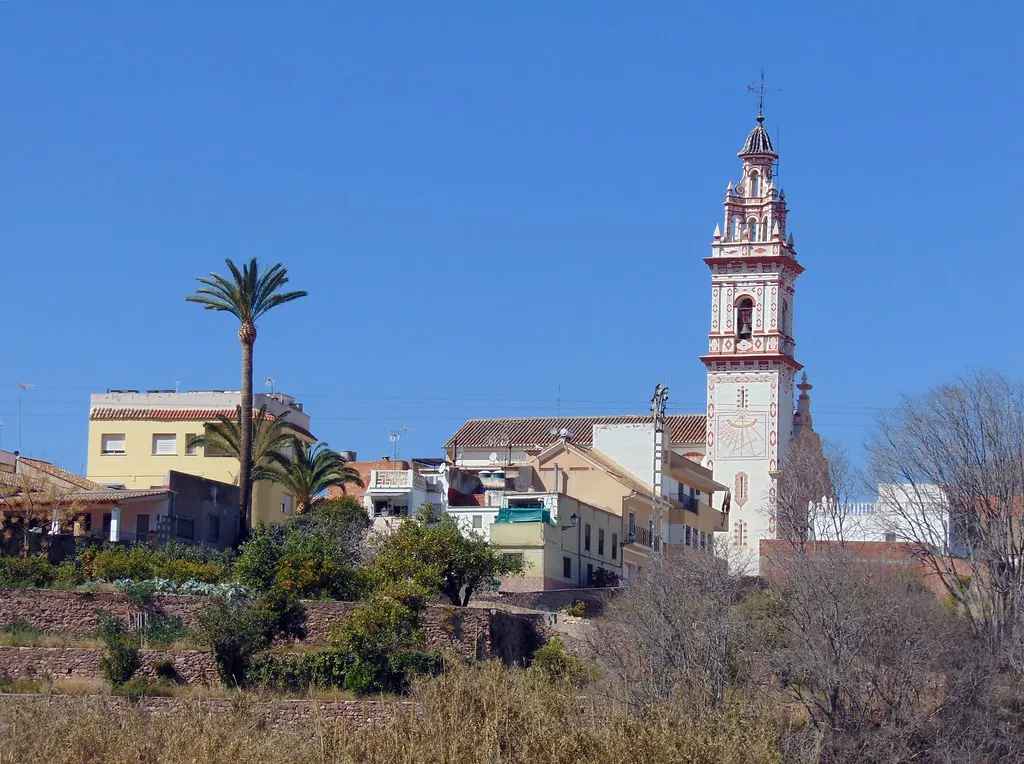
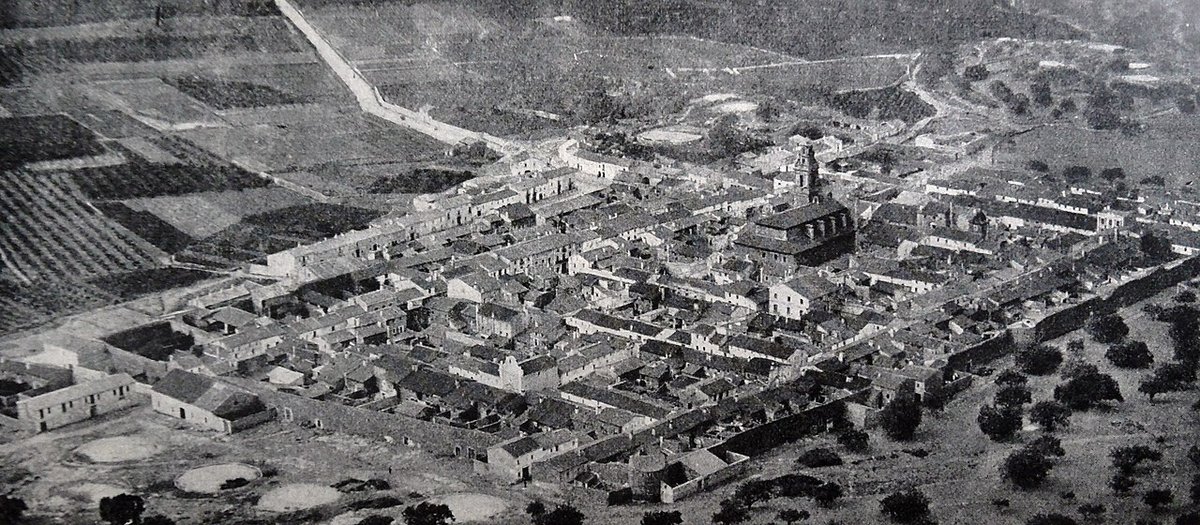
At the centre of Quartell stands the parish church dedicated to San Antonio Abad. The building dates back to the 16th century, although it has undergone later alterations, something quite common in churches across the Valencian huerta. Its importance lies less in its size and more in its role within the layout of the village. The main streets branch out around it, along with a small square where much of the daily activity is concentrated.
Nearby, there are a few modest open spaces, small squares and widened corners where benches and fountains have been placed. These are simple spots, designed for everyday use rather than for show. At certain times of day, it is common to see older residents sitting, chatting, or quietly watching life pass by.
Calle Mayor preserves part of the village’s older layout. In some stretches, the houses stand so close together that the street remains in shade for much of the day. This is typical of agricultural settlements where space was used as efficiently as possible.
Walking Through the Huerta
The most distinctive aspect of Quartell lies just beyond the immediate urban area. Stepping out along any of the agricultural tracks quickly leads into the huerta. These routes are flat and easy to follow, running between citrus groves and small farm buildings.
In spring, the orange blossom transforms the atmosphere. Its scent spreads along the paths when the trees are in flower, changing the experience of walking through the fields. At other times of the year, the agricultural cycle becomes more visible. Depending on the season, it is possible to see pruning, harvesting, or other stages of fieldwork in progress.
These paths also connect Quartell with nearby villages in the Vall de Segó, such as Benavites and Faura. The distances are short, making it straightforward to link them on foot or by bicycle along rural tracks.
Festivities and Everyday Life
The local calendar combines religious celebrations with events organised by village associations. Festivities dedicated to San Antonio Abad hold a central place and typically include processions, band music, and activities involving local residents.
As in many villages in the comarca, gunpowder and street parades are part of the festive atmosphere. These celebrations are primarily intended for the people who live here and for those with family ties to the village, rather than for outside visitors.
Throughout the year, other events linked to the Valencian religious calendar also take place. These include celebrations connected to the Virgen de los Desamparados and San José. They follow a simple format and retain a distinctly local character.
When to Pass Through Quartell
Spring and autumn are usually the most pleasant times to explore the area. Temperatures are mild enough for walking through the huerta, and the fields are active. Summer brings intense heat, especially around midday, which is typical of this stretch of the Valencian coastal plain.
After rain, some of the dirt tracks can become muddy. In those conditions, it makes more sense to stay within the village or to combine a visit with nearby places in the Camp de Morvedre, such as Sagunto or the other villages of the Vall de Segó.
A Short Stop in the Vall de Segó
Quartell does not revolve around tourism and does not have major monuments. It can be explored in a short time: a walk through the centre and a stroll along the surrounding paths are enough to get a sense of the place.
What stands out here is the chance to observe how a traditional agricultural landscape still operates so close to the coast. The huerta, the acequias, and the layout of the village itself offer a clear picture of how this part of the Camp de Morvedre has functioned in recent history.