Full Article
about Torres Torres
Known for its well-preserved Arab baths and its castle.
Hide article Read full article
At the Edge of the Plain
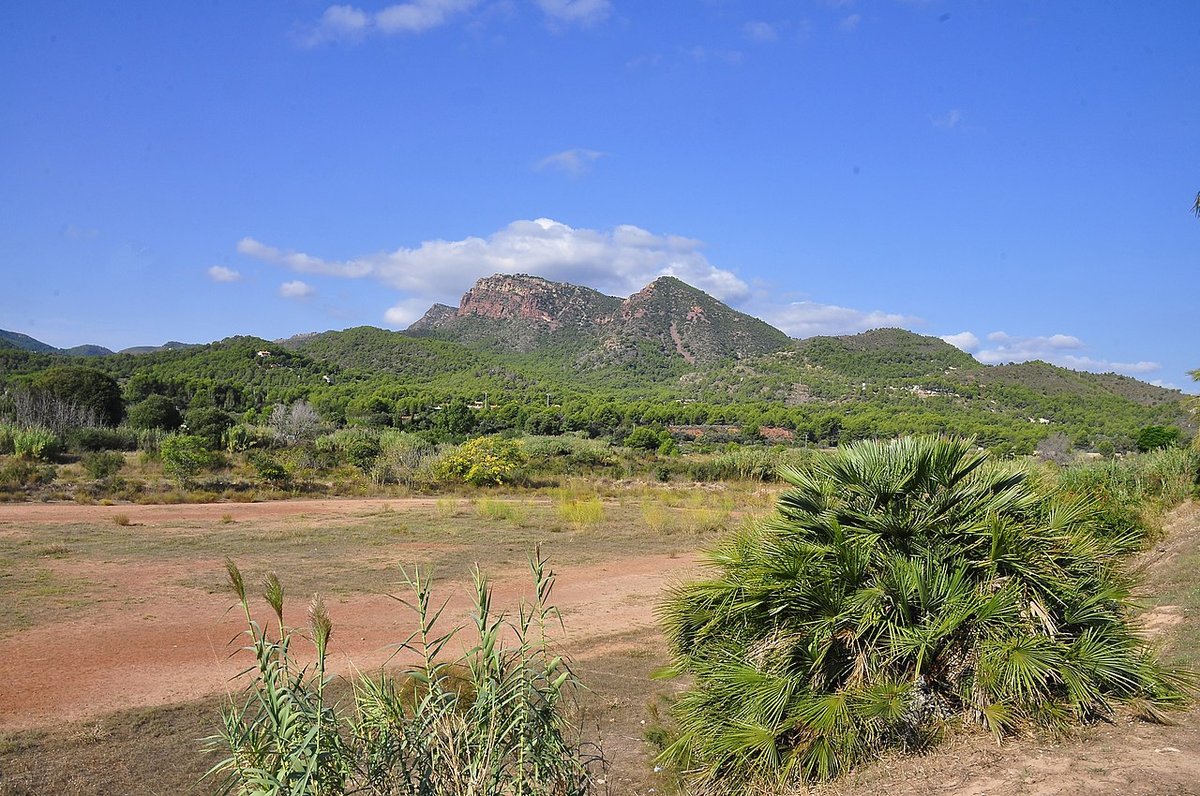
Tourism in Torres Torres is closely tied to its position within the Camp de Morvedre. The village lies in the inland strip of the comarca, where the agricultural plain begins to ripple before reaching the Sierra Calderona. Sagunto and the coast are not far away, yet the landscape already feels different: citrus groves stretch across the fields, low hills rise gently, and rural tracks link settlements that have been connected for centuries.
The name Torres Torres itself points to a defensive past. In the Middle Ages, this territory formed part of a surveillance network linked to controlling the Palancia valley and the routes between the interior and the Mediterranean coast. Remains from that system survive from the Andalusí period, including the so‑called Torre Árabe, a reminder of the Muslim presence before the Christian conquest.
This is not a restored monumental complex set up as a formal visitor site. Instead, the remains are absorbed into the agricultural landscape around the village, as happens with many defensive vestiges in this part of the region. They appear as fragments within fields and low hills, part of everyday scenery rather than separate heritage enclosures.
The municipal area also marks a clear transition between the Valencian huerta, the traditional irrigated farmland around the city of Valencia, and the first mountain ranges inland. From the tracks that leave the village towards nearby rises, much of the Camp de Morvedre plain comes into view. On clear days, a strip of the Mediterranean can be seen in the distance.
Parish Church and Old Streets
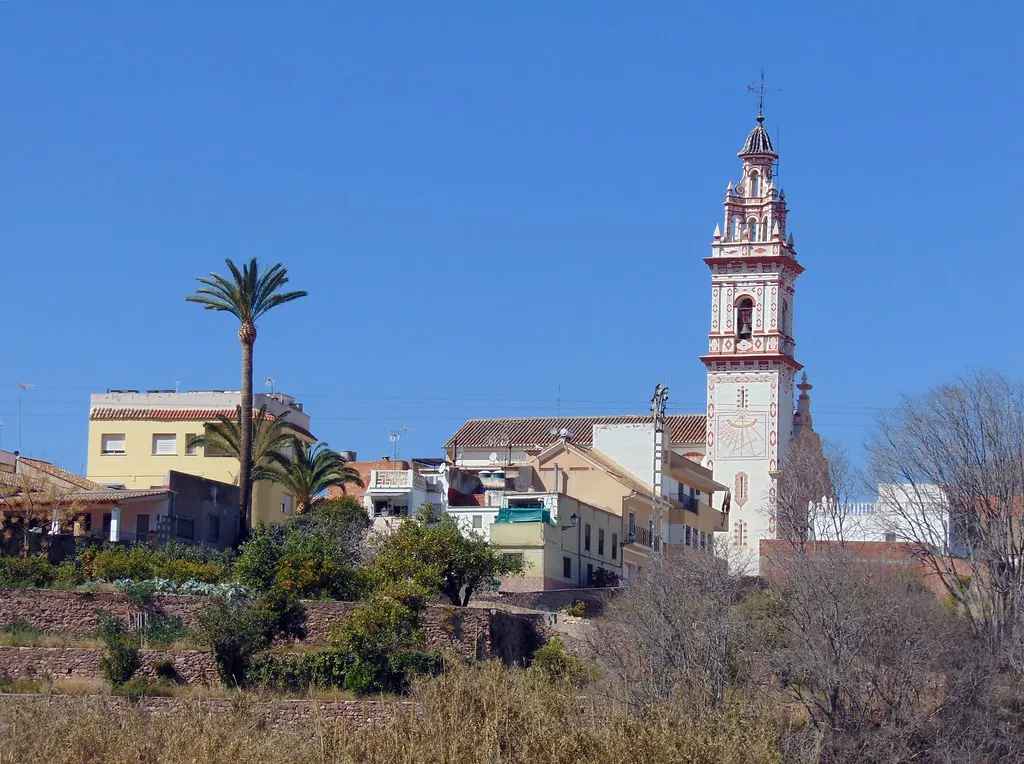
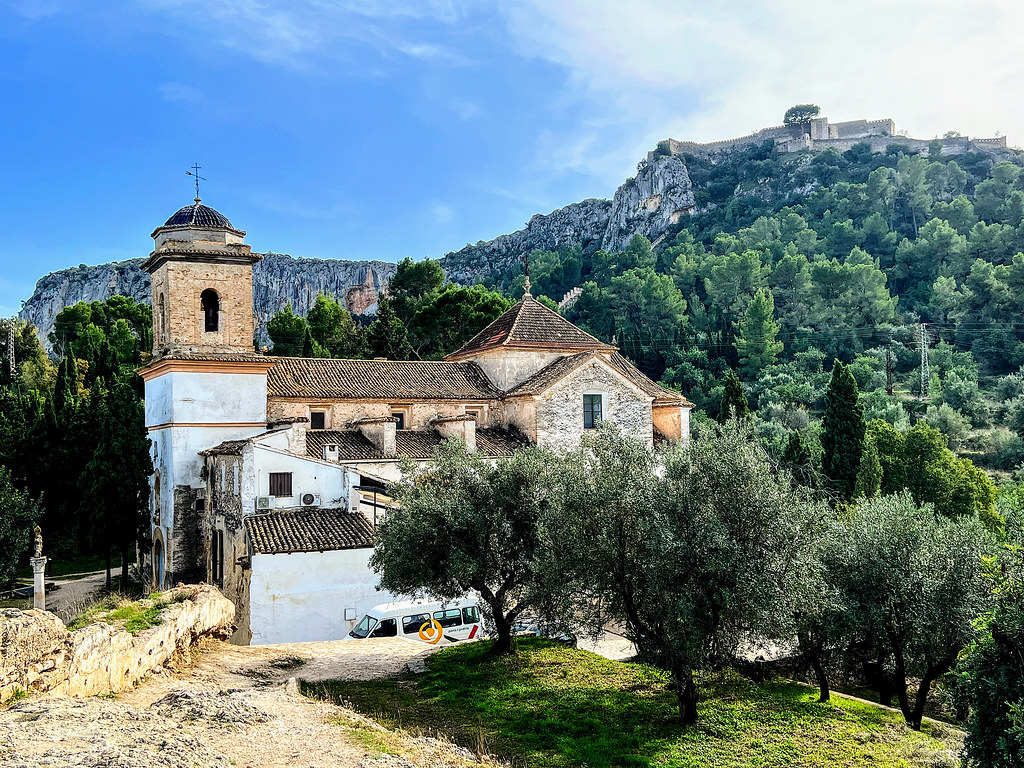
At the centre of the village stands the parish church of San Miguel Arcángel. The present building dates from the 16th century and has undergone later alterations, which is common in agricultural communities that expanded gradually over time. Its façade is restrained. Inside, several Baroque elements remain, including a modestly sized altarpiece generally dated to the early modern period.
Around the church lies the main square, still the everyday meeting point for residents. It anchors village life and provides a sense of continuity between past and present.
The old quarter preserves an irregular layout. Narrow streets rise and fall in response to the topography, creating a pattern that reflects earlier phases of development. There are no grand buildings, yet small details reveal the age of the settlement: stone doorways, wrought iron grilles and interior courtyards that can only just be glimpsed from the street. The urban fabric has been altered over time but remains recognisable, shaped by successive generations rather than by large-scale planning.
Archaeological sites have also been identified in the surrounding area, indicating occupation of the territory since ancient times. The Torre Árabe is the most visible of these remains. Access and state of conservation may vary, so it is advisable to check locally before setting out.
Paths Through the Orchard Landscape
The agricultural tracks around Torres Torres make it easy to explore the surroundings at a measured pace. Many connect with neighbouring towns in the Camp de Morvedre, such as Estivella and Benifairó de les Valls, following routes that for centuries linked market gardens and alquerías, traditional rural farmsteads.
The terrain is generally gentle, with moderate slopes. For that reason, it is common to see people walking or cycling between orange groves, especially outside the central hours of the day during the hottest months.
Climbing slightly onto nearby hills opens up views across the agricultural plain of the comarca. From this vantage point, the logic of settlement becomes clear: small villages set relatively close to one another, each surrounded by cultivated plots that have shaped the local economy for generations. The pattern is repetitive yet distinctive, with each settlement maintaining its own nucleus organised around a church and a square.
This gradual shift from flat orchard land to the first elevations of the Sierra Calderona defines the character of Torres Torres. It sits neither fully in the coastal plain nor in the mountains, but in the transition between the two.
Festivities and Local Traditions
The main patron saint festivities are held in honour of San Miguel Arcángel, usually at the end of September. During these days, activity centres on the church and the main square. Religious ceremonies take place alongside popular celebrations in which a large part of the village participates. The events reinforce community ties and bring together different generations around shared customs.
Another significant date in the calendar is Corpus Christi. On that day, some streets in the old quarter are covered with carpets made from flowers and coloured sawdust. This tradition is found in various parts of the Comunidad Valenciana. The compositions are temporary and prepared collectively by neighbours, accompanying the route of the procession through the village. The visual effect transforms familiar streets for a few hours before the designs disappear.
As in many agricultural municipalities in the area, home cooking remains closely linked to seasonal produce. Rice dishes, vegetables from the nearby huerta and simple stews are associated with family gatherings during festive periods. The cuisine reflects the agricultural base that continues to define the surroundings.
A Network of Small Settlements
Torres Torres is connected to the rest of the Camp de Morvedre by local roads that cross cultivated fields and low hills. Traffic is usually light, and many of these stretches are also used for relaxed cycle rides or walks between neighbouring villages.
Travelling through this part of the comarca reveals a succession of small settlements separated by only a few kilometres. Each has its own church, its own square and its particular relationship with the surrounding farmland. Together they form a historical network that still structures the territory today.
Within that network, Torres Torres occupies a clear position at the meeting point between orchard and hillside. Its remains from the Andalusí period, its 16th‑century parish church and its irregular streets all sit within a working agricultural landscape. Rather than presenting a concentrated ensemble of monuments, the village offers a setting where history, cultivation and everyday life remain closely intertwined.