Full Article
about Benissanó
Famous for its perfectly preserved medieval castle where Francis I of France was imprisoned.
Hide article Read full article
A small place that quietly works
Benissanó feels a bit like stepping into a place you hadn’t planned to linger in, then realising you’re in no hurry to leave. Not because there is an endless list of attractions, but because everything is close, easy to grasp, and somehow fits together.
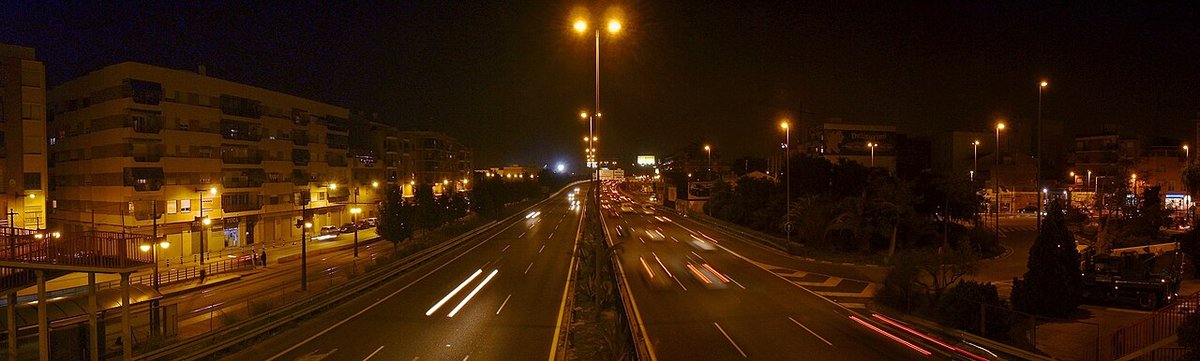
With just over two square kilometres, it barely registers on a map. Many people pass by on the CV‑35 on their way to more familiar destinations. Yet for its size, the town carries more history than expected.
It is the kind of place where you can take a short walk without a plan and quickly understand how it is laid out. That sense of scale shapes the experience. Nothing feels far, and nothing feels staged.
The castle that stands out
The first thing that draws attention in Benissanó is the Castillo‑Palacio. It is not especially tall, but in a town this small, a 15th‑century castle stands out immediately.
This is not a decorative, fairytale-style building. It has a more solid, practical presence, the sort that suggests it has seen real events over the centuries. And it has. For a time, it held Francisco I of France after his capture at the Battle of Pavia. The idea of a French king staying, or rather being kept, in this corner of Camp de Túria feels almost improbable when standing in front of it.
The building has shifted roles over time. It began as a fortress, later took on the character of a noble residence, and today serves cultural purposes and visits. Because it belongs to the municipality, local residents also use it for celebrations. Weddings inside a castle are simply part of everyday life here, rather than a rare spectacle.
Streets that follow daily life
Getting around Benissanó does not require much effort. A couple of turns without a fixed route are enough to build a mental map. Even so, the town is not frozen in the past. There is movement, with cars coming and going towards nearby places like Llíria or Valencia, and people sitting outside their homes as evening arrives.
The streets combine newer houses with older ones. There is no strict visual uniformity, and it does not seem necessary. What defines the place is not its appearance as a whole, but the rhythm of everyday life taking priority over presentation.
Beyond the town itself lie fields of orange trees. When the blossom season arrives, the scent of azahar drifts into the streets. At that point, it becomes easier to understand why settlements in this part of the region developed exactly where they did.
A discovery that became devotion
Towards the end of the 17th century, a small bronze medallion was found buried in the ground. At the time, the discovery was interpreted as a religious sign. From that moment grew the devotion to the Virgen María del Fundamento, now the patron saint of Benissanó.
Stories like this tend to take root more easily in smaller communities. A single event spreads by word of mouth, gradually turning into tradition. Over time, it becomes part of how the place understands itself.
Today, the image of the Virgen still has a role in local celebrations. It appears in festivities and in processions that take place in some years, maintaining a link between the past and present.
Water, belief and the Pozo de la Salud
There was also a period when Benissanó gained attention for something quite different: its water. The Pozo de la Salud became known in the 19th century because it was believed to help cure jaundice.
People from nearby areas came to drink from it, hoping for improvement. It reflects a time when health was understood in very different ways from today. Modern medicine has changed how such claims are viewed, and the well is now approached with more scepticism.
Even so, the Pozo de la Salud remains part of the town’s local memory. It is one of those small details that adds depth to the place, showing how people once made sense of illness and remedies.
Is it worth stopping?
That depends on what you are looking for.
Anyone expecting perfectly restored medieval streets or rows of souvenir shops may find it underwhelming. Benissanó is a typical town in Camp de Túria. It mixes modern housing with older buildings, has quiet streets, and carries on with daily routines without trying to turn them into a display.
However, it offers something else. History appears here in an unplanned way: a large castle in a very small town, an episode involving a French king, a well once linked to healing. None of it is presented with grand gestures.
A short stop is enough to get a clear impression. Walking up to the Castillo‑Palacio, wandering through the centre, then heading out towards the surrounding fields gives a complete picture in less than an hour.
For a pause along the road, that can be exactly what is needed.