Full Article
about Llíria
Music City with major Iberian and Roman sites and Arab baths
Hide article Read full article
Any visit to Llíria tends to begin with a glance towards the Tossal de Sant Miquel. This hill, rising a few metres above the surrounding plain, dominates the market gardens of Camp de Túria and explains the town’s logic. A settlement grew here under the protection of the sierra to the north, with the Turia close enough to sustain irrigation.
Long before the present town took shape, the Iberians of Edeta built their oppidum on this spot in the 4th century BC. Sections of defensive wall can still be identified among later remains. Medieval structures reused the same ground, as did modern repairs and even 19th‑century fortifications linked to the Carlist wars and the monastery of San Miguel. The same commanding point has been occupied and adapted for centuries, each period leaving its mark without fully erasing what came before.
From Edeta to the Carta de Poblamiento
After the Christian conquest in the 13th century, the area was left sparsely populated. Jaime I promoted the creation of new agricultural communities, and in 1253 Llíria received its carta de poblamiento, a charter designed to reorganise the town and attract settlers. Soon afterwards the territory passed into the hands of Teresa Gil de Vidaurre, an unusual figure in the documentation of the time. She is traditionally credited with playing an important role in organising irrigation and consolidating Christian settlement, although the precise details of her interventions are not always clear.
The layout of the old quarter reflects this period of repopulation. Streets are relatively straight and converge around the main square. There stands the church of la Sangre, one of the best known medieval buildings in the municipality. Its interior preserves a Gothic‑Mudejar wooden ceiling, often cited as among the most interesting in the Comunidad Valenciana. The impression it creates has less to do with size than with proximity. From the gallery, the structure is easy to study at close range, including the subtle distortions that the timber has acquired over the centuries.
Baroque Confidence and Urban Change
The basilica of the Asunción occupies the centre of today’s town. Its construction extended through much of the 17th century and reflects the religious climate that followed the Council of Trent, when many towns expanded or replaced their medieval churches. The contrast becomes clear on entry. The exterior is sober, built in pale stone. Inside, the language shifts towards a more theatrical Baroque style, with twisted columns, elaborate plasterwork and a dome that organises the entire space.
In the 1990s, urban works brought another period of Llíria’s past to light. Arab baths dating from around the 12th to 13th centuries were discovered not far away. These structures help explain how Andalusi hammams functioned. There was a furnace, a system for circulating hot air beneath the floor, and a sequence of rooms at different temperatures. Several vaults survived because the complex had remained buried for centuries, something that has happened relatively often with buildings of this kind.
A Town Defined by Music
For some time Llíria has been known as the “ciudad de la música”. Bands hold a social importance that is unusual for a town of around twenty‑five thousand inhabitants. Two musical societies, the Unión Musical and the Banda Primitiva, maintain a rivalry that is usually traced back to the early 20th century. Each developed its own school and cultural life, and the number of trained musicians emerging from the town is striking in proportion to its size.
This identity becomes particularly visible during the fiestas of San Miguel at the end of September. Concerts, street parades and open rehearsals take place across the municipality during those days. Music also shapes the processions of Semana Santa, documented here since the Early Modern period. Processional marches continue to play a central role, reinforcing the link between religious celebration and band tradition.
References to music extend beyond performance. Decorative motifs inspired by instruments and scores appear in local crafts, an echo of how deeply this tradition is woven into daily life.
Huerta, Dryland and Craft Traditions
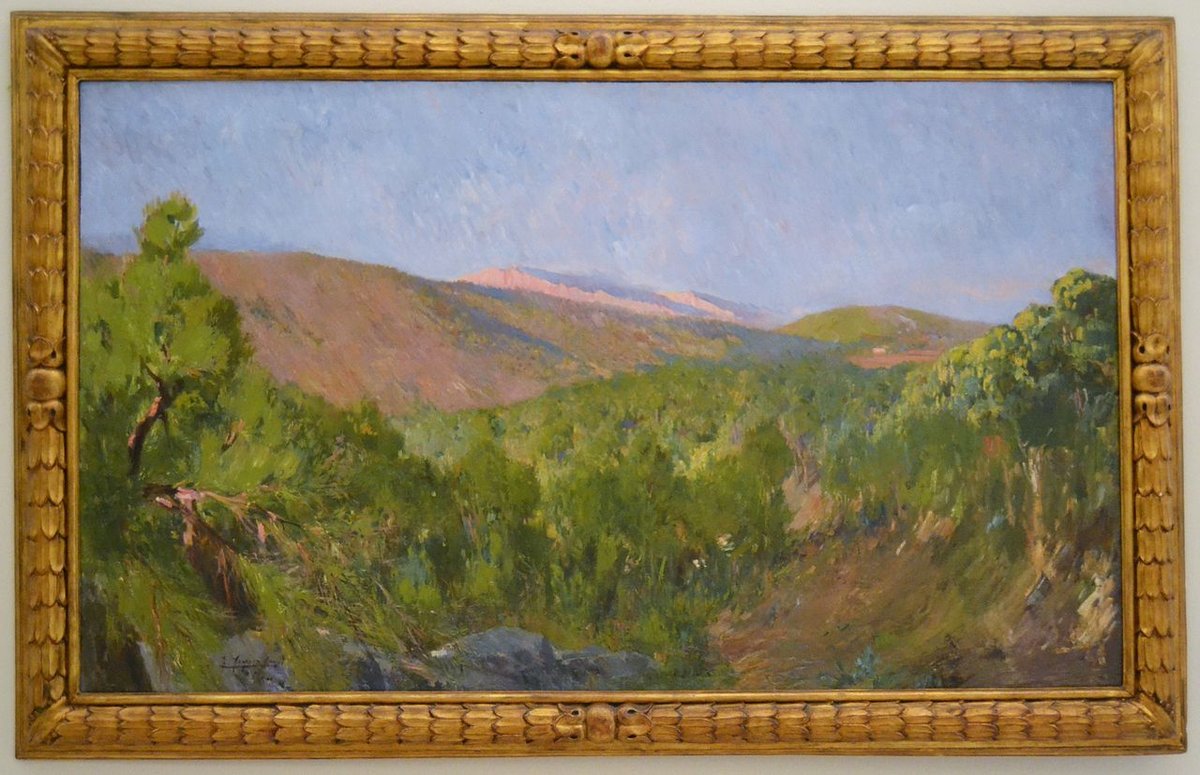
The huerta of Llíria stretches towards the south and east. To the north, the terrain begins to undulate and Aleppo pines appear on higher ground. This gradual shift explains the historical economy of the municipality. Irrigated agriculture dominated the plain, while dryland farming took over on the slopes.
Today citrus fruits are the main crop, though plots with carob trees and other older cultivations can still be seen. The pattern of rectangular fields and irrigation channels defines much of the landscape around the town.
Ceramic tradition in Llíria is linked both to its Andalusi past and to agricultural needs. For centuries, small family workshops operated in the area of the Vila Vella. They produced practical items such as water jars, containers for storing oil and components for domestic ovens. Some designs preserve geometric patterns reminiscent of Islamic decoration. Others incorporate more recent motifs connected to music, a distinctly local reference that ties craft to identity.
Up to the Tossal, Through the Vila Vella
The path up to the Tossal de Sant Miquel begins near the monastery. It is not a long walk, although the slope is noticeable. From the top, the agricultural structure of Camp de Túria becomes clear. Rectangular plots stretch outwards, irrigation channels cut through the fields, and on clear days the urban line of Valencia appears in the distance.
Back down in the Vila Vella, the earlier street plan still shapes movement through the town. The relatively straight routes leading towards the main square reflect the 13th‑century reorganisation that followed the carta de poblamiento. Churches, later buildings and modest houses occupy the same footprint established after the conquest.
Llíria presents itself through these overlapping periods: Iberian Edeta on the hill, medieval repopulation in the old quarter, Baroque ambition at the basilica of the Asunción, and the rediscovered Arab baths beneath modern streets. At the same time, bands rehearse for San Miguel and fields of citrus continue to define the horizon. The result is a town where geography, agriculture, religion and music all share the same stage, each rooted in a specific moment yet still active in the present.