Full Article
about San Antonio de Benagéber
A young, residential municipality split off from Paterna with many housing estates.
Hide article Read full article
San Antonio de Benagéber is easier to understand if you begin somewhere else. The story of this town does not start in its current streets but upriver, in the old village of Benagéber. That earlier settlement disappeared beneath water in the mid‑20th century after the construction of the reservoir that now bears its name. Part of its population was relocated and resettled on the plain of Camp de Túria, near the Turia and just a few kilometres from Valencia.
The name of the new municipality reflects that dual origin: a reference to the submerged Benagéber and to San Antonio Abad, the saint to whom the parish church is dedicated.
Compared with many towns in the Valencian Community, San Antonio de Benagéber is recent. There is no medieval quarter or visible layering of centuries in its architecture. The urban layout belongs instead to the post‑war period and to the later expansion linked to Valencia’s metropolitan area. Its streets and neighbourhoods reflect planning and growth rather than gradual historical accumulation.
A Town Rebuilt, A Memory Preserved
Although the town itself is modern, the memory of the former Benagéber remains central to local identity. Many families still keep photographs and stories of the village that now lies beneath the reservoir. That shared past shapes the way the present is understood.
The parish church of San Antonio Abad, which stands at the heart of today’s municipality, plays a symbolic role. It is not an ancient monument but a point of continuity, a focal place for a community that had to begin again in a different setting. Around it sit the town hall and several straight streets that formed the original nucleus of the resettlement.
From that starting point the municipality has grown steadily, particularly from the late 20th century onwards. Residential developments have spread beyond the initial core. Many people who work in Valencia have chosen to live here in search of more space and a less urban rhythm of life. As a result, the landscape today is defined by detached houses, residential areas and, in between them, agricultural plots that recall the land’s earlier use.
This combination gives San Antonio de Benagéber a distinctive character. It is at once a commuter town within Valencia’s orbit and a place that still shows traces of its rural setting.
Between the Huerta and the Turia Natural Park
Geographically, San Antonio de Benagéber lies at a point of transition. On one side is the historic huerta of the Turia, the traditional irrigated farmland that has shaped this region for centuries. On the other are the drier inland areas of Camp de Túria. This meeting of landscapes is still visible in the surrounding fields.
Citrus groves remain part of the scene, and agricultural tracks thread between plots of cultivated land. The boundary of the Parque Natural del Turia lies very close to the municipality, linking the town to a broader protected river environment. For visitors unfamiliar with the term, a parque natural in Spain is a designated natural area with recognised ecological value, often including walking and cycling routes.
In practical terms, the river landscape provides the main setting for outdoor activities. The terrain is largely flat, which makes walking and cycling accessible. Service roads run between fields and irrigation channels, allowing easy exploration without significant gradients. Not every path is formally marked as an official route, yet they are well known locally and often connect with established itineraries inside the Turia Natural Park itself.
This proximity to open land explains part of the town’s appeal for those who have moved here from Valencia. Within a short distance of home, it is possible to step onto a country path and follow the course of the Turia through farmland and riverbank scenery.
Local Festivals and Shared Traditions
San Antonio de Benagéber’s main celebrations revolve around San Antonio Abad and La Candelaria, both widely observed traditions in this part of Spain. San Antonio Abad, associated with animals and rural life, is honoured in many Valencian towns during the winter months. La Candelaria, linked to Candlemas, also has deep roots in local religious and popular culture.
In San Antonio de Benagéber, these festivities typically include religious events, band music and neighbourhood gatherings in streets or public squares. Rather than large‑scale spectacles, they function as moments of encounter. In a town that has grown rapidly over a few decades and where families have arrived at different times, such celebrations help maintain social ties.
The tone is communal rather than touristic. The focus is on participation and continuity, reinforcing the sense that, despite its recent origins, the municipality has built its own traditions on the foundation of older ones.
Getting There and Getting Around
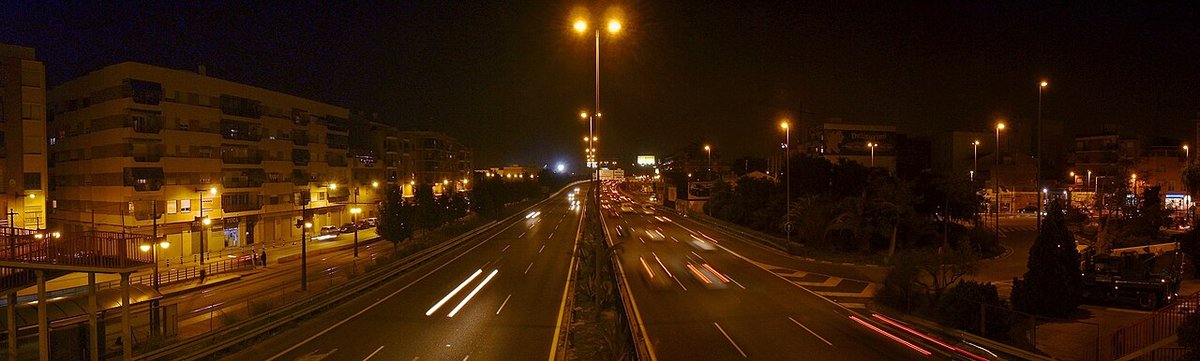
San Antonio de Benagéber is around twenty minutes by car from Valencia via the CV‑35, also known as the pista de Ademuz. Its development as a residential area has meant that many daily journeys are made by car. There are also bus connections with the city, linking the municipality to the provincial capital.
The centre itself can be explored quickly on foot. The original core around the church and town hall is compact, with straight streets that reflect its planned beginnings. To gain a fuller sense of the area, it is worth heading towards the agricultural tracks that lead in the direction of the Turia and the surrounding farmland. There, the relationship between the town and the landscape of Camp de Túria becomes clearer.
San Antonio de Benagéber does not present grand monuments or layers of architectural history. Its interest lies elsewhere: in the story of relocation after the flooding of old Benagéber, in the way a community re‑established itself on new ground, and in its position between cultivated huerta and river park. It is a place shaped by 20th‑century change, yet still connected to older traditions and to the agricultural landscape that surrounds it.