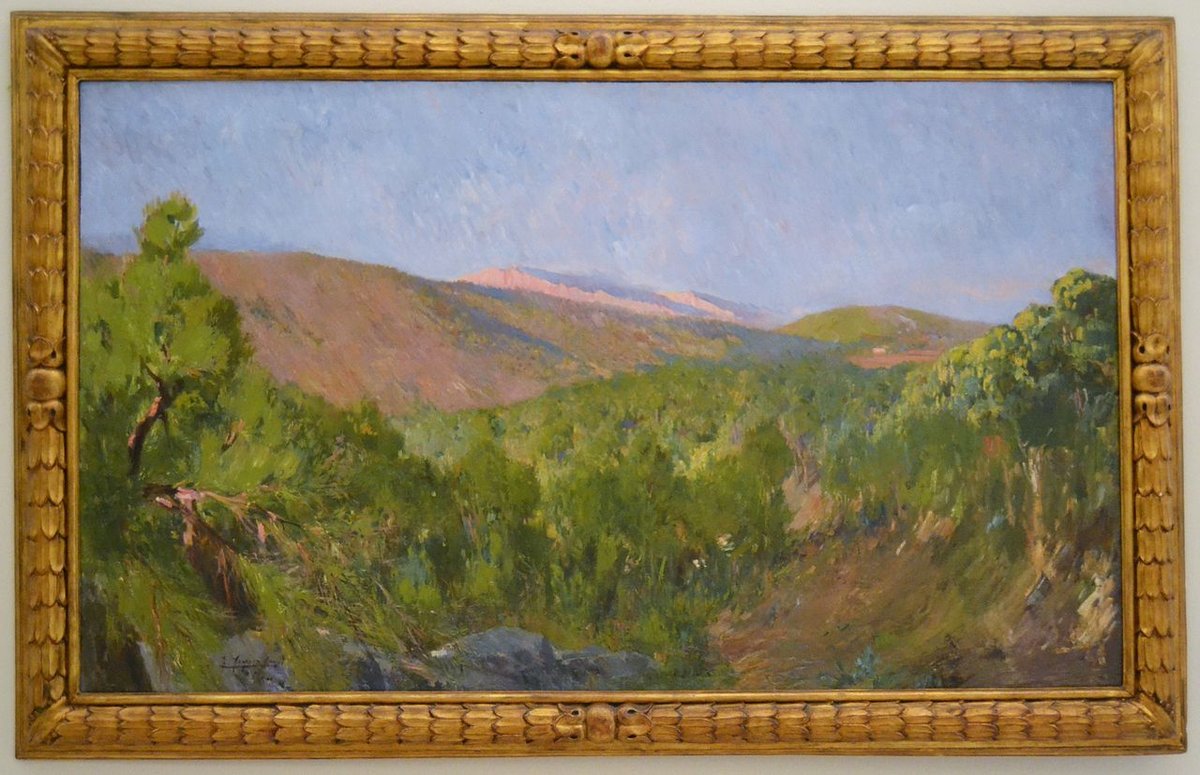
Serra de Mariola, Ferran Cabrera Cantó, Museu de Belles Arts de València.JPG
Ferran Cabrera i Cantó · Public domain
Comunidad Valenciana · Mediterranean Light

Serra

The bells of the Purísima church strike eight as dawn mist lifts off the Sierra Calderona. By half past, the baker has sold out of pan de higo and ...

3,767 inhabitants · INE 2025
330m Altitude

Why Visit

Mountain Serra Castle Hiking in Calderona

Best Time to Visit

year-round

San Roque festival (August) agosto

Things to See & Do
in Serra

Heritage

  • Serra Castle
  • Porta Coeli Charterhouse
  • Garbí Viewpoint

Activities

  • Hiking in Calderona
  • Route of the Springs

Festivals
& & Traditions

Fecha agosto

Fiestas de San Roque (agosto), San José (marzo)

Las fiestas locales son el momento perfecto para vivir la autenticidad de Serra.

Full Article
about Serra

Heart of the Sierra Calderona, with a castle and popular mountain trails

Ocultar artículo Leer artículo completo

The bells of the Purísima church strike eight as dawn mist lifts off the Sierra Calderona. By half past, the baker has sold out of pan de higo and is pulling the metal shutters down. This is Monday morning in Serra, 330 metres above the Costa Blanca package strips, and the village is already halfway through its working day.

Serra sits fifteen kilometres inland from the Mediterranean as the crow flies, yet the sea feels irrelevant here. The horizon is blocked by pine-dark ridges that cool the air by several degrees. In August that difference saves sanity; in January it can mean a surprise frost while Valencia’s promenade is still in T-shirts. The locals, just 3,600 of them, have the brisk gait of people who live on slopes. Every street either climbs or descends; there is no flat middle ground.

Stone, Slope and Silence

The urban centre is a compact knot around the Plaça de l’Església. Houses are built from honey-coloured limestone hacked out of the neighbouring hills, their wooden balconies painted the regulation Valencian green. Tourist tat is non-existent: no fridge-magnet stalls, no “authentic” English pub. The only shop selling anything approaching souvenirs is the grocer on Carrer Major, and his straw hats are displayed next to the potatoes because that is where space exists.

Above the rooftops the ruined Islamic castle keeps watch. A ten-minute haul up Carró de la Costera brings you to crumbling walls and a 360-degree payoff: orange groves in the flood plain below, the coastal high-rise stripe beyond, and behind you the Calderona peaks stretching into Castellón. Interpretation boards are minimal; guard-rails even more so. The drop is sheer and the stones loose underfoot—come in trainers at the very least, not flip-flops.

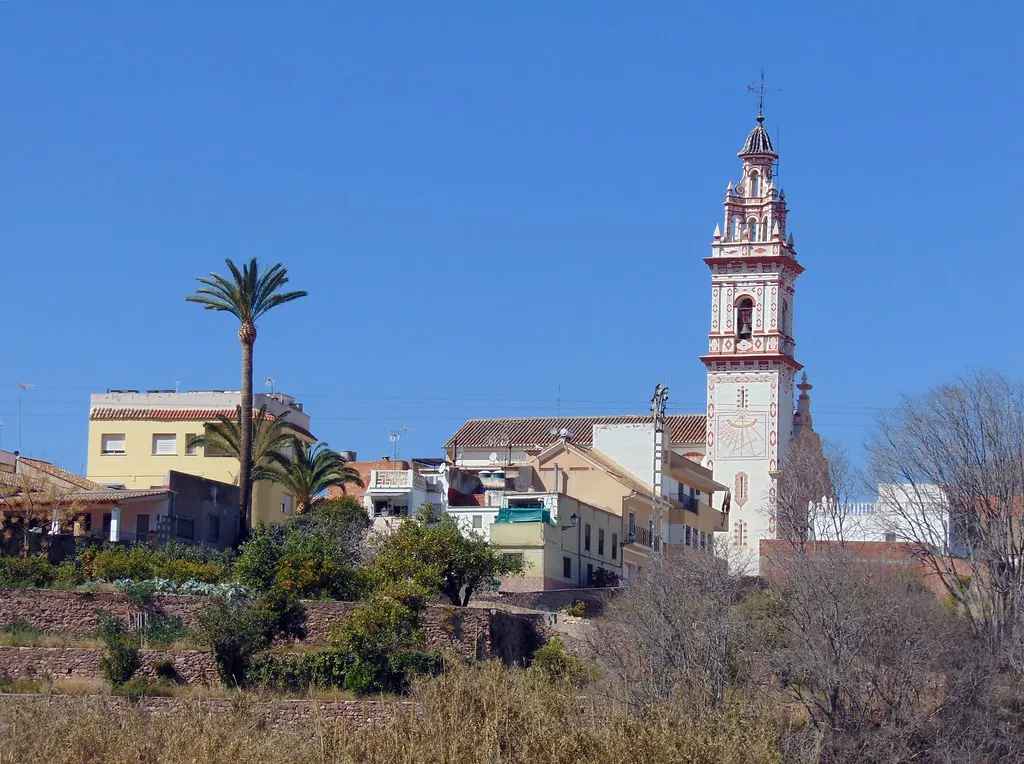
Back in the lanes the eighteenth-century church of La Purísima offers baroque contrast. Its tower is the reference point for every set of directions: “bajas hasta que ves el campanario”, “subes després de l’església”. Inside, the gold leaf is local, paid for by medieval timber money and later orange profits. The side chapel still bears shrapnel scars from the Civil War; no one has bothered to smooth them over.

Water, Wine and Rabbit

Serra’s prosperity was built on springs. Two public fountains still flow: the Fuente de la Esperanza and the Fuente del Berro. Their water is drinkable, cold enough to numb a plastic bottle in July, and carries the faintest taste of iron. On feast days villagers queue with five-litre jerrycans; the council chlorinates the supply but old habits survive.

That same water irrigated vines until the phylloxera plague hit in 1900. Vines gave way to almonds, then to olives, then to commuter villas for Valencians who wanted clean air. Only one commercial bodega remains, Celler del Garbí, operating out of a converted stable. Its Bobal rosé is the colour of onion skin and slips down at fourteen degrees—dangerously easy on a hot afternoon. The owner keeps English opening hours: 11 a.m.–2 p.m., closed Thursday and Sunday. Turn up outside that window and the place is locked.

Food follows mountain logic: heavy on game, light on seafood. Rabbit appears on every menu, usually grilled over holm-oak embers with rosemary and a squeeze of lemon. Portions are built for people who have just walked three hours; ask for a half-ration (“media ración”) if you are not ravenous. Vegetarians get eggs, cheese and the seasonal vegetable stew called “olleta de blat”—think Valencian Scotch broth with chickpeas and pumpkin.

Trails, Bells and Bangs

The village sits inside the Sierra Calderona Natural Park, so footpaths start at the last streetlamp. The classic outing is the Pico del Águila, a 572-metre summit that takes two and a half hours up, slightly less down. The route is way-marked but signs are in Valencian; download the Wikiloc file while you still have Wi-Fi. Spring brings lavender and bee-eaters; autumn smells of damp pine and wild thyme. Mid-summer starts should begin by seven; after ten the heat ricochets off the rock.

Mountain-bike tracks spider out along old charcoal paths. The surface switches from packed grit to fist-sized stones without warning—hybrid tyres will not enjoy the experience. Climbers head to the Barranco de la Maimona, a limestone gorge with twenty-five bolted routes graded 5a to 7b. Abseiling groups also use the ravine; if you hear shouts above the pines, look up before you stroll underneath.

Fiestas punctuate the calendar like drumbeats. March brings firecracker-laden Fallas leftovers; June has the romería pilgrimage to the castle ruins; August hosts the main summer fair with nightly street discos that finish at three. Mid-July is the loudest: the Moros y Cristianos fusillade rattles windowpanes for seventy-two hours straight. Light sleepers should book outside the old quarter or bring ear-plugs made of concrete.

Euros, Mondays and Misconceptions

Practicalities first: there is no cash machine. The nearest ATM is twelve kilometres away in Náquera, and the village supermarket does not accept cards for purchases under ten euros. Bring notes. Monday is shutdown day: only Bar la Plaça keeps its doors open, and the bakery till falls silent at eleven. Plan accordingly.

Public transport exists but demands patience. The L-210 bus leaves Valencia’s Canovas station at 07:15 and 15:30, returning at 07:00 and 18:00. The journey takes fifty-five minutes on a good day; add another twenty if the driver stops for cigarettes. A single ticket costs €2.45—bargain by UK standards, but the last service back is early for Spanish dinner habits. Driving is simpler: A-23 towards Sagunto, exit 18, then CV-310 for fifteen minutes. Park on Avenida de la Constitución; the centre is too narrow for casual manoeuvres.

What the Map Doesn’t Say

Guidebooks compare Serra to “what Mijas used to be”. The analogy is half-true: both are mountain villages within sight of the sea, but Serra lacks the coach-park infrastructure and the souvenir donkeys. Foreign visitors are still novel enough that the lady running the pastel-coloured bakery will apologise for not speaking English while pressing free almond biscuits into your hand. Accept them; they are excellent.

The village is not picture-perfect. Satellite dishes bloom on ancient walls; half-built extensions wait for the next generation of cash. Winter mist can park itself for days, and August weekends fill with Valencian families who talk loudly and leave crisp packets under the pines. Come expecting flaws and you will forgive them quickly.

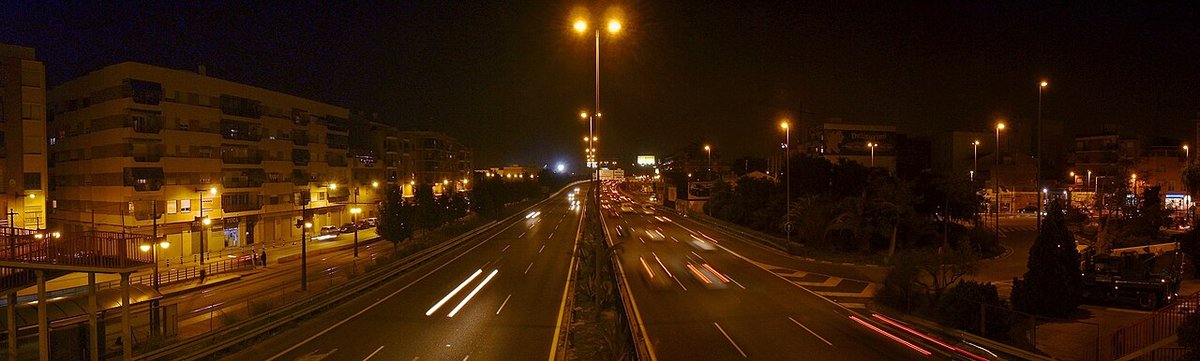
Leave time for the Garbí viewpoint at sunset. The track starts behind the football pitch, climbs gently for twenty minutes, then drops you onto a sandstone lip that faces due west. The Mediterranean turns bronze, the coastal motorway becomes a necklace of headlights, and for a few minutes the only sound is wind through Aleppo pines. No entrance fee, no gift shop, no explanatory panel—just the view and the quiet.

When you descend again the village bars will be shutting. Last orders is ten-thirty, even on a Saturday. Walk back through the dark lanes, past the fountain where someone has left a plastic crate of free loquats, and you will understand why Serra does not bother with marketing departments. The place sells itself—provided you arrive before the baker goes home.

Key Facts

Region
Comunidad Valenciana
District
Camp de Túria
INE Code
46228
Coast
No
Mountain
Yes
Season
year-round

Livability & Services

Key data for living or remote work

2024
ConnectivityFiber + 5G
TransportTrain nearby
HealthcareHospital 5 km away
EducationElementary school
Housing~5€/m² rent · Affordable
CoastBeach 17 km away
Sources: INE, CNMC, Ministry of Health, AEMET

Official Data

Institutional records and open data (when available).

  • Cartuja de Portaceli
    bic Monumento ~3.9 km
  • Castillo
    bic Monumento ~1.2 km
  • Torre de la Ermita
    bic Monumento ~0.1 km
  • Torre de Ría
    bic Monumento ~0.8 km
  • Torre del Señor de la Vila
    bic Monumento ~0.2 km
  • Torre de Satareña
    bic Monumento ~1.4 km

Planning Your Visit?

Discover more villages in the Camp de Túria.

View full region →

More villages in Camp de Túria

Traveler Reviews