Full Article
about Chella
Known for the spectacular Chella waterfall and its Moorish quarter.
Hide article Read full article
The pull of El Salto
Anyone arriving in Chella for tourism is usually told the same thing: head down to El Salto first. The river Sellent has carved its way through the rock here, creating a waterfall known as El Salto de Chella. It is not presented as a grand natural spectacle, just a stretch of river that the town has used for as long as people can remember.
In summer, locals swim in the pool below the falls. The spot is often called La Playa Salvaje, literally the Wild Beach, though it is simply a natural bathing area beside the cascade. After heavy rain the water turns cloudy and the path can become muddy, so conditions vary depending on the weather. There is no elaborate infrastructure or interpretation. It is a river corner that belongs to the village.
The appeal lies in that simplicity. Walk down, sit by the water, watch how the rock has been worn away over time. In warm months the sound of voices carries from the pool. At other times it can feel quieter, shaped more by the flow of the Sellent than by the people who come to it.
Getting there and finding your way in
Chella sits on the CV‑580 between Navarrés and Anna, in the comarca known as the Canal de Navarrés. Some stretches of the road are narrow, though driving is straightforward.
From Valencia, the usual route is to head down to Xàtiva and then continue up towards the Canal de Navarrés along regional roads. The final section is calmer and less busy.
Parking is rarely complicated. Cars are left in streets near the centre or at the entrances to the village, and the rest of the way is done on foot. On Saturday mornings there is a weekly market, so there is more movement than usual, though nothing excessive. There are no paid blue zones to worry about.
Once parked, Chella is easily covered at walking pace. The streets are straight, the houses low. The scale of the place means you are never far from the centre or from the paths that lead out towards the countryside.
A working village, not a monumental one
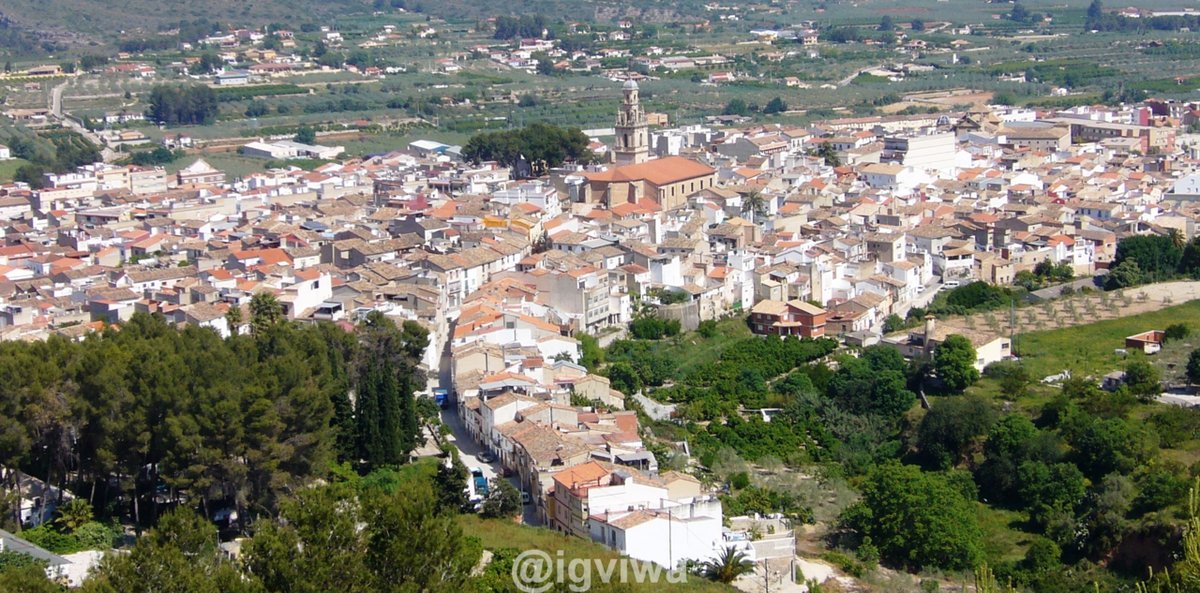
Chella has just over two thousand inhabitants. It is not a monumental town filled with major landmarks. It is an agricultural village that continues to function as one.
The most visible building is the Iglesia de la Asunción. The current church was built after the eighteenth‑century earthquake that affected much of the surrounding area. It stands in stone, with its bell tower rising above the rooftops, and a square in front where there is usually some movement at certain hours of the day.
Beyond the church, the interest lies in everyday details. In some windows and small displays you may spot encajes de bolillos, traditional bobbin lace. Women from the village make them more out of custom than for business. It is a quiet continuation of a craft, present but not advertised.
Chella’s centre has changed little over the years. There are no grand avenues or major museums. What you see is a place shaped by routine, agriculture and long familiarity among neighbours. Visitors looking for a catalogue of monuments will not find it here. Those curious about how a small Valencian village lives from one season to the next may find that more revealing.
Eating and local flavours
Food in Chella follows the same logic as the town itself. There are local bars where you can have coffee, beer, a sandwich or a tapa. They do what is expected of them, without trying to be anything more.
The cooking that really defines the place is home cooking. Arroz caldoso, a soupy rice dish, appears frequently at family gatherings. Gazpacho manchego is also common. In this area it is prepared with rabbit and torta cenceña, an unleavened flatbread broken into pieces and cooked in the stew. It is a substantial, rural dish rather than the chilled tomato soup that some travellers associate with the word gazpacho.
February brings another small culinary marker. Around the feast of San Blas, many households prepare torticas de cacahuete, peanut biscuits made as part of the local tradition. They are tied to the festive calendar more than to commerce, another example of how domestic life sets the tone.
Festive days and quieter moments
The calendar shapes Chella’s rhythm. February gathers several celebrations in quick succession: Candelaria, San Blas and the Cristo del Refugio. There are processions, food shared in the street and noticeably more activity than usual.
August is marked by Moros y Cristianos, a festival found in many parts of the Comunidad Valenciana. In Chella it means plenty of gunpowder, comparsas in costume and people returning to the village for their holidays. The population swells and the streets fill.
Anyone seeking calm would do well to avoid those days. Outside the main fiestas, the pace is different. Spring is often the most pleasant time for walking in the area. The countryside is green and the heat has not yet become intense. It is a good season to combine time in the village with time along the paths that follow the river and cross the surrounding landscape.
Two paths and a simple tip
From the village, the PR‑CV 113 heads towards El Salto de Chella and other nearby spots. It is a long circular route that takes several hours. Carry water, as there is nowhere to buy anything once you are outside the urban area.
The GR‑332 also passes through the area on a stage that links villages in the Canal de Navarrés. This is a long‑distance path used by hikers who are already on their way from one place to another.
The most direct advice is straightforward: go down to El Salto in the morning, then return to the village for lunch. After mid‑afternoon the pace drops noticeably. Nights are quiet and the next day starts early. That is simply how Chella works, following the habits of a small agricultural community beside the Sellent.