Full Article
about Quesa
Famous for the Charcos de Quesa, naturally beautiful pools.
Hide article Read full article
A village that keeps its own pace
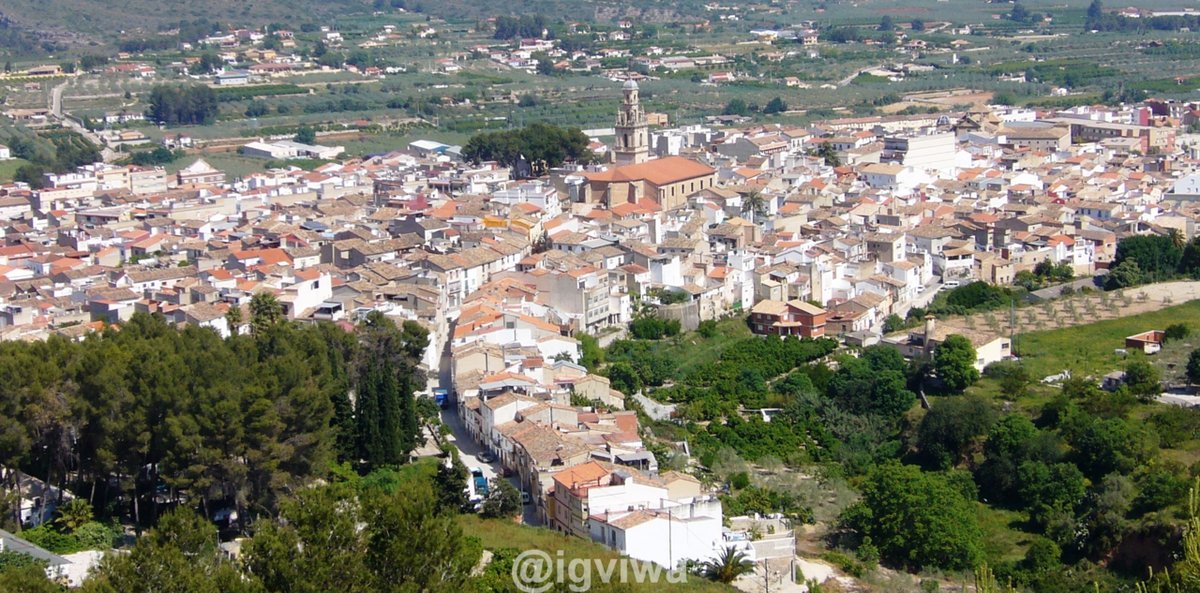
The first impression in Quesa is straightforward: things move slowly here. Tourism in Quesa does not revolve around weekend coach trips or tightly packed itineraries. Life continues much as it always has, with fields stretching out around the village, quiet streets, and neighbours who know each other.
The population sits at around 700 people, and that scale shapes everything. Pale houses line the streets, some with tiled façades, and the parish church anchors the centre. Beyond it, terraces of crops and pine forest define the landscape. Quesa does not try to draw attention to itself. It is the kind of place that reveals itself gradually, once expectations are set aside.
Streets, stonework and everyday history
The main axis of the village is Calle Mayor, also known as Carrer Major. Here stands the parish church of San Pedro, built at the beginning of the 20th century after the previous church became too small. Its bell tower rises above the rooftops and works as a useful reference point while walking through the village.
From this central street, others branch off, including Carrer dels Apòstols and Carrer Sant Jaume. Along them, traces of older architecture remain visible: stone doorways, traditional iron grilles, and façades that have been maintained without losing their original form. This is not a monumental historic quarter. It reflects a farming village that has updated itself over time while holding onto its structure.
Just outside the centre sits the old public washhouse. It is a simple construction beside a small watercourse. For decades, it served as a meeting place where much of the village gathered to do the laundry. Today it takes little time to visit, yet it helps sketch a picture of daily life not so long ago.
Walking further out, the surroundings shift into agricultural land. Terraced fields appear, planted with olive trees and almond trees. During harvest seasons, whether for almonds or olives, activity increases noticeably. From some of these paths, nearby villages such as Enguera and Bicorp can be seen across the valley.
Walking out to the Charcos de Quesa
Many visitors come for the Charcos de Quesa. These are a series of natural pools set within a ravine, formed by water flowing between rock walls and pine forest. In summer, they become a refuge from the heat.
Access is usually on foot via marked trails. The terrain is not mountainous in a demanding sense, but proper footwear is useful. Some sections include loose stones, and after rain there may be mud.
Light changes the feel of the place quite noticeably. Early in the morning or towards the end of the day, the sun falls at an angle and brings out stronger colours in the ravine. Around midday, the sunlight is much harsher.
Food rooted in the land
Cooking in Quesa reflects what has traditionally been grown and produced in the area. Expect hearty dishes, seasonal vegetables, cured meats, and robust olive oil.
Simple stews are common, such as espinacas con garbanzos, a combination of spinach and chickpeas. Rice dishes often include rabbit or chicken. Mushrooms appear in autumn dishes when the season allows. Menus are not extensive and there is little emphasis on experimentation. The focus is on homemade food that is filling and straightforward.
Festivities through the year
The main celebrations centre on San Pedro, the village’s patron saint, at the end of June. Religious events take place alongside open-air parties, music, and activities organised by local groups.
August brings another lively period, particularly at night. Many people who have moved away return for a few days, and the population temporarily grows. The atmosphere becomes busier than usual during this time.
There are also traditions tied to rural life. Olive harvesting in autumn and family pig slaughters in winter continue in many households, maintaining long-standing customs.
A short visit, unhurried
Quesa is easy to cover in a limited amount of time. A morning is enough to walk through the centre, visit the washhouse, and follow some of the paths that circle the village.
With more time, the natural choice is to head towards the Charcos or wander among the terraces. There are no large museums or major landmarks to structure a visit. The rhythm here is simpler: walk for a while, take in the landscape, and slow down.
Common mistakes to avoid
One frequent assumption is that everything lies just a few minutes apart on foot. On a map, distances appear short, but rural paths often take longer routes than expected. Summer heat can also make those walks more demanding.
Another issue is driving into very narrow streets in the centre. Some areas are better approached on foot after parking at the edges. It makes moving around easier and avoids awkward manoeuvres.
Anyone heading towards the ravines in summer should take water and some form of sun protection. Shade is limited in certain stretches.
What becomes clear after a while
Quesa does not depend on large monuments. Its interest comes from the combination of ravines, pine forests and terraced fields that surround it. A walk through these landscapes offers a clearer sense of how the area works and how people have lived with it over time.