Full Article
about Alcocer de Planes
Small, quiet village on the Serpis river; perfect for switching off in the countryside.
Hide article Read full article
A quiet road into the hills
Reaching Alcocer de Planes usually means heading inland from Alicante towards Alcoy, then joining the CV‑700. The final kilometres twist through the hills. It is not a fast road, and it suits the place to arrive without rushing. From Alicante the journey takes about an hour, depending on traffic as you leave the city.
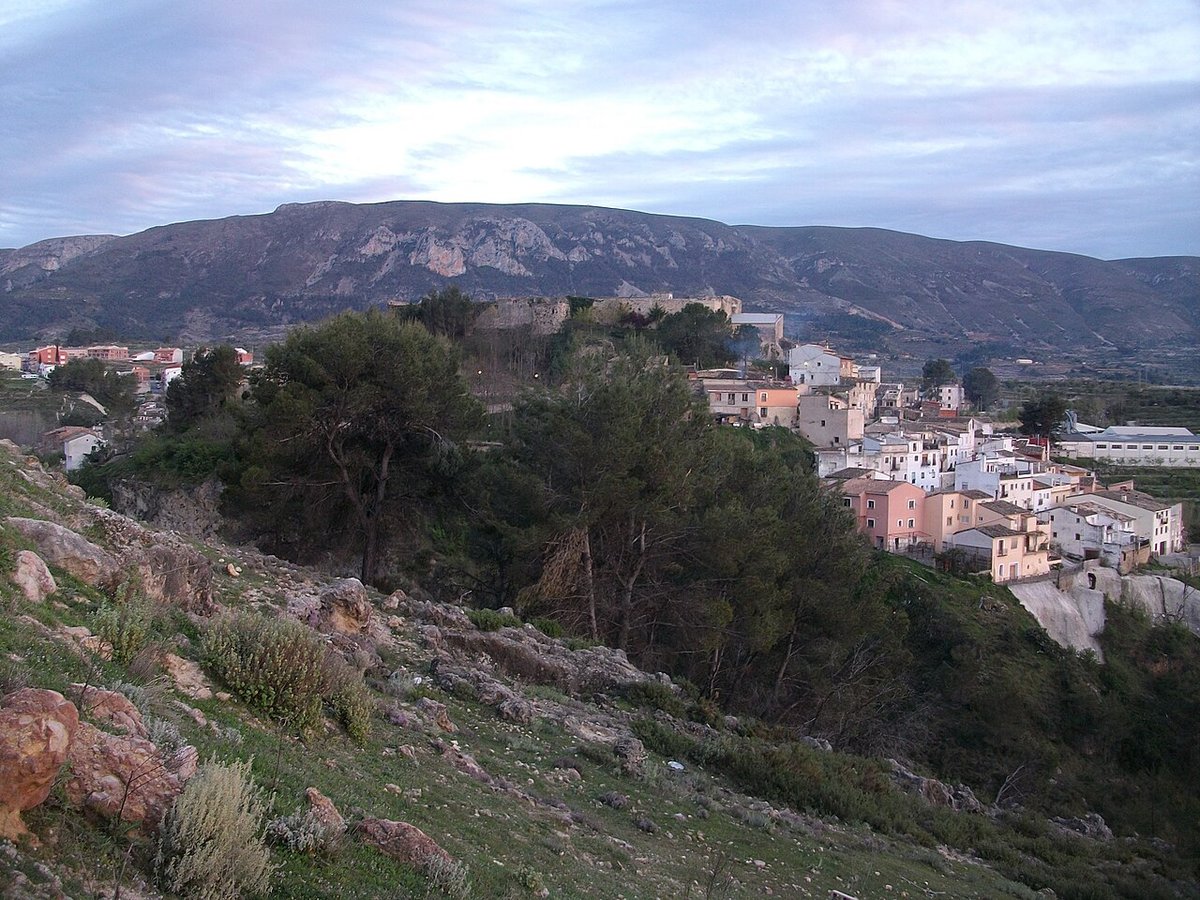
The village reveals its scale almost immediately. There are only a few streets and just over two hundred residents. The houses are typical of this part of El Comtat, built with stone walls and tiled roofs. Near the centre there is often a space where you can leave the car. If not, parking tends to be slightly uphill, followed by a short walk back down.
This is a small settlement in the interior of the province of Alicante, in the Comunidad Valenciana. It does not present itself as a major destination. It feels more like a pause in the landscape, a place that forms part of a wider rural route through the comarca.
Spring and autumn are generally the best times to come. In February and March the surrounding almond trees blossom, changing the look of the slopes. In autumn the fields are drier and the terraced plots take on ochre tones. Both seasons make walking more comfortable than the height of summer.
A modest local heritage
Alcocer de Planes has no grand monuments. The Iglesia de Sant Miquel Arcàngel stands on the main square and serves its purpose. It is a simple building, much like many churches in the smaller villages of the comarca.
A walk around the centre does not take long. The streets are short, some of them narrow, with stretches of cobbled paving. Within an hour the whole village can be seen at an unhurried pace. What tends to hold the attention are the small details rather than major landmarks: old wooden doors, worn stone walls and little vegetable plots pressed up against the houses.
Once you step beyond the last houses, the landscape opens into terraced farmland. Olive trees and almond trees dominate, with some vineyards depending on the area. This is the typical agricultural scenery of inland Alicante. It is not dramatic, yet it represents the comarca well and explains how villages like this have sustained themselves over time.
The terraces shape the hills into horizontal lines, following the contours of the land. They reflect a practical approach to farming on slopes, where every patch of soil has been adapted for cultivation. The setting is quiet, with low hills rather than high peaks, and broad views across the valley.
Simple ways to spend the day
Several paths lead out from the village into the surrounding fields and low hills. These are straightforward walks, suitable for a gentle outing rather than a demanding hike. They offer the chance to move at a slower pace and observe the rural environment closely. There are no major summits or long mountain routes here.
The local cooking follows the logic of the countryside. Ingredients such as pulses, olive oil and nuts form the base of many dishes. Rice is prepared baked in the oven or cooked in a casserole. The results are filling and substantial, designed to satisfy rather than impress.
For anyone interested in photography, midday is best avoided. The light across much of the valley can be harsh at that time. Early morning and late afternoon usually work better for capturing the village and the nearby terraces. When in season, the almond blossom adds contrast to the hillsides and can transform otherwise muted scenery.
The pace of a visit reflects the size of the place. There is no long list of attractions to tick off. Instead, the appeal lies in wandering through the streets, stepping out onto the paths and observing how the village relates to its fields. It is a setting that rewards attention to texture and light rather than spectacle.
Traditions without ceremony
The main local festivities revolve around Sant Miquel Arcàngel at the end of September. They typically include religious events and some gatherings among neighbours. Participation comes largely from the people of the village itself.
At Christmas the atmosphere remains calm. Families meet, there is little noise and not much movement in the streets. This is the usual rhythm in villages of this size, where daily life is closely tied to the seasons and to long‑standing routines.
There are no large-scale celebrations or events that draw big crowds from outside. The focus stays local, centred on shared meals, religious observance and social contact among residents. Visitors who happen to be there at these times will find a community marking its calendar in a straightforward way.
Planning the stop
The most direct route from Alicante is to head towards Alcoy and then continue along the CV‑700 towards Planes. From Planes the turn-off to Alcocer de Planes is short. The last sections of road are narrow, with bends and mainly local traffic.
Spring and autumn are generally the most pleasant months for walking. In summer the heat builds by mid‑afternoon. In winter some mornings bring fog rising from the valley, which can soften the views but also reduce visibility on the road.
Comfortable footwear is advisable. Between the cobbled streets and the dirt tracks outside the village, thin-soled trainers are quickly felt underfoot. Time planning should also be realistic. The village can be seen fairly quickly, and many visitors combine a stop here with other places in El Comtat.
Alcocer de Planes suits those who are already travelling through the region and want to understand its rural character. It offers a compact example of inland Alicante: stone houses, terraced fields and a small church on the square. There are no headline sights, yet there is a clear sense of place shaped by agriculture and modest local traditions.