Full Article
about Alfafara
Municipality set in the Sierra de Mariola, noted for its archaeological sites and rock-cut mills.
Ocultar artículo Leer artículo completo
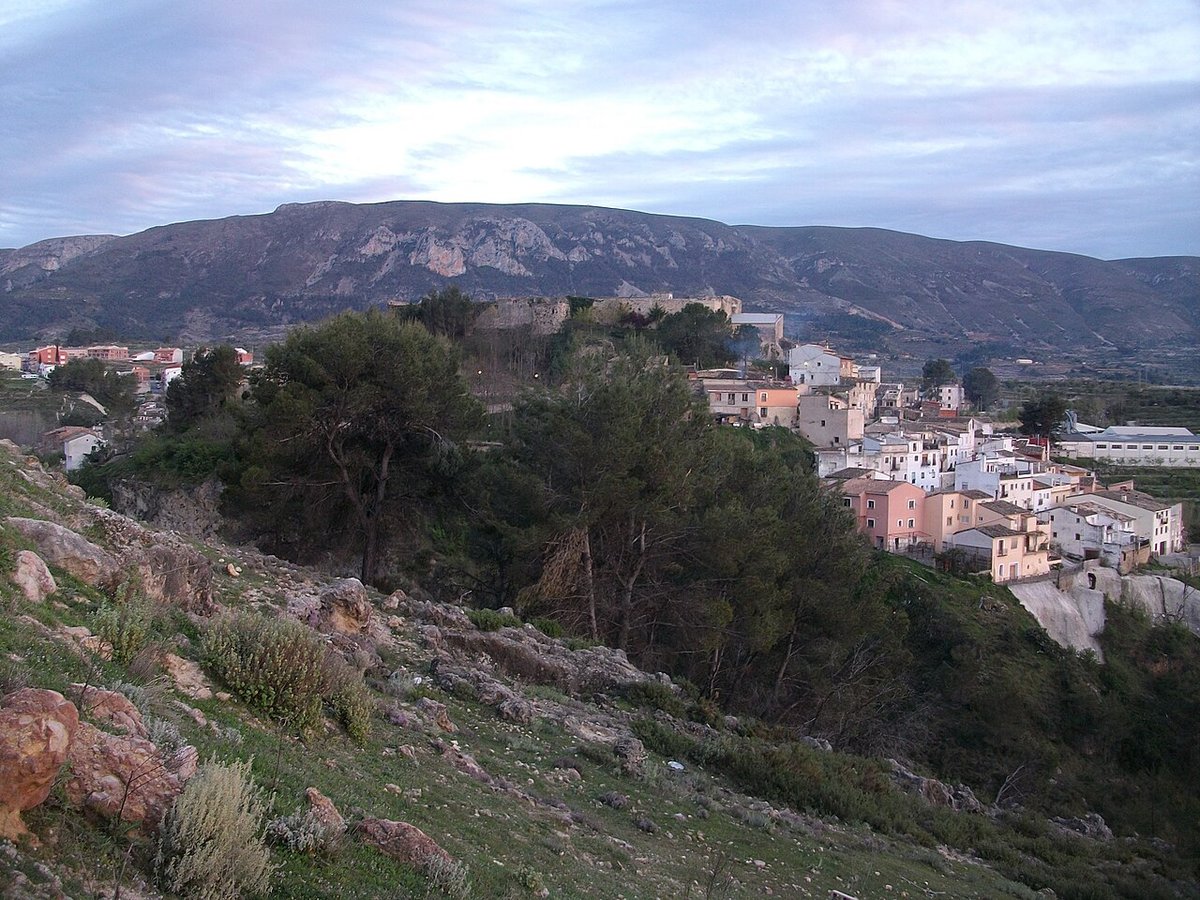
The village bakery opens at seven, but the bread's usually gone by eight. That's your first lesson in Alfafara time – a rhythm dictated by villagers who've been buying the same anise-scented rolls for forty years, not by TripAdvisor reviews. Four hundred souls cling to this limestone ridge at 550 metres, where the Mediterranean turns mountainous and the Costa Blanche feels like a rumour someone once heard.
Stone, Silence and Switchbacks
Getting here requires commitment. The sat-nav will try to kill you with shortcuts that dissolve into gravel, so stick to the CV-81 from Alcoy, then crawl the final four kilometres of hairpin bends that climb through Aleppo pines. The road narrows until two Fiats couldn't pass without exchanging insurance details, yet somehow laundry vans manage daily deliveries. Park where the tarmac ends – there's no traffic warden because there's no traffic.
What greets you isn't picture-postcard Spain. Houses huddle shoulder-to-shoulder, their stone walls the colour of burnt cream, roofs patched with terracotta tiles that have weathered centuries of Levante winds. Narrow lanes tilt at angles that would give health-and-safety officers palpitations. Windows remain resolutely shuttered against midday heat; the only movement might be an elderly woman in black, moving at geological speed towards the church.
San Miguel Arcángel squats at the village heart, its medieval bones disguised under later additions. Inside, the air smells of beeswax and centuries. There's no admission charge, no audio guide – just a single bulb illuminating a 16th-century retablo that someone's great-grandfather helped restore. The priest lives next door; ring the bell if you want to see the sacristy's collection of priestly vestments, but remember this isn't a heritage attraction – it's someone's workplace.
Walking Through Thyme and History
Alfafara's real cathedral stands outside the village proper. The Sierra de Mariola stretches northwards, a protected expanse where thyme, rosemary and lavender grow wild between the pines. Footpaths radiate like veins from the village, following ancient mule tracks that once connected mountain hamlets when these routes mattered more than motorways. The GR-7 long-distance path passes within two kilometres; local trails link to it like tributaries.
Walk south-east for twenty minutes and you reach the Font de l'Arque, a spring where women washed clothes until the 1970s. The concrete tubs remain, moss-covered now, surrounded by carob trees and the ruins of stone terraces that once grew almonds. Continue upwards for another hour and the Mediterranean appears – a silver sliver between mountains, 30 kilometres distant but looking close enough to touch.
The mirador isn't signed. You'll simply emerge onto limestone slabs where griffon vultures ride thermals at eye level. On clear winter days, the outline of Ibiza floats on the horizon like a mirage. Bring water – there's no café kiosk, no souvenir stall, just the wind and the smell of pine resin heating in the sun.
What to Eat When There's Nowhere to Eat
The village supports one proper restaurant, Casa El Tío David, open Thursday through Sunday. British walkers rave about the cordero asado – lamb chops grilled over vine cuttings, served with potatoes roasted in the same wood-fired oven. The owner speaks enough English to translate the menu, but why bother? You're eating what Miguel's cooking today, probably a rice dish baked with local rabbit and beans from his mother's garden. Three courses with wine costs less than a London sandwich.
Between meals, the bakery on Carrer Major sells those anise rolls alongside country loaves dense enough to build walls. The village shop – part grocery, part ironmongers, part gossip exchange – stocks tinned tuna, local olives and surprisingly good wine from neighbouring Bocairent. Buy supplies for a picnic; there are no cash machines here, so draw euros before you leave Ontinyent.
Sunday complicates things. Spanish families arrive for lunch, filling Tío David's twenty tables by 1.30 pm sharp. They'll drive from Alcoy or Ontinyent, three generations squeezing around plates of paella, children running between tables while grandparents sip cafe con leche. Turn up without a reservation and you'll be eating crisps in the square.
When the Village Plays Trumpets
August transforms everything. The fiesta mayor erupts mid-month with fireworks that echo off the limestone cliffs like artillery. Brass bands parade through streets too narrow for parades; locals decorate balconies with banners, competing to outdo neighbours. British expats in nearby villages arrive with earplugs and stories about previous years when the celebrations lasted until dawn.
September brings the religious festival of San Miguel, more sedate but equally immersive. Processions wind past houses where residents have laid out tables of almond sweets and mistela – a sweet wine that tastes like liquid Christmas. Visitors are expected to take a glass; refusing would be like declining a cup of tea in Yorkshire, only with more theological implications.
Winter shrinks the village further. When temperatures drop to minus five, wood smoke drifts from chimneys at all hours. The bakery adds hearty empanadas to its repertoire; walkers emerge from misty trails to find the bar's fireplace blazing. Snow falls perhaps twice yearly, turning the surrounding peaks white while the village remains grey-stone and defiant.
The Practical Truth
You need a car. Public transport reaches the neighbouring town of Bocairent, seven kilometres distant, but the connecting bus only runs during school term-time. Taxis must be booked a day ahead; drivers know the fare to Alfafara because they've been charging the same amount since 2005. From Alicante airport, it's 110 kilometres – allow ninety minutes because you'll want to stop for photographs.
Accommodation means renting. Three village houses offer tourist lets, booked through Spanish websites that translate oddly. Expect stone walls a metre thick, Wi-Fi that works when the wind blows the right direction, and neighbours who'll offer tomatoes from their garden. There are no hotels, no swimming pools, no spa treatments – just the mountains and the silence you claim to want.
Mobile signal vanishes inside most houses. Download offline maps before leaving the main road; signposting on walking routes assumes you grew up here. The tourist office in Bocairent provides leaflets, all in Spanish, but the diagrams are clear enough if you can count kilometres.
Leaving Before You Arrive
Alfafara isn't for everyone. Some visitors last two hours before fleeing towards coastal cocktails and proper restaurants. Others extend their stay, seduced by mornings where the only sounds are swallows and the church bell counting slow hours. The village offers no revelations, no Instagram moments – just the chance to remember what quiet sounds like when traffic and notifications fall silent.
Drive away at dusk and the village shrinks in the rear-view mirror, windows glowing amber against darkening mountains. You'll carry the smell of wood smoke and thyme for days, a sensory souvenir no airport shop sells. Whether that's enough depends on what you came searching for – and whether you realised you were searching at all.