Full Article
about Almudaina
Tiny farming village dominated by an Islamic tower; total quiet and top-quality cherries.
Hide article Read full article
First Light Over El Comtat
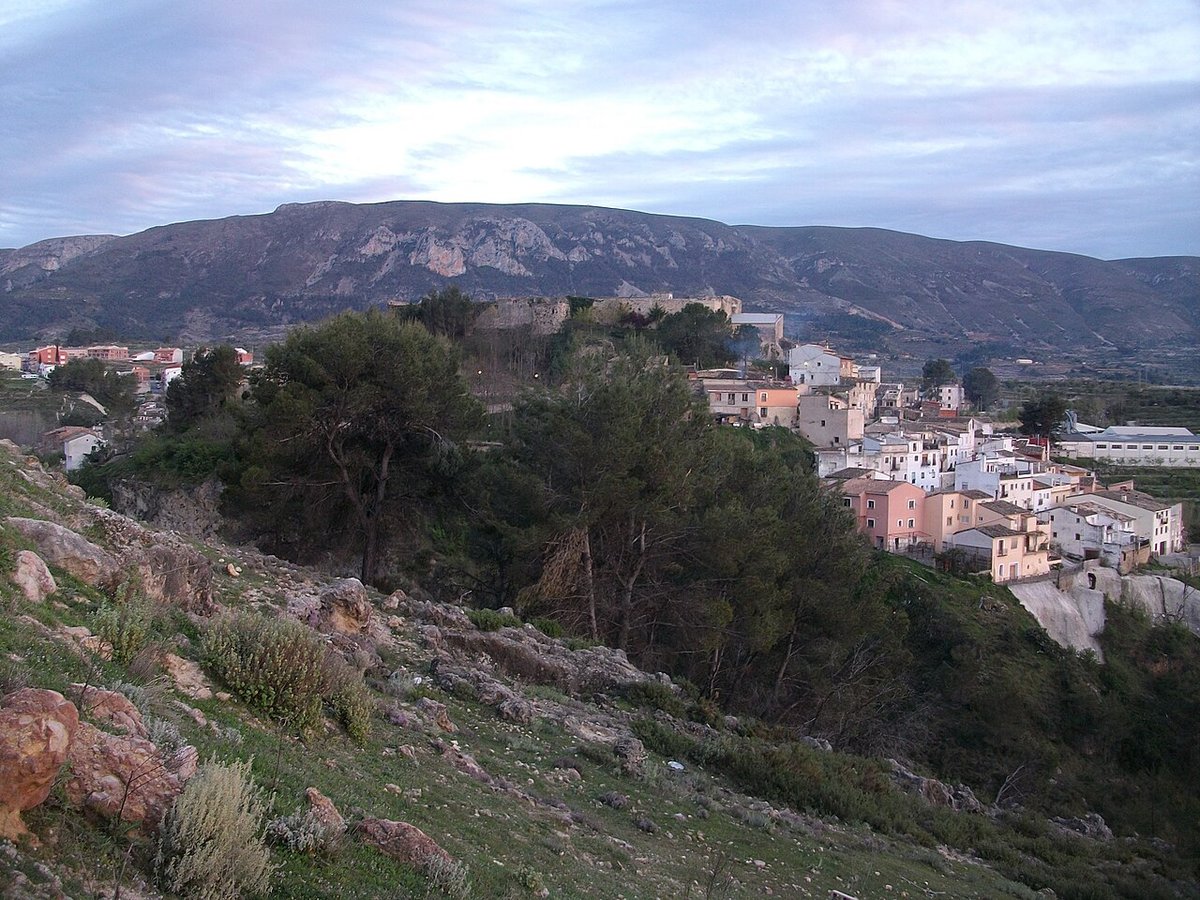
At seven in the morning, when the sun begins to brush the slopes, Almudaina is still half asleep. The light reaches the dry-stone terraces first, then slowly slips down into the village’s narrow streets. The air carries the smell of damp earth and last night’s spent firewood. From almost any edge of the urban centre, the same view unfolds: almond trees, the occasional carrasca oak and mountains closing in the horizon of El Comtat.
Almudaina has around 128 inhabitants and sits in a little-travelled corner of the comarca, just over 500 metres above sea level. This is mountain country, and it sets the pace. The streets are short, with gentle inclines and cobbled stretches where footsteps echo differently underfoot. Many houses still have dark wooden doors and wrought-iron balconies that creak when opened in the morning.
At the centre stands the church of San Juan Bautista. Its bell tower is visible from almost anywhere in the village. When the bells mark the hour, the sound rebounds off the nearby slopes and lingers for a moment in the valley air.
Walking Among Terraces and Old Paths
It takes very little effort to leave Almudaina on foot. Follow any of the paths that slip between the last houses and you soon find yourself on agricultural tracks that have been here for decades, outlined by dry-stone walls dividing the terraces.
Some of these routes descend towards small ravines where old watering troughs or fountains used by farmers still appear along the way. Signposting is not always clear, so it makes sense to walk slowly and pay attention at junctions. The terrain is not especially demanding, yet in summer the sun falls directly overhead and there is little shade beyond the scattered pine woods.
At certain points the landscape opens wide and the whole valley of El Comtat comes into view. Tiny white villages dot the distance, patches of cultivated land break up the slopes and mountain ranges layer one behind another. On clear days, they fade into bluish tones towards the horizon.
The rhythm here is unhurried. These are paths shaped by agricultural use rather than tourism, and they still feel that way. The dry-stone walls, built without mortar, trace the contours of the land and speak quietly of years of manual labour on steep ground.
Almond Trees and Mountain Cooking
The agricultural landscape also dictates what ends up on the table. Almond trees encircle the village and in February they usually cover the hillsides with white and pale pink blossom. The display is brief, sometimes lasting barely a couple of weeks if the wind picks up.
Almonds find their way into many kitchens in the area, particularly in traditional sweets. Homemade embutidos, cured sausages prepared locally, are common too, alongside hearty spoon dishes once cooked in country houses during the winter months. It is inland cooking, filling and practical, designed to sustain long working days in the fields.
This is food shaped by altitude and season. Winters can be sharp in the mountains, and recipes reflect that need for warmth and substance. Nothing feels elaborate. Instead, dishes are rooted in what the land offers and what families have preserved or produced themselves.
Properly Dark Nights
When night falls, Almudaina changes completely. Street lighting is limited, and it only takes a short walk away from the village centre for the sky to fill with stars. In summer, if the air is clear, the milky band of the Milky Way is visible without difficulty.
Even on warm evenings it is wise to carry a jacket. In this mountain setting the temperature drops quickly after midnight. The stillness becomes more noticeable once the bells fall silent and there is little sound beyond the occasional breeze moving through trees.
For anyone used to urban light pollution, the darkness can feel striking. The outlines of the surrounding mountains turn into silhouettes, and the village settles into a quiet that is increasingly rare.
Festivities Tied to the Rural Calendar
Life in Almudaina still follows the rhythm of the agricultural year, and local celebrations reflect that link. The main fiesta is usually held around San Juan Bautista at the end of June. During these days the village becomes livelier than usual, with religious events, music and gatherings in the square.
In January there is also the traditional blessing of animals associated with San Antonio, a custom found in many farming villages across the region. It is a reminder of the importance livestock once held, and in some places still does, in rural life.
Over the Christmas period, neighbours continue to gather around bonfires and share homemade sweets. This is a common scene in small inland villages in the province of Alicante, where winter evenings draw people together outdoors despite the cold.
These occasions do not transform Almudaina into a busy destination. Instead, they offer a glimpse of how traditions remain woven into daily life in a village of just over a hundred residents.
When to Visit
Spring and autumn are generally the most pleasant times to walk in the surroundings of Almudaina. Temperatures tend to be mild and the countryside shifts in colour almost week by week.
For almond blossom, the usual window falls between February and early March, though much depends on how the winter has been. A colder season may delay the flowering, while milder weather can bring it forward.
High summer brings intense heat at midday. If visiting at that time of year, early starts make a difference. Before nine in the morning the village is quiet and the air still carries a trace of coolness drifting down from the sierra.
Almudaina does not offer grand monuments or a packed schedule of sights. What it provides is simpler: mountain air, old paths and a landscape shaped by terraces and almond trees. For a few hours or a few days, that is more than enough.