Full Article
about Benilloba
A town with a textile tradition set in a privileged natural setting; it still has a working flour mill.
Hide article Read full article
A Detour into El Comtat
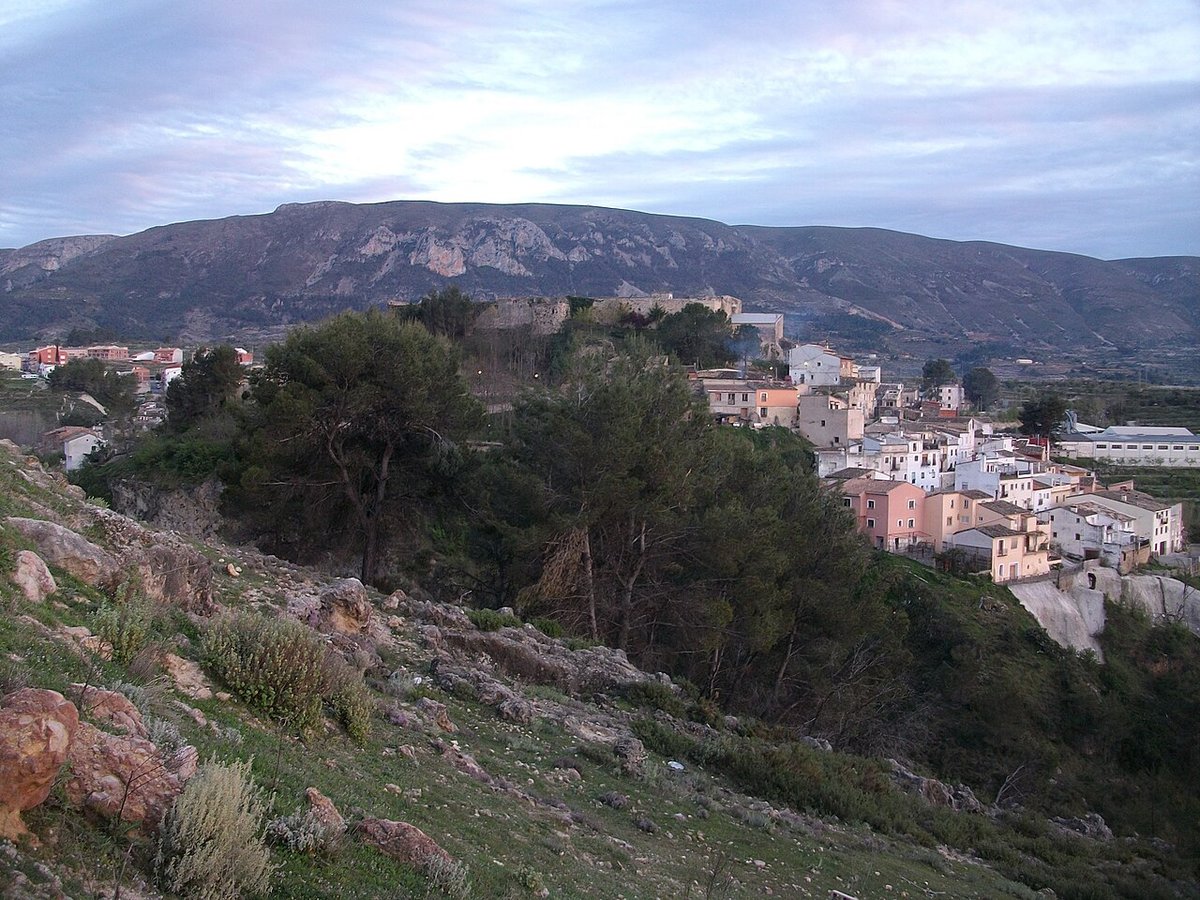
Benilloba feels like the kind of place you reach after turning off the main road for a short break and discovering that everything suddenly moves more slowly. Set in the comarca of El Comtat, in the interior of Alicante province, it sits among terraced fields that fall towards the Serpis valley. The Mediterranean coast is relatively close, yet the contrast is immediate.
Tourism in Benilloba does not follow the pattern of better-known towns along the Costa Blanca. There are no queues and no streets designed with visitors in mind. Around 740 people live here. Cars are parked wherever space allows, and locals glance up with quiet curiosity as you cross the main square. Spend a little time walking between almond trees and vegetable plots and it becomes clear what defines this place.
At just over 500 metres above sea level, Benilloba still holds on to much of the agricultural landscape that has shaped this part of inland Valencia. It is not a rural museum and does not attempt to present itself as one. This is a working village where farming remains part of everyday life and where many things continue much as they have for years.
Streets That Still Belong to the Village
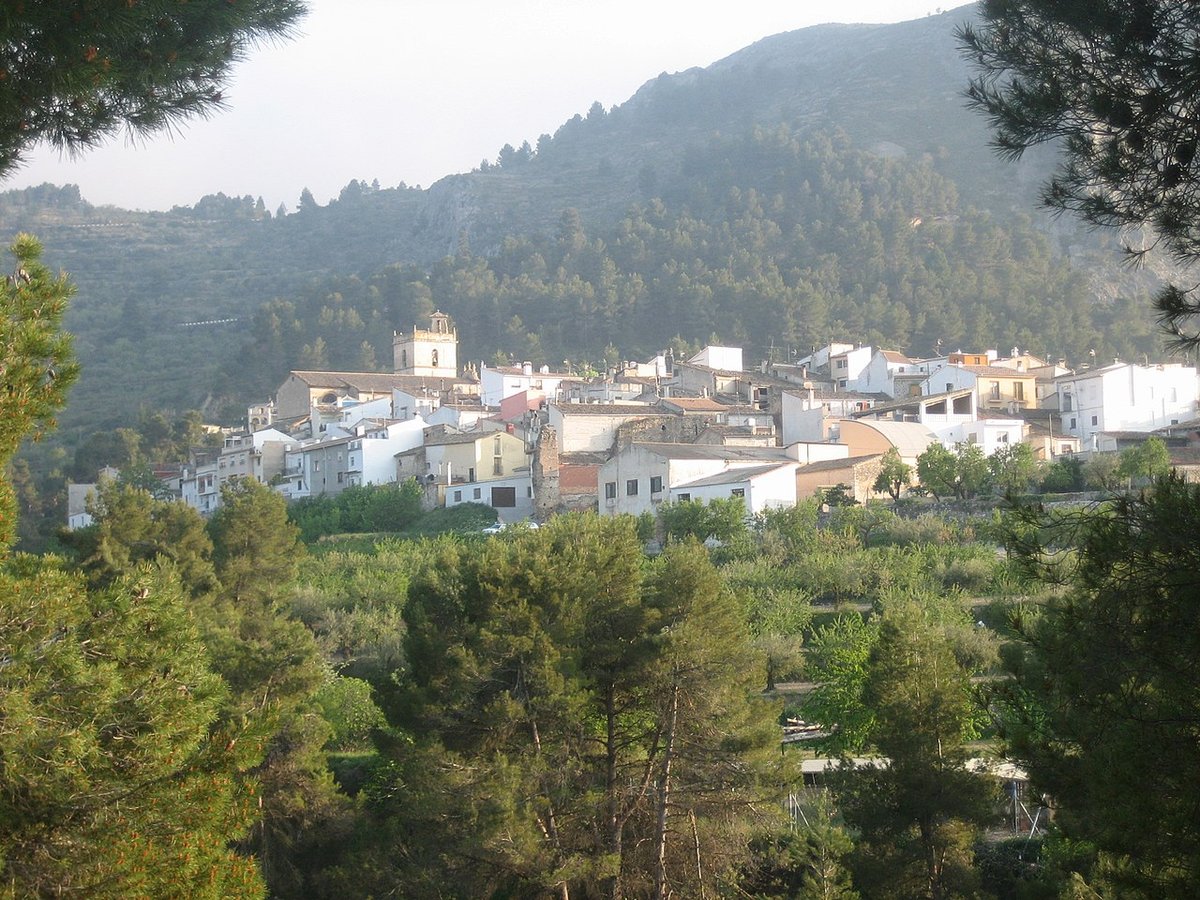
The historic centre can be covered quickly, though it is worth slowing down. The streets are narrow, lined with white façades, iron window grilles and roofs of traditional curved terracotta tiles layered one above another. It is the sort of urban fabric where small details catch the eye: an old wooden door, an uneven wall, a house restored without being turned into something glossy and modern.
The parish church of the Purísima Concepción is one of the most visible buildings in the village. It is not monumental in scale. Instead, it fits the overall tone of Benilloba: simple, well cared for and woven into daily life.
Many of the houses have been renovated with respect for what was already there. The village does not feel like a freshly painted rural stage set. You can still spot former animal pens, small courtyards and features linked to agricultural work.
Arrive in late winter or early spring and the surrounding countryside changes noticeably. The almond terraces come into blossom and the valley lightens in tone. The exact timing varies from year to year, depending on the cold, yet when the flowers appear the landscape feels transformed.
Walking the Serpis Valley
One of the most natural ways to experience Benilloba is simply to leave the village on foot. Several rural tracks begin on the outskirts and wind between terraced fields, small plots and denser vegetation closer to the river.
Not all of these paths are marked as official walking routes, so it is sensible to ask locally or check the route carefully before setting out. After periods of heavy rain, certain stretches can change quite a bit.
Even so, it is easy to find yourself on long-established agricultural tracks where old tools sometimes lie abandoned, dry-stone walls line the way or a small spring sits tucked among the trees. This is not technical hiking. It is a gentle walk through land that has been worked for generations, shaped by human hands as much as by nature.
The Serpis valley itself provides the backdrop throughout, giving a sense of continuity between the village and its fields. The connection between settlement and farmland is clear, and that relationship remains central to understanding Benilloba.
Cooking from the Interior
Food in and around Benilloba reflects the traditions of inland Valencia. When the weather turns cold, dishes tend to be hearty. Much of what appears on the table comes from nearby vegetable plots.
Greens such as chard, aubergine and cauliflower feature regularly, often accompanied by cured sausages or traditional stews. The cooking is practical and rooted in what is grown locally.
Sweets made with almond or honey are also common, which makes sense given the crops that surround the village. Almond cultivation, in particular, leaves its mark not only on the landscape but on the kitchen as well.
This is not a gastronomic scene created to attract travellers from afar. It is home cooking, the kind that has long been prepared in this comarca. The appeal lies in its continuity rather than in innovation.
Festivals That Belong to the Neighbours
The main fiestas are usually held in August. During those days, the atmosphere shifts noticeably. More people fill the streets, music carries across the square and religious events take place alongside activities organised by local peñas and associations. In many Spanish villages, a peña is a social group of friends or neighbours who come together to arrange events during festivals.
There are no elaborate productions or endless programmes of events. The celebrations remain closely tied to the residents. Evenings tend to centre on the main square, with families sitting outside once the heat begins to fade.
Throughout the year, smaller celebrations appear, often linked to religious traditions or moments in the agricultural calendar. These occasions reinforce the rhythm of village life, which still turns around the seasons.
Reaching Benilloba
From Alicante city, the most common route heads inland along the A‑7 before continuing on regional roads that cross areas of olive and almond trees. The journey usually takes a little over an hour, depending on traffic and the exact starting point.
On arrival, visitors typically park at the edges of the village and continue on foot. The historic centre is compact and many streets are narrow, so walking quickly becomes the most practical way to get around.
Benilloba is not the sort of destination that fills an entire weekend with scheduled sights. It works better as a calm stop within El Comtat: a stroll through the village, a walk across the terraces and a sense, increasingly rare, of being somewhere that still revolves around the land.