Full Article
about Benimarfull
Municipality known for its sulfurous waters and spa; quiet rural setting
Hide article Read full article
A dot on the map that makes you slow down
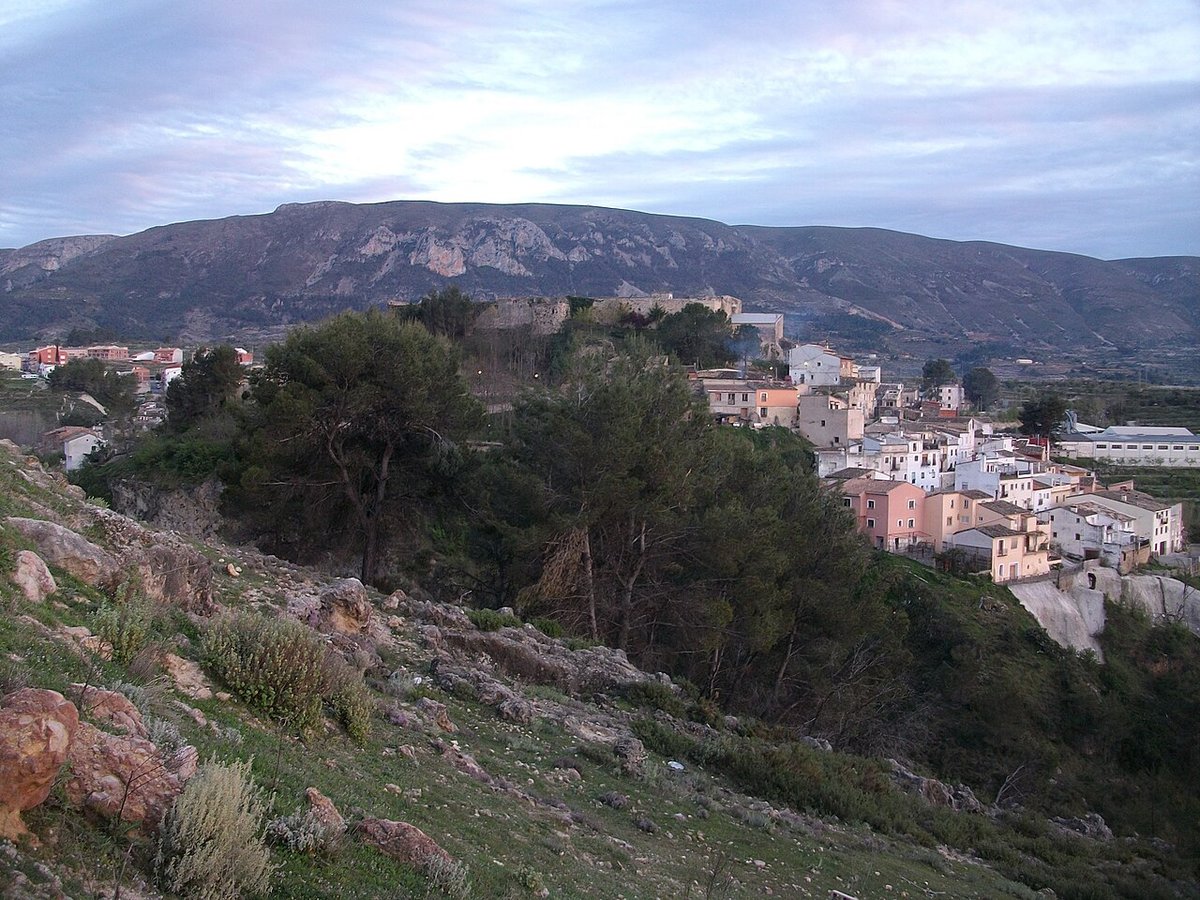
Some places appear on the map as little more than a speck, the sort that makes you wonder if the navigation has made a mistake. Benimarfull is one of those. You follow the roads through El Comtat, past terraced fields and gentle bends, and suddenly it is there in front of you. Small, unassuming, easy to underestimate at first glance.
Tourism in Benimarfull works in that same understated way. People do not usually come here chasing a major attraction. It tends to happen because it is nearby, because someone mentioned it, or because it falls along the route between other inland villages in Alicante. Then you park, start walking, and quickly get a sense of the scale. This is not a full-day outing. It feels more like stepping into a small neighbourhood shop where, within minutes, you know exactly where everything is.
A short walk through the centre
The church of San Juan Bautista acts as the main point of reference. In villages of this size, that is often how things work. You look around and the bell tower becomes your compass, much like a floodlight pole on a makeshift football pitch.
The building is simple, with little ornamentation. Stone walls, a restrained façade, and the quiet presence of a place that has seen generations pass through the same space. Inside, there are traditional devotional elements of the kind commonly found in rural parishes, where history is not displayed behind glass but remains part of everyday use.
From the church, several narrow streets branch out and can be covered quickly. Very quickly, in fact. Walk without stopping and in about twenty minutes you can complete the whole circuit. The houses keep their masonry façades, sloping roofs, and doorways that sometimes reveal small interior patios. In some cases, old tools rest against the walls as if they had only just been set down.
It is easy to picture what life used to be like here. Low doors, slightly winding streets, and balconies with plant pots arranged without much planning, as though placed one by one with whatever was at hand.
The landscape beyond the village
Step outside the built-up area and olive groves take over. Rows stretch out in an orderly pattern, almost as if the land had been combed into place. Many of the trees have been there for decades, some likely for more than a century.
Between the fields, the terrain breaks into small ravines and slopes where that neat geometry no longer fits. Pines appear in scattered clusters alongside Mediterranean scrub: rosemary, thyme, and other plants that release a dry, distinctive scent in warm weather. It gives the air a quality that feels almost tangible, like opening a jar of herbs but on a landscape scale.
In winter and early spring, almond trees shift the scene noticeably. White and pink patches emerge among the terraces. This is not unique to Benimarfull, it happens across much of the comarca, but here it unfolds very close to the village itself.
Paths and quiet routes
Rural tracks lead out from the municipality and make it possible to move around the area without much difficulty. These are agricultural paths linking terraces, ravines, and sometimes neighbouring villages within El Comtat.
Walking here feels grounded and everyday. It is not the kind of mountain route where attention is fixed on gradients or the clock. It is closer to a long stroll along country paths, where the landscape changes gradually, almost metre by metre.
It is worth having some form of route reference or a map. Signage in these areas can be inconsistent, and at certain junctions, decisions rely more on instinct than on clear directions.
Cyclists are a common sight as well. The local roads and rural tracks lend themselves to it, with gentle climbs that build gradually in the legs rather than arriving all at once.
Food from the inland tradition
The cooking associated with this area matches what would be expected in agricultural villages of inland Valencia. Local produce plays a central role, along with olive oil and dishes designed to sustain long working days.
There are stews made with small game, rice dishes prepared with vegetables from the garden, and hearty pots for colder weather. The style of cooking brings to mind large family meals, the kind where everything is served from a single pot, with strong flavours and little concern for presentation.
Festivities and everyday life
The main celebrations revolve around San Juan Bautista, usually at the beginning of summer. During those days, the rhythm of the village shifts. There is band music, religious events, and activities organised by the residents themselves.
In August, the main fiestas are typically held as well. This is when many people who live elsewhere return. The change is noticeable: more people in the streets, long outdoor tables, and conversations that seem to pick up where they left off months earlier.
These are not large-scale events with elaborate programmes. They are village festivals in the most literal sense. More like a large family gathering where everyone contributes something, and in the end, everyone takes part in one way or another.
Benimarfull works like that. Quiet at first glance, easy to pass through, but with a rhythm and character that reveal themselves the moment you slow down.