Full Article
about Cocentaina
A count’s town rich in heritage, famed for its Fira de Tots Sants, one of the oldest fairs in Spain.
Hide article Read full article
The scent of roasting maize drifts down from the main square, a sweet, toasty note that mixes with the damp stone smell of the alleyways. It’s just past seven, and the canvas stalls of the Fira de Tots Sants are still being pegged into place. In Cocentaina, November mornings begin like this: with the chill of night still on the ground and the slow, certain arrival of the fair.
The Palace at the Heart of the Old County
Light enters the Palacio Condal through tall Gothic windows, drawing pale rectangles on the stone floor. The air inside is cool and carries the faint, dry smell of old paper from the archives. This is not a silent museum; you hear the creak of a floorboard overhead, the distant murmur of a guide in another room. The Renaissance courtyard gathers sound softly, turning conversations into a low hum.
The tower staircase is narrow, its steps worn smooth in the centre by centuries of use. A damp, mineral coolness rises from the walls. From the top, the wind hits you first, then the view settles. The whole Comtat valley unfolds in terraces of olive trees, a muted green and silver patchwork that runs right up to the foot of the Sierra de Mariola. From here, you understand this palace was never just a residence; it was an observation point.
By evening, they light it from below. The stone façade glows against the dark blue sky, a fixed point in the maze of the old town.
A Kitchen Shaped by Olive Oil and Smoke
Walk certain streets in the old quarter around midday and you might catch it: the sharp, smoky aroma of pericana escaping a kitchen door. It’s a smell of roasted ñora peppers and good olive oil, pungent and specific to these valleys. The oil from here often has a peppery bite that catches in your throat if you taste it on bread.
The Fira de Tots Sants turns the centre into an open pantry. Stalls are piled with wrinkled cacaus—roasted almonds—and loops of cured sausage. People move slowly, tasting a piece of cheese, debating the merits of one honey over another in rapid Valencian. It feels less like shopping and more like a prolonged, communal meal.
As afternoon fades, the scent profile changes. The sweetness of torró toasting mixes with the savoury smoke from grills. The air grows heavier, warmer, full of promises for dinner.
When the Fira Takes Over
For a few days each autumn, Cocentaina’s usual rhythm is absorbed by the fair. What’s remarkable is its scope: one street might be lined with antique tools and woven esparto grass baskets; the next is filled with modern tractors. Livestock pens sit a short walk from stalls selling artisan chocolate. This juxtaposition isn’t staged—it’s just how this historic fair has evolved.
The crowd’s tempo changes with the hour. Mornings are for families and serious provisioning. Later, groups of friends gather, and the movement becomes a slow shuffle.
Away from the noise, down a set of stairs near Plaça del Pla, is the town’s civil war shelter. The temperature drops sharply as you descend. The walls are just rough rock, and the space feels claustrophobic even when empty. It’s a sobering counterpoint to the abundance above ground, a cold reminder in the stone.
If you want to see the fair without being carried by the current, go on a weekday morning. By Saturday afternoon, every main artery is packed solid.
The Sierra de Mariola and the Pace of the Land
Leave the town behind by following any of the paths that head past the last houses. The ground underfoot changes from pavement to dirt track lined with gorse. The sound changes too—the distant fair becomes a buzz, then fades away entirely, replaced by wind and birdsong.
In spring, the mountain air is thick with the medicinal scent of blooming rosemary and thyme. By late autumn, it smells of dry grass and turned earth. Scattered among these slopes are the pous de neu, ancient snow wells. Step inside one. The silence is absolute, and your breath fogs immediately. Moss grows on stones kept perpetually damp by remembered cold. They are masterpieces of simple engineering, built for storing winter into summer.
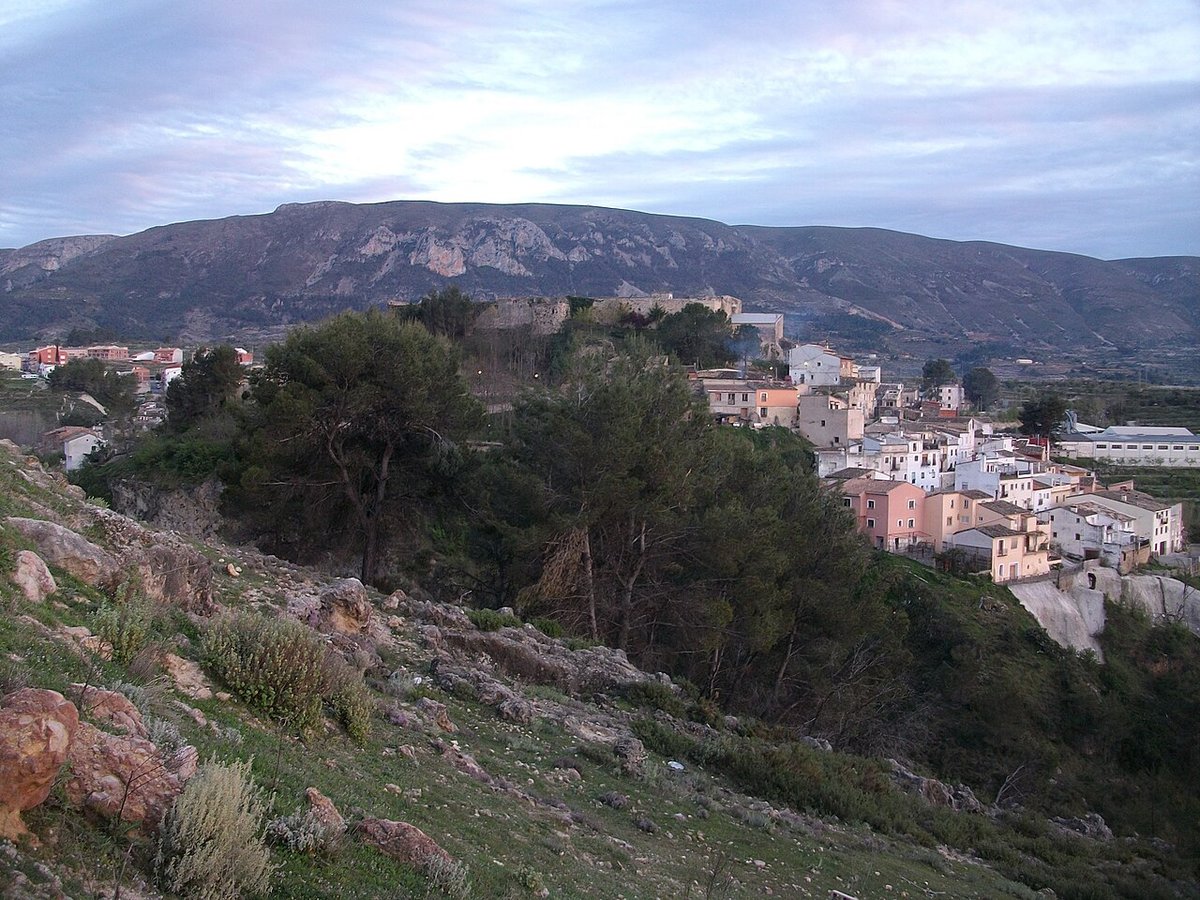
Walking back as dusk approaches has a particular quality. The lights of Cocentaina wink on below, looking like a smaller, quieter version of itself seen from the palace tower. You re-enter through streets now shadowy and calm.
When to Go
The first weekend of November is Cocentaina for many people—vibrant but overwhelming. To walk its streets with space to look up at archways and carved doors, come in March or October. The light is similar, slanting and golden, but you’ll have it mostly to yourself midweek.
Cocentaina reveals itself in these practical details: in how you time your visit to avoid crowds at the fairground toilets, in learning that the best light on the palace façade is just before sunset, in noticing how quickly you can walk from crowded plaza to mountain silence. Its character isn’t shouted; it’s murmured in the rustle of olive leaves and in the steady echo of bells calling from El Salvador.