Full Article
about Famorca
The least populated municipality in the province (often); tucked into the Serrella range
Hide article Read full article
A Small Mountain Village in El Comtat
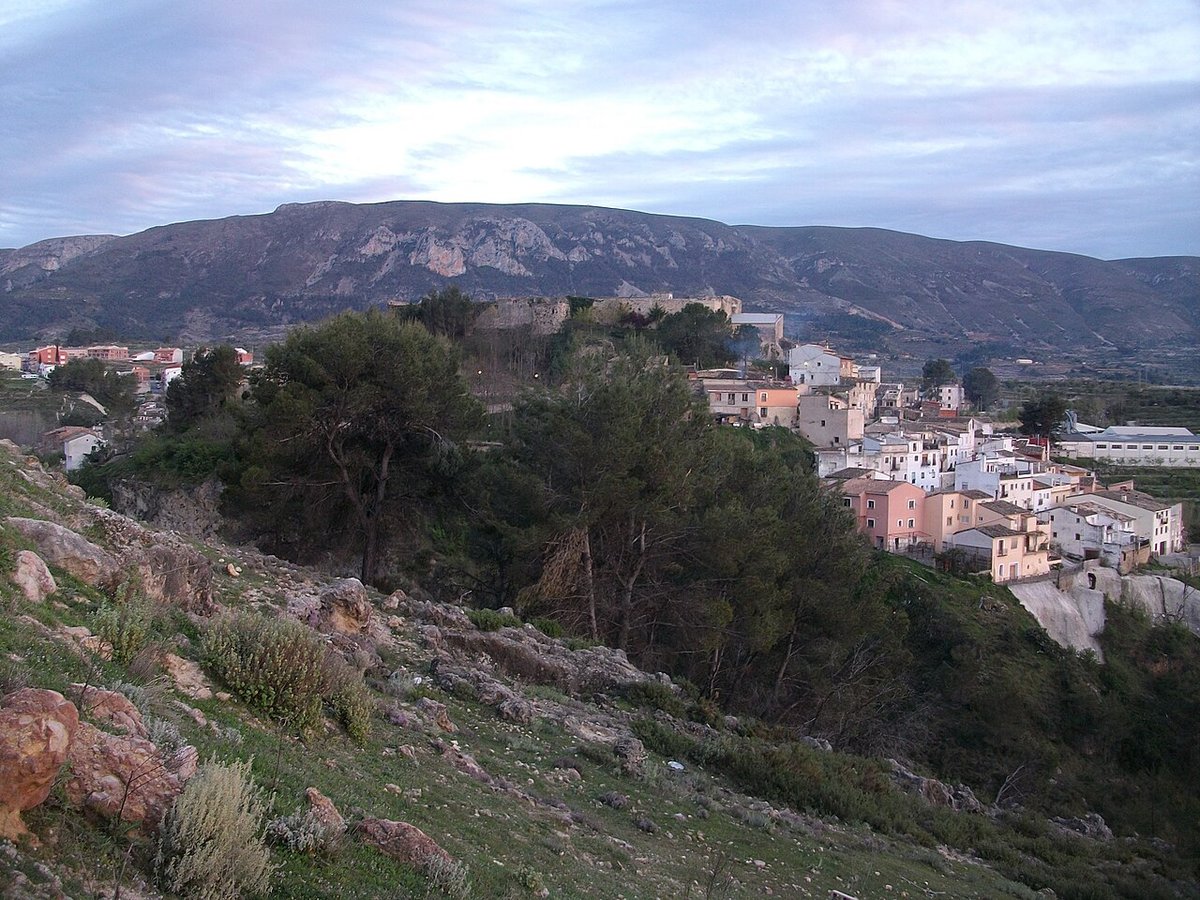
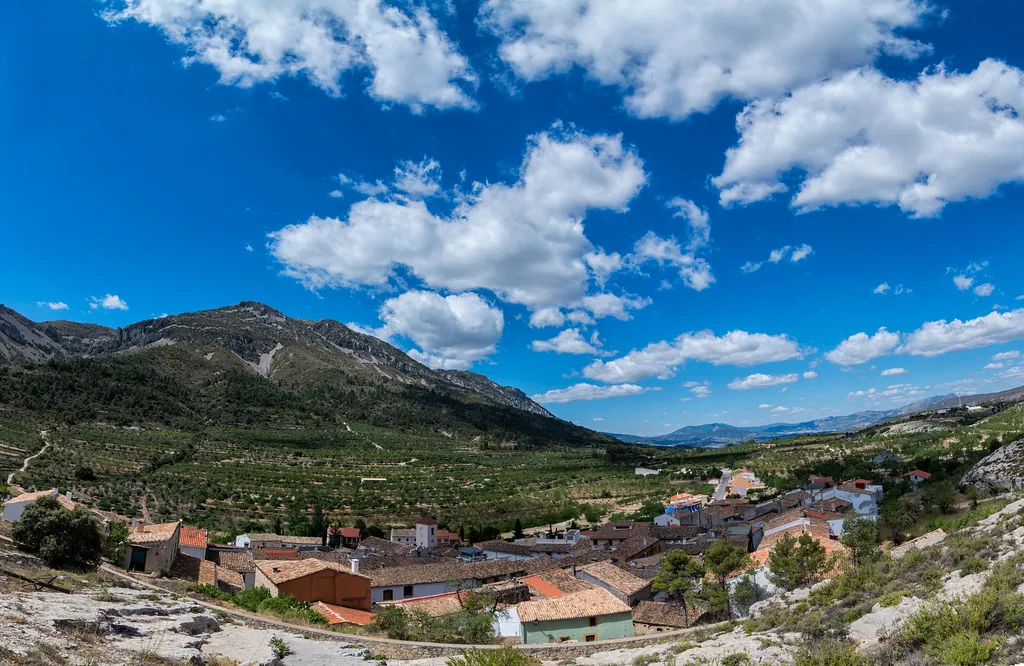
Tourism in Famorca is closely tied to its position in the mountains of inland Alicante. The village sits in the comarca of El Comtat, on a hillside at around 680 metres above sea level, surrounded by terraced fields and low scrub. Only a few dozen people live here today. The settlement retains the logic of mountain communities: compact, shaped by the terrain and deeply connected to agriculture.
More than monuments, it is this relationship with the land that defines Famorca. Rubble-stone houses, tiled roofs and wooden doors reflect a domestic economy built on making use of what was available. In places like this, architecture follows necessity rather than fashion. Homes were designed to keep out the wind, store the harvest and conserve warmth through winter.
The result is a village that feels cohesive and practical. Every corner seems to respond to climate, slope and soil, rather than to any formal urban plan.
Traces of History in the Urban Layout
The small urban centre is organised around the parish church dedicated to San Cayetano. The current building is generally dated to the 18th century, a period when many inland villages expanded or rebuilt their churches following the expulsion of the Moriscos and the later repopulation of these areas. It is a simple church, in keeping with a municipality of very modest size.
From the square around the church, it is easy to understand how the village grew. Streets are short, some with noticeable slopes, and terraced houses stand shoulder to shoulder, offering each other protection. There are no grand, straight alignments. The layout bends and adjusts to the relief of the hillside.
On many façades, elements of traditional local architecture are still visible: whitewashed walls, small windows and broad chimneys. Numerous houses face south or south-east, a common solution in mountain settlements to capture more sunlight during the colder months. Orientation here was not aesthetic but practical, part of a careful balance between exposure and shelter.
The overall impression is of a place that has evolved gradually, shaped by daily needs and by the constraints of its setting.
Terraced Fields and Dry Stone Walls
Around Famorca stretches one of the most characteristic landscapes of inland Alicante: agricultural terraces supported by dry stone walls. These bancales made it possible to cultivate slopes that would otherwise have been difficult to work.
Almond and olive trees have traditionally been planted here, along with small vegetable plots in areas where water could be used more effectively. At the end of winter and the beginning of spring, when many almond trees blossom, the valley’s appearance shifts for a few weeks.
Beyond the cultivated land, the nearby hills combine Aleppo pine, holm oak and Mediterranean scrub. Ravines and small rises encircle the municipality, marking the boundary between worked fields and more rugged terrain. The contrast between terraces and scrubland helps define the identity of the area.
The dry stone walls themselves are part of that identity. Built without mortar, they represent a long-standing technique adapted to the materials at hand. They hold back the earth, create level ground for planting and trace a geometric pattern across the slopes.
Paths Through the Sierras
Several traditional paths leave Famorca, once linking the village to other settlements in El Comtat and to fields located further from the urban centre. Many of these routes are still used today as walking trails.
Some follow old livestock routes, others connect springs, animal pens and agricultural plots. Along the way, dry stone walls appear again, as do small rural constructions and remains of former irrigation systems. These details offer clues to how the surrounding land was organised and used.
The routes pass through a largely peaceful landscape. It is worth bearing in mind that the terrain is mountainous and that certain stretches include slopes or uneven ground. Walking here means accepting the contours of the land rather than expecting level paths.
The wider sierras frame the experience. Hills and ravines define the municipality’s limits and shape its views, reinforcing the sense of being in a rural interior that has changed slowly over time.
Local Cooking and the Village Calendar
Famorca’s cooking reflects what the surrounding countryside has traditionally provided: almonds, olive oil, seasonal vegetables and, at certain times of year, game meat. In local homes, baked rice dishes are still prepared, along with substantial stews for the colder months and different varieties of savoury cocas, a type of flatbread or pastry typical of eastern Spain.
The festive calendar remains centred on religious celebrations and gatherings among neighbours. San Cayetano, the village’s patron saint, is celebrated in summer and usually brings together many of the year’s activities. In January, the tradition of blessing animals continues, a custom linked to periods when livestock played a more significant role in the local economy.
These occasions structure the year in a small community where social life is closely tied to shared traditions. Even with a reduced population, the rhythm of the calendar maintains continuity with the past.
Getting There and Practical Notes
Famorca lies in the interior of Alicante province, within the comarca of El Comtat. It is reached via mountain roads that connect the valley’s villages with Alcoy and other nearby towns. These are winding roads, sometimes narrow, typical of this part of the sierra.
The village itself is small and can be explored in a short time. What tends to be most rewarding is an unhurried walk through the streets and along the paths that lead towards the terraces and the surrounding hills.
In winter, temperatures can drop noticeably and the wind is felt more strongly in exposed areas. Spring and autumn are generally milder. Summer days are hot, although evenings cool down relatively easily thanks to the altitude.
Famorca does not revolve around major sights or headline attractions. Its appeal lies in its setting, its compact layout and the agricultural landscape that still frames daily life. For those interested in mountain villages shaped by necessity and tradition, this corner of El Comtat offers a clear example of how geography and history continue to influence the present.