Full Article
about L'Alqueria d'Asnar
Paper-mill town on the Serpis river; old smokestacks remain amid a pleasant riverside setting.
Hide article Read full article
At eight in the morning, when mist sits low over the river Serpis, the village is still half asleep. From the slight rise where L'Alqueria d'Asnar stands, the lights of Alcoy flicker in the distance like embers. The quiet does not last long. A car crosses the road, a shutter rattles open, the bell tower sends its echo across the rooftops.
Just over five hundred people live within a municipal area that barely reaches one square kilometre. That closeness is immediately apparent. Streets are short, distances are measured in minutes, and daily life feels shared.
A Village in Full View
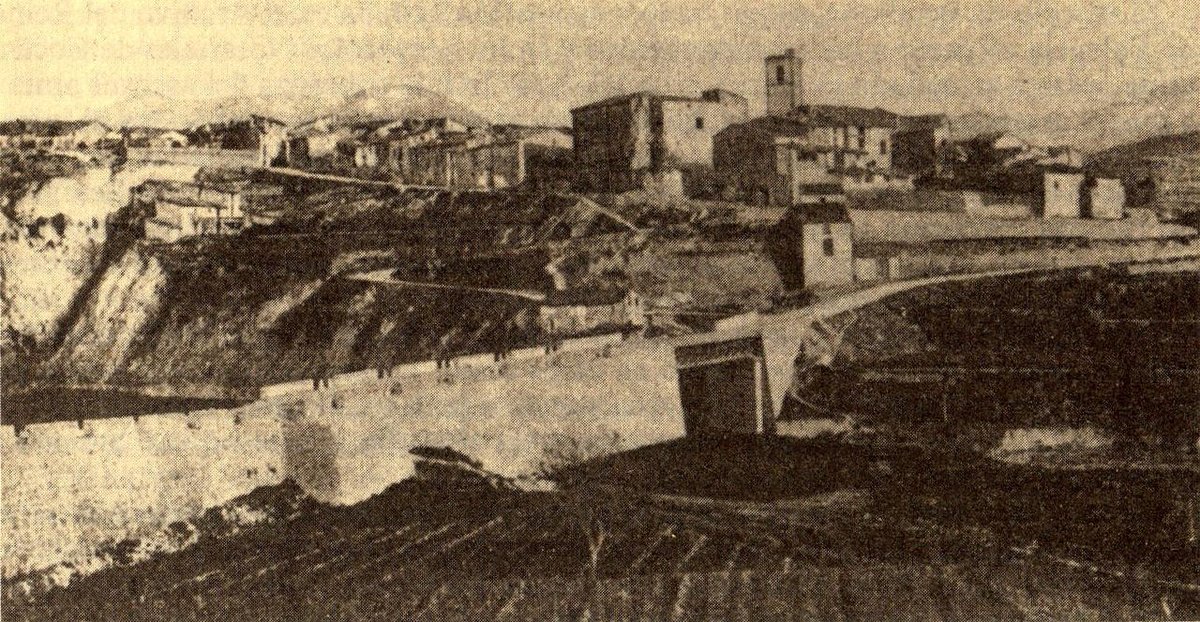
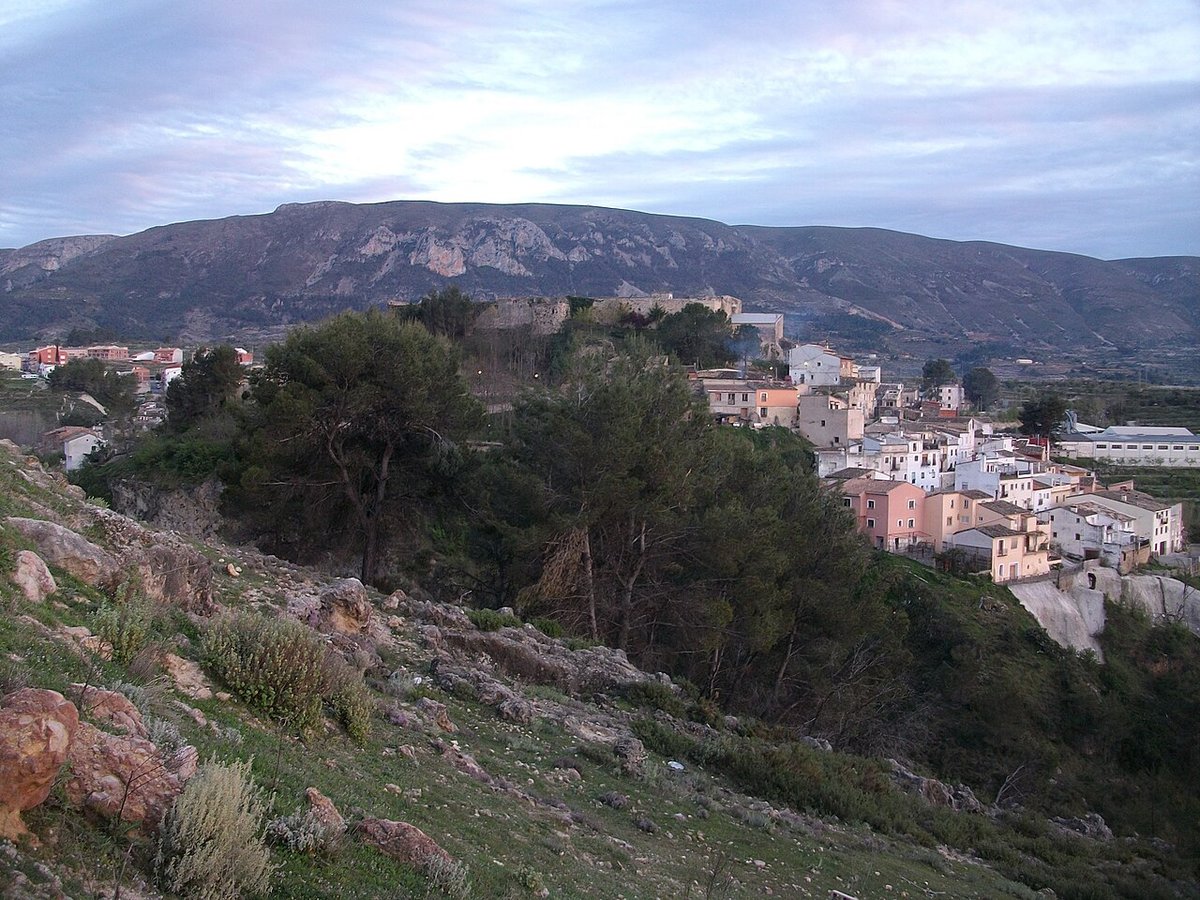
Walking through L'Alqueria d'Asnar can feel like stepping into a life-sized model. The houses cluster around the church of Sant Miquel, built when this place was still known as Ràfol Blanc. The stone carries centuries on its surface and shifts in tone with the hour. On misty days it looks damp and grey. When spring sun brushes the façades shortly before lunch, it turns a muted gold.
The bell tower stands out because it looks unlike others in the area. It has a modernist air that some residents associate with the school of Gaudí, though its exact origins are not always clearly explained. At certain times it is possible to go up. The spiral staircase leads to a view that feels surprisingly wide for such a small settlement: the outline of the Sierra de Mariola in the background, terraced almond groves that fill with white blossom towards the end of winter, and an urban centre so compact it seems almost built in a single piece.
The scale of the place becomes clearer from above. There are no sprawling districts, no long avenues stretching away. Everything is close, gathered around the church and a handful of streets that bend gently with the slope.
Where the Serpis Shapes the Land
A short walk downhill towards the Font de Pedra leaves the narrow streets behind and brings you closer to the sound of water. Here the river Serpis flows calmly between poplars and ash trees, in an area protected since the beginning of this century. The path often takes on a reddish hue from damp earth. After rain, the air carries the scent of rosemary and freshly turned soil.
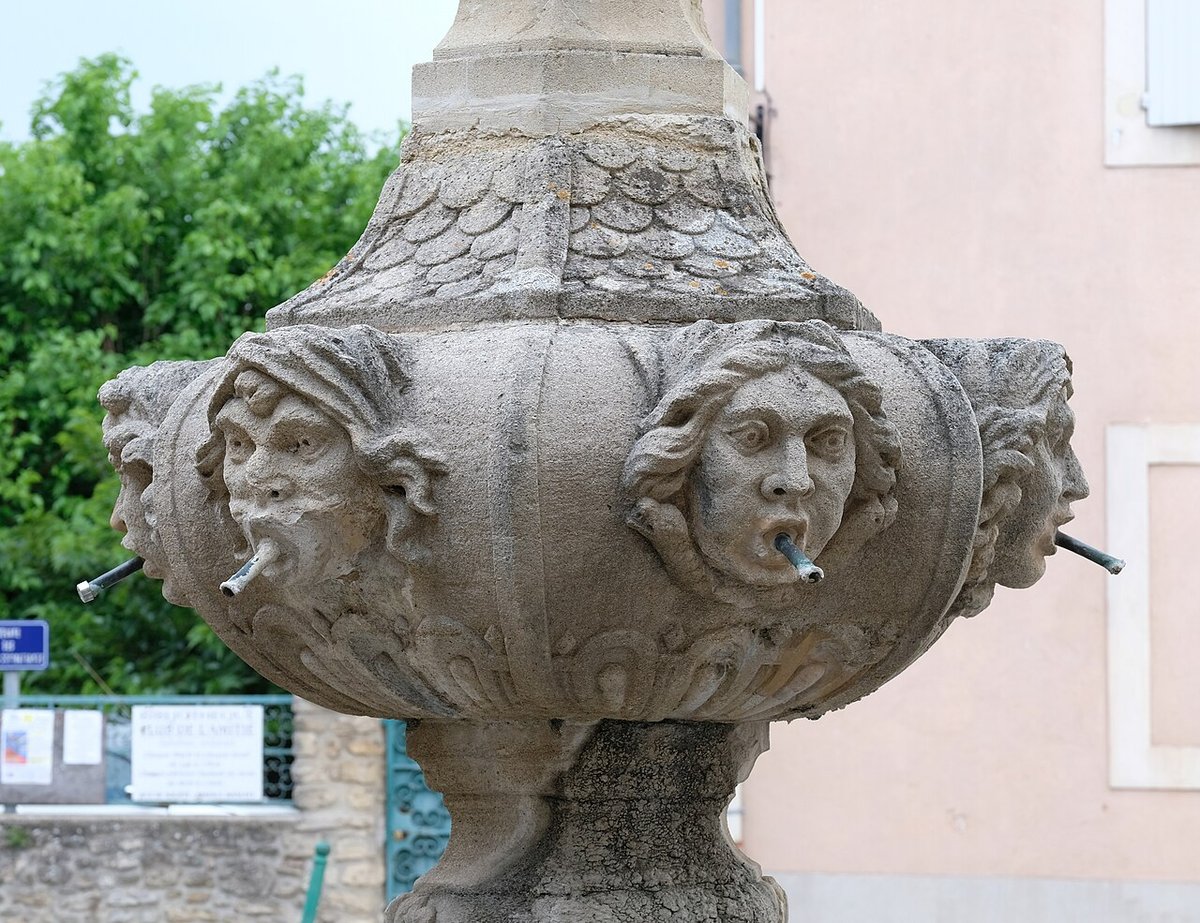
A little further upstream stand the remains of former paper factories. For decades this area formed part of the small industrial network that developed between Alcoy and Cocentaina, linked to paper and textiles. Walls, irrigation channels and the shells of buildings still remain, some partly reclaimed by vegetation. The setting is now known as the Jardines del Terrer. Tall palm trees rise above stone benches, and a fountain provides a steady background sound.
On Sunday mornings it is common to see local residents here, reading the paper or chatting in the shade. The river moves slowly beside them, and the industrial past sits quietly in the background, visible but no longer active.
When Balconies Fill with Colour
In mid-September, the fiestas dedicated to Sant Miquel transform the village. Balconies are covered with coloured fabrics that have been stored carefully all year, many of them handmade. There is no single pattern. Some display scenes of the river, others geometric designs, others blocks of intense colour visible from the far end of the street.
During those days, the air carries the smell of frying food, new wine and freshly made embutido, Spanish cured sausages. In the narrowest streets appears the poltrota, a dark, spiced sausage closely linked to the traditional pig slaughter. Preparation for the fiesta begins weeks earlier. That is when the underlying rhythm of the place becomes clear: neighbours assembling structures, families sewing fabrics, younger residents learning traditional dances that have been passed down here for generations.
The decorations do more than brighten façades. They mark continuity. Textiles made years ago are brought out again, repaired if necessary, and rehung in the same streets.
The Taste of Home
Early in the day, near the church, the smell of freshly baked bread drifts out from doorways. On certain days of the week, wood-fired ovens are still lit in private homes. The aroma mingles with coffee and with the cool air descending from the Sierra de Mariola.
Poltrota returns frequently in conversation. Each family has its own method: drier or softer, heavier on spice, with more or less black pepper. It can sometimes be seen hanging in kitchens, tied with string and curing slowly. There are not many places to sit down for a meal within the village itself, so much of this cooking remains domestic. A talkative neighbour may well explain how it is made or where the recipe came from in their household.
Food here is not presented as spectacle. It is part of routine, prepared at home and discussed casually in the street.
When to Come and How to Get Around
Spring is often a good time to visit. The river carries more water, the almond blossom has already passed, and the heat does not press as it can in July or August. Walking to the Font de Pedra or along the banks of the Serpis is more comfortable then.
It is best reached by car, which can be left at the entrance to the village. Several streets are very narrow, and manoeuvring within the centre can be awkward. During the week the pace is slow. In summer, especially at weekends, more people arrive from Alcoy or Cocentaina in search of cooler air by the river.
Stay until evening and head towards the area near the cemetery. From there the light falls sideways across the Sierra de Mariola and the tiled roofs of the village. For a few minutes, almost everything falls quiet except for the distant sound of water. The real scale of L'Alqueria d'Asnar becomes clear at that hour: small, tightly gathered, and surrounded on all sides by landscape.