Full Article
about Millena
Quiet village dominated by Castillo de Travadell; known for its centuries-old elm (now gone, the site remains).
Hide article Read full article
Morning Echoes on a Dry-Stone Slope
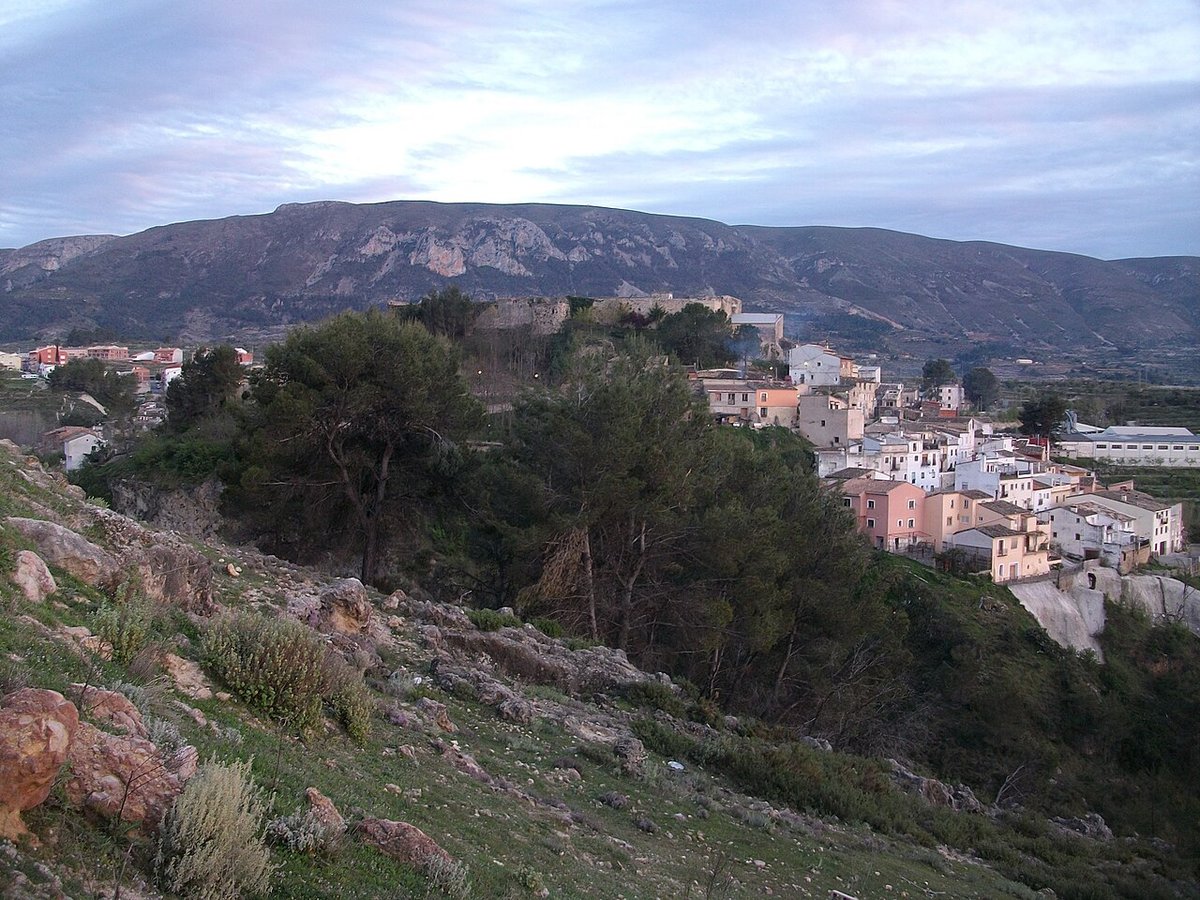
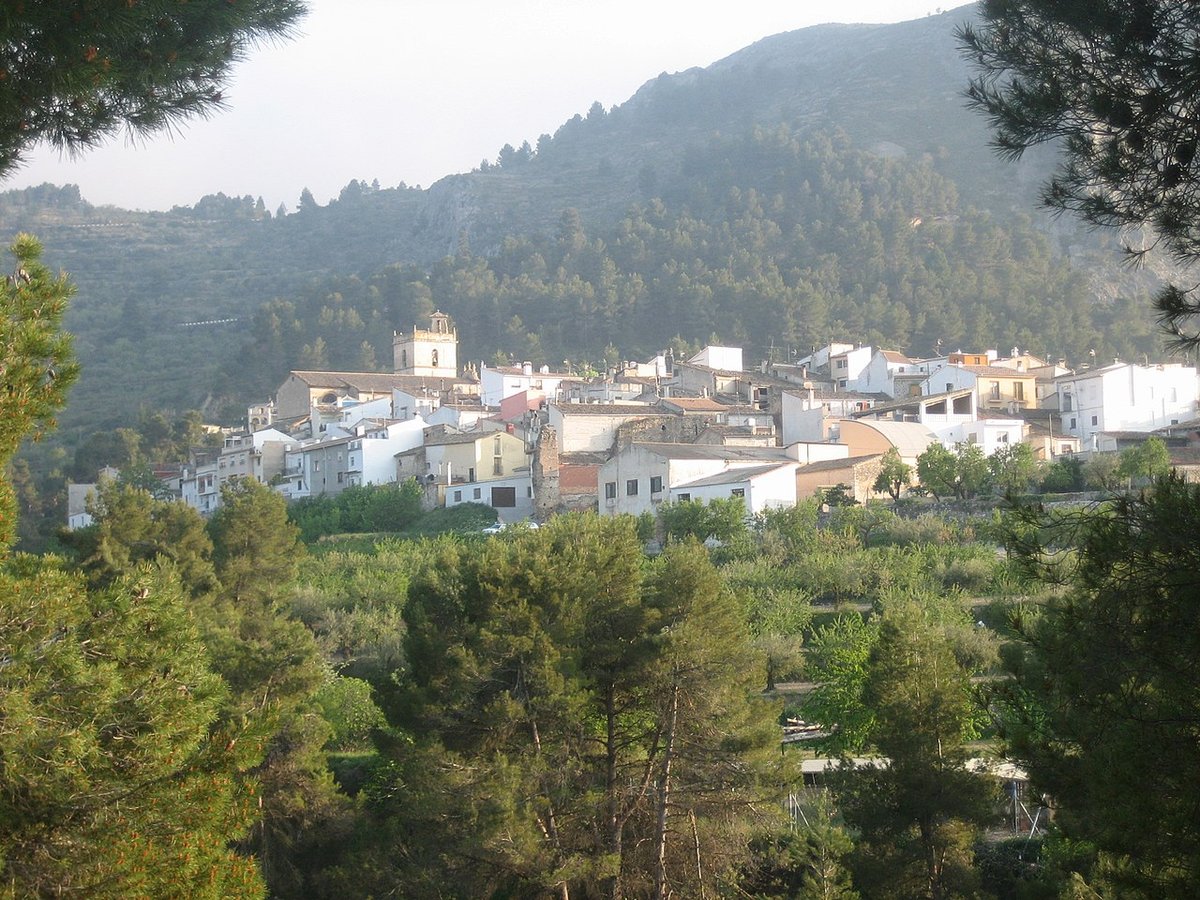
A single shutter slams against a wall, the sound sharp and wooden in the quiet. The echo bounces off pale façades before dissolving into the scent of cold earth and last night’s hearth smoke. This is how the day announces itself in Millena, a village of two hundred and sixty-five souls on a hillside in Alicante’s El Comtat. There are no signs for tourists, no prepared welcome. Just the slow, uncurling rhythm of a place where the terraced land dictates the pace.
The streets are narrow channels that follow the slope’s natural contours. They climb, they dip, they turn without warning. Heavy wooden doors show years of sun-bleaching. Dark iron grilles guard windows left open to catch a breeze. Behind low walls, in small courtyards, you might see a pile of firewood, a lemon tree heavy with fruit, or a few chickens scratching at the dirt. It feels less like a preserved relic and more like a working settlement that simply happens to be old.
The Centre and Its Slow Unfolding
Everything eventually leads to the church of San Miguel. Its façade is plain, almost severe in the morning light. The square before it holds a few benches in the shade of an old tree. Come mid-afternoon, that shade becomes a refuge. You’ll hear the murmur of conversation, the drag of a chair across stone, the clink of a glass being set down. This is where the village gathers its breath.
From here, it takes only a few minutes of walking to reach the edge. The land opens up abruptly. The view is not a single panorama but a series of layers: first the neat bancales of olive groves, then patches of dark pine, and finally the ragged line of the sierras against the sky. The clarity of this view depends on the day; sometimes a heat haze softens everything to a blur.
Walking the Boundary Between Stone and Soil
The true character of Millena is found in its periphery, where the last house ends and the first terrace begins. Dry-stone walls hold back the earth in intricate, gravity-defying patterns. Many are centuries old, built by hand and maintained through sheer stubbornness. They support ancient olive trees and almond groves whose white blossoms dust the slopes in February.
Old agricultural tracks, paved with loose stone and history, lead out toward Benilloba or Tollos. They are public paths now, used more for walking than for moving livestock. In summer, walking them requires sense: start early, carry water, and respect the sun’s dominance over this exposed terrain. By late autumn, the same paths are empty and cool, the structure of the land laid bare.
Even now, life here is tuned to agricultural cycles. Winter is for pruning olives. Late winter brings almond blossom. The olive harvest returns with the cold. You see it in calloused hands, in conversations about rainfall, in bundles of wild rosemary and thyme gathered from the scrubland. If you visit in autumn and see people with baskets in the holm oak woods, they are hunting for mushrooms. Unless you are certain, it is wise to follow someone who knows.
The Shift of Seasons in the Streets
Spring softens the light and coaxes green from the terraces. The paths are at their most inviting then, before the summer heat bakes everything hard. Summer itself changes the village’s texture. Families return, filling empty houses. The fiestas for San Miguel animate the square with music and long tables pushed together. The noise is cheerful but confined; walk two streets away and you’ll find silence again.
For solitude, come on a weekday in autumn or winter. Smoke hangs above red tile roofs. The square is quiet. The landscape shows its bones—the gray of stone, the brown of turned earth, the stark geometry of those relentless terraces. You understand then that this is not a backdrop; it is the foundation.
Millena asks for your patience. It reveals itself through repetition: the way afternoon light gilds one particular wall, the smell of wild thyme crushed underfoot on a path, the distant clank of a goat’s bell from a hidden valley. There are no sights to check off a list. There is only this quiet negotiation between hill and village, observed one slow step at a time