Full Article
about Muro de Alcoy
A key town at the foot of the Mariola; it blends industry and tradition around a compelling old quarter.
Hide article Read full article
Anyone planning tourism in Muro de Alcoy should begin with something practical. The car park by the Castillo usually has spaces and it is free. From there, it is a five-minute walk downhill to the centre. That is generally easier than driving into the narrow streets, where turning around can become awkward.
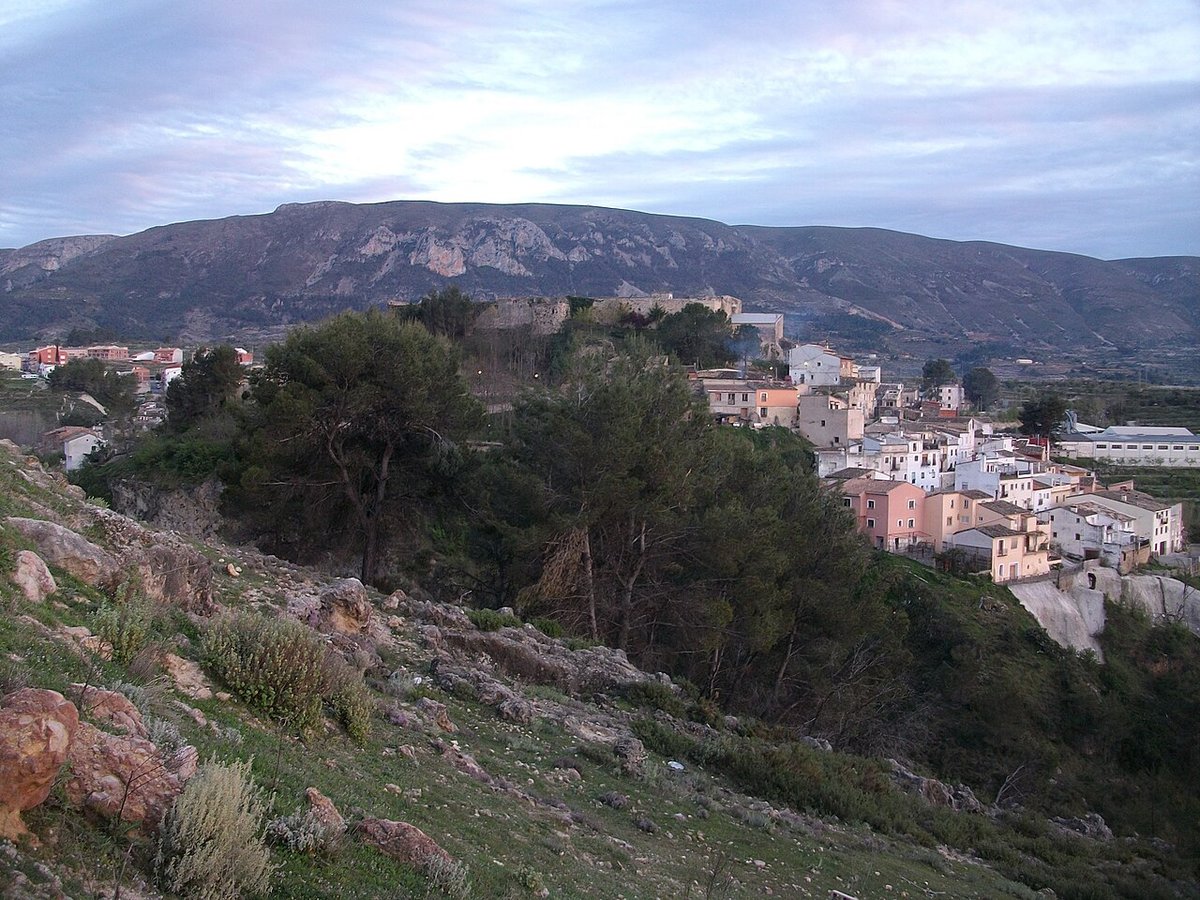
Muro de Alcoy sits in the Comunidad Valenciana, close to the Sierra de Mariola. It is a working town rather than a purpose-built destination. What you see is daily life, largely unchanged by visitor trends.
An Ordinary Town, On Its Own Terms
Muro has around 9,000 inhabitants and feels like it. Tourism is not its main focus. For years the local economy relied on textiles and agriculture, and that background still shapes the atmosphere.
A walk along Calle Mayor shows balconies with washing hung out to dry, older residents sitting in doorways and bars filled with regulars who have known each other for decades. Very little is arranged for effect. The town does not perform for visitors.
Plaza de la Señoría forms the centre of things. Here you will find the town hall, a Renaissance palace and the church of San Juan gathered around the same space. It is not a grand or dramatic ensemble, yet it works as a focal point. People sit on the church steps to pass the time. The bell tower marks the hours throughout the day. Light sleepers should bear that in mind.
There is no rush to transform the square into something it is not. Life continues at its own pace, especially on weekday mornings when the centre remains calm and parking is straightforward.
The So-Called Castle and Its View
Despite the name, the Castillo is not a medieval fortress. It dates from the 19th century and today functions as a viewpoint. Inside there is a small museum dedicated to the town’s Moros y Cristianos festival. Costumes and parade weapons are on display, and the lingering smell of old gunpowder is hard to miss.
The visit does not take long. The real highlight lies outside on the terrace. From here, the view opens out towards the Sierra de Mariola and a valley filled with olive groves. In summer the sun is strong and there is little shade, so conditions can feel harsh in the middle of the day.
The setting explains much about Muro. The mountains are close, and the agricultural landscape still frames the town. It is a reminder that this is a place rooted in its surroundings rather than reshaped for tourism.
Eating in Muro
Local cooking is direct and filling. Expect hearty dishes and generous portions rather than modern reinterpretations.
One of the most typical winter recipes is trigo picado. This is a stew made with cracked wheat, broad beans and pork. It is substantial and suited to colder weather. Bajoques farcides also appear frequently, particularly at weekends when many households prepare them at home. These are stuffed peppers, usually filled according to family tradition.
Another well-known dish is olla de músico. The exact ingredients vary depending on who makes it, though it often includes different types of sausage. There is little attempt to reinvent these recipes. In Muro, they are prepared much as they have always been.
Food here reflects continuity more than experimentation. The flavours and methods belong to the area and remain part of everyday life rather than a showcase for visitors.
Beyond the Centre: An Ancient Olive Tree and Mountain Paths
About five kilometres from the town stands the olivo del Tío de la Cañada. Local accounts say it is more than a thousand years old. The trunk is hollow, large enough for people to stand inside. It sits alone in the countryside, without fences or an interpretation centre. Visitors arrive, look at it, and leave.
The final stretch of access is along a dirt track. After heavy rain, it is worth thinking carefully before attempting it.
For those who prefer walking, the Sierra de Mariola lies very close to Muro. Several marked trails begin in the surrounding area. Some are short routes leading to natural springs. Others climb higher, where the gradient becomes more noticeable. Water is essential. There are no places to buy supplies in the mountains.
The proximity of the sierra shapes daily life in the town. It offers space to stretch your legs without complicated planning. At the same time, it remains a natural environment rather than a managed attraction.
When the Town Changes
Muro feels most relaxed on a normal weekday morning. Parking is easier and the centre stays quiet.
In May, Moros y Cristianos transforms the atmosphere. This is a festival common across parts of the Comunidad Valenciana, commemorating historical conflicts between Moors and Christians. In Muro, arcabuces are fired, bands play through the streets and noise starts early in the day. The town becomes louder and more crowded than usual.
January brings another shift during San Antón, when bonfires are a common sight. These seasonal moments contrast with the routine rhythm that defines most of the year.
Outside festival periods, Muro appears exactly as it is: a town continuing with its own routines, with the Sierra de Mariola close at hand for a walk. Travellers seeking a polished backdrop may prefer other destinations. Here, things are simpler and more direct.