Full Article
about Quatretondeta
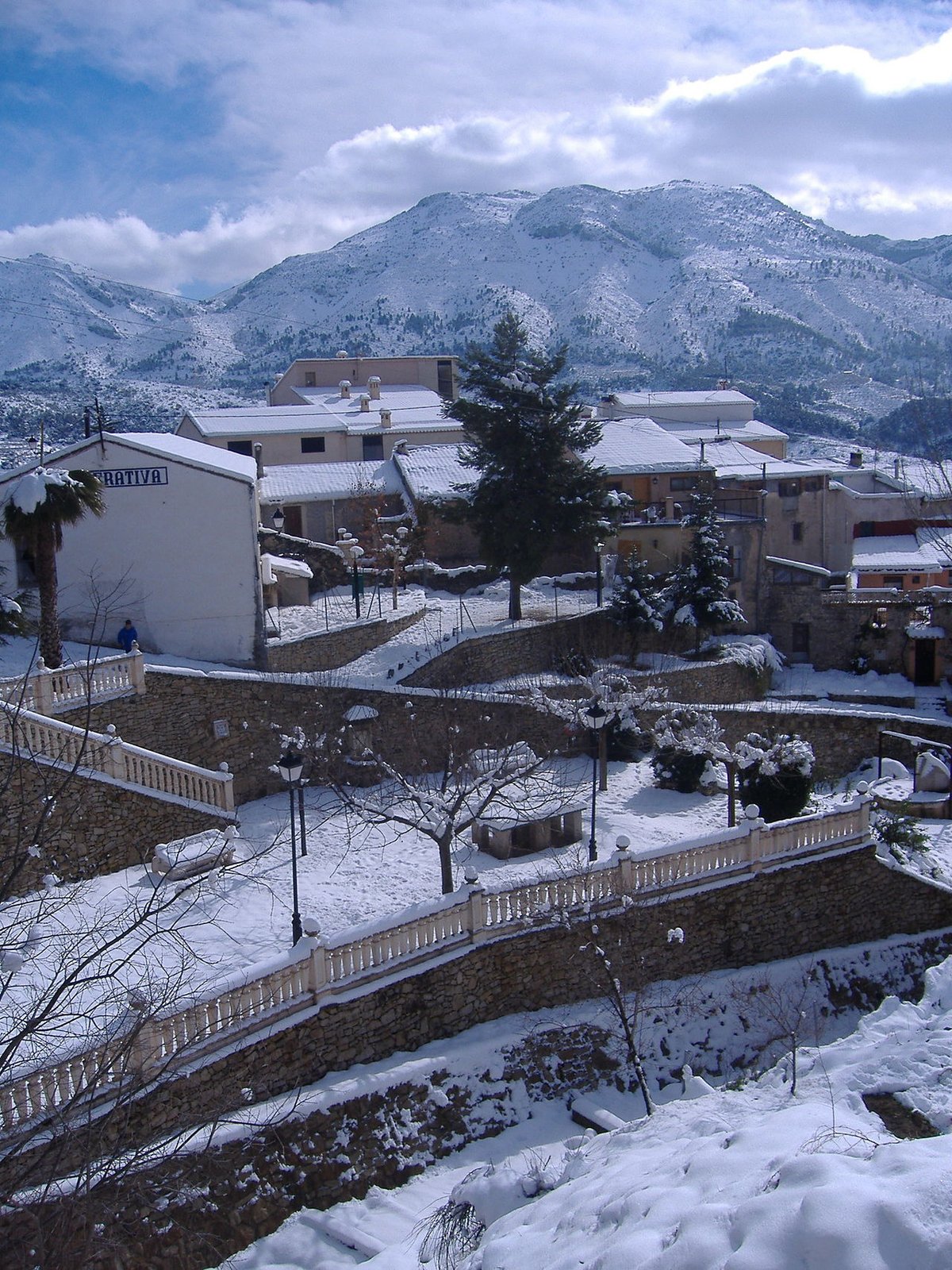
Small village at the foot of the Serrella; known for its rock spires (Els Frares)
Hide article Read full article
A village you cross in minutes
Quatretondeta is small, immediately so. You arrive, leave the car at the entrance, and within a few minutes you are already inside. There is usually space to park near the first houses. At weekends it is better to come early. The streets are narrow and not suited to driving around for long.
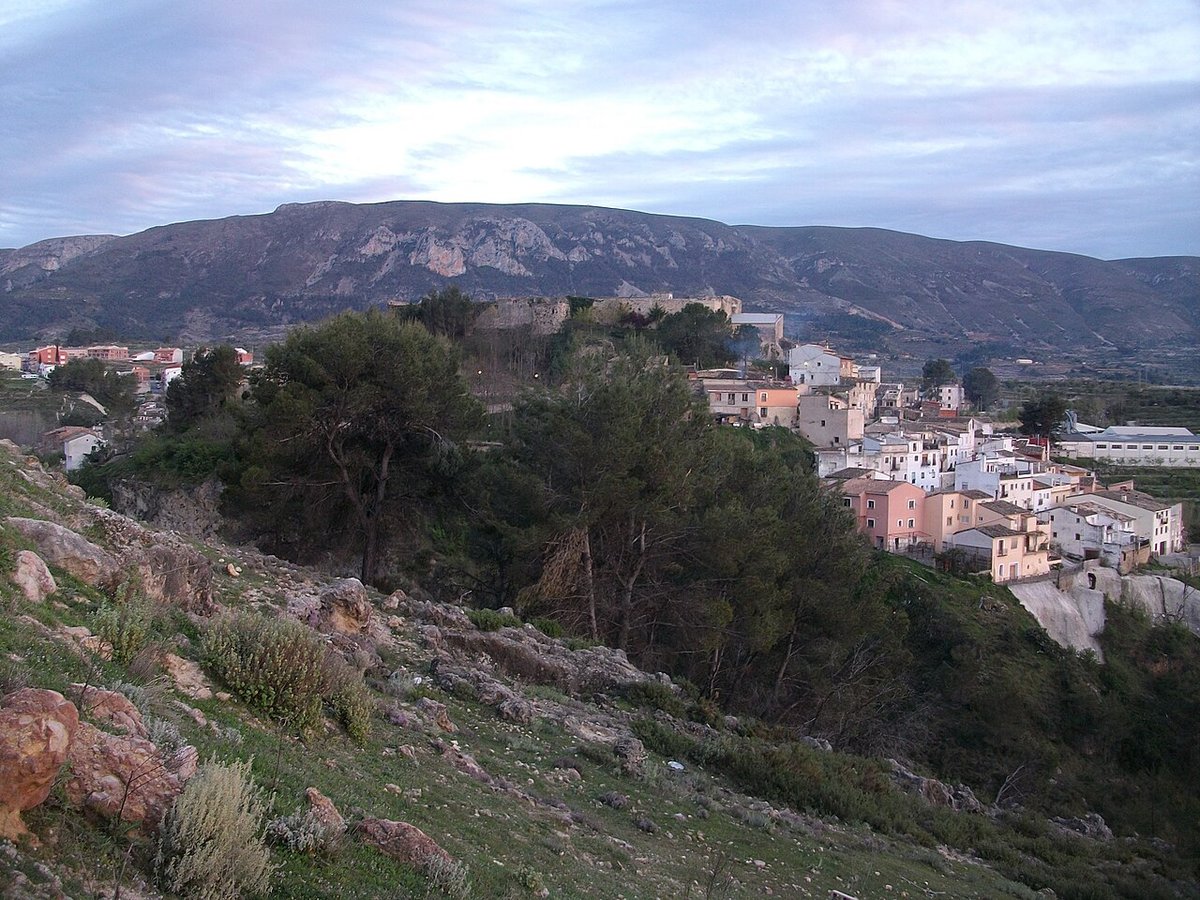
The built-up area takes up very little space. Short streets, stone houses and whitewashed façades set the tone. Some buildings still keep old wooden doors and iron balconies. In the centre stands the church of San Juan Bautista. It is the most visible building, though not a large one. The original construction is old, but it has changed quite a bit over time.
There is no sense of grand monuments or long avenues. Everything feels contained, scaled to daily life. You can walk across the whole village at an easy pace and never feel rushed. The layout encourages you to look closely rather than far ahead.
Terraces, almond trees and open hills
What defines Quatretondeta is not within the streets but beyond them. As soon as you step out, the landscape opens into dry-stone terraces, built over time to make use of the slopes. Almond and olive trees grow on these levels, many planted decades ago. That long effort is what shapes the view today.
During the flowering season, the almond trees cover the hillsides in white with touches of pink. It does not last long, but it changes the valley completely while it does. For the rest of the year the land looks drier and more rugged, which is typical of this inland part of Alicante province.
The terrain does not try to soften itself. Stone, earth and low vegetation dominate. The terraces draw lines across the slopes, a reminder of how the land has been worked and maintained over generations. Even without knowing the details, it is clear that the landscape is the result of steady, practical labour rather than design.
Walking without a plan
Several paths leave directly from the village. There is no need for much planning. Some connect with nearby places such as Benimassot or Famorca. These are old routes, once used to move between villages or to reach fields and hills for work.
There are no large viewpoints or specially prepared trails. Within a few minutes of walking, the valley and the surrounding mountain ranges come into view anyway. The experience is simple and immediate. You follow a path, gain a bit of height, and the perspective opens.
Silence is one of the most noticeable features. It is not absolute, but it is close. At times you might hear livestock or the distant sound of a bell. Otherwise, the quiet is steady and unbroken. That lack of background noise becomes part of the walk itself.
The routes do not demand much in terms of logistics. They are there, starting at the edge of the village, and they lead outward without ceremony. You can turn back whenever you choose or continue towards another settlement. The sense of connection between places remains visible in these paths.
Food and local customs
The cooking in Quatretondeta follows the patterns of inland cuisine. Dishes are straightforward and tied to what is available. You find dry rice dishes with vegetables, simple stews with meat and potatoes, and cured sausages prepared during the traditional pig slaughter season.
Almonds appear frequently in local baking, which makes sense given the surrounding fields. The link between the land and the kitchen is direct and easy to read.
When there has been good rain, some residents go into the hills to look for wild mushrooms. It is a common pastime in the area, although it requires knowing what you are picking.
Festivities are still very much centred on the village itself. In June, celebrations are held for San Juan Bautista. In August, they are dedicated to the Virgen de la Asunción. During those days there is more activity than usual, and people who live elsewhere often return. The village fills out a little, though it does not lose its scale.
How long to spend here
Quatretondeta can be seen quickly. In about an hour you can walk through the centre without any hurry. Staying longer usually means heading out on foot or continuing the journey through other villages in the Comtat area.
A clear piece of advice follows from that. It is not a place to visit on its own as a main destination. It works better as a short stop while travelling through the region. Park, take a walk through the streets, then follow one of the paths for a while before moving on to the next village.
The scale has always been small here, and it remains so. That is not something to work around but something to accept. The appeal lies in how little there is to organise and how quickly the surroundings take over once you step beyond the last house.