Full Article
about Castellfort
A fortified Templar village on a windy hilltop, rich in architecture with sweeping views over Els Ports.
Hide article Read full article
A Village Above the Coastline
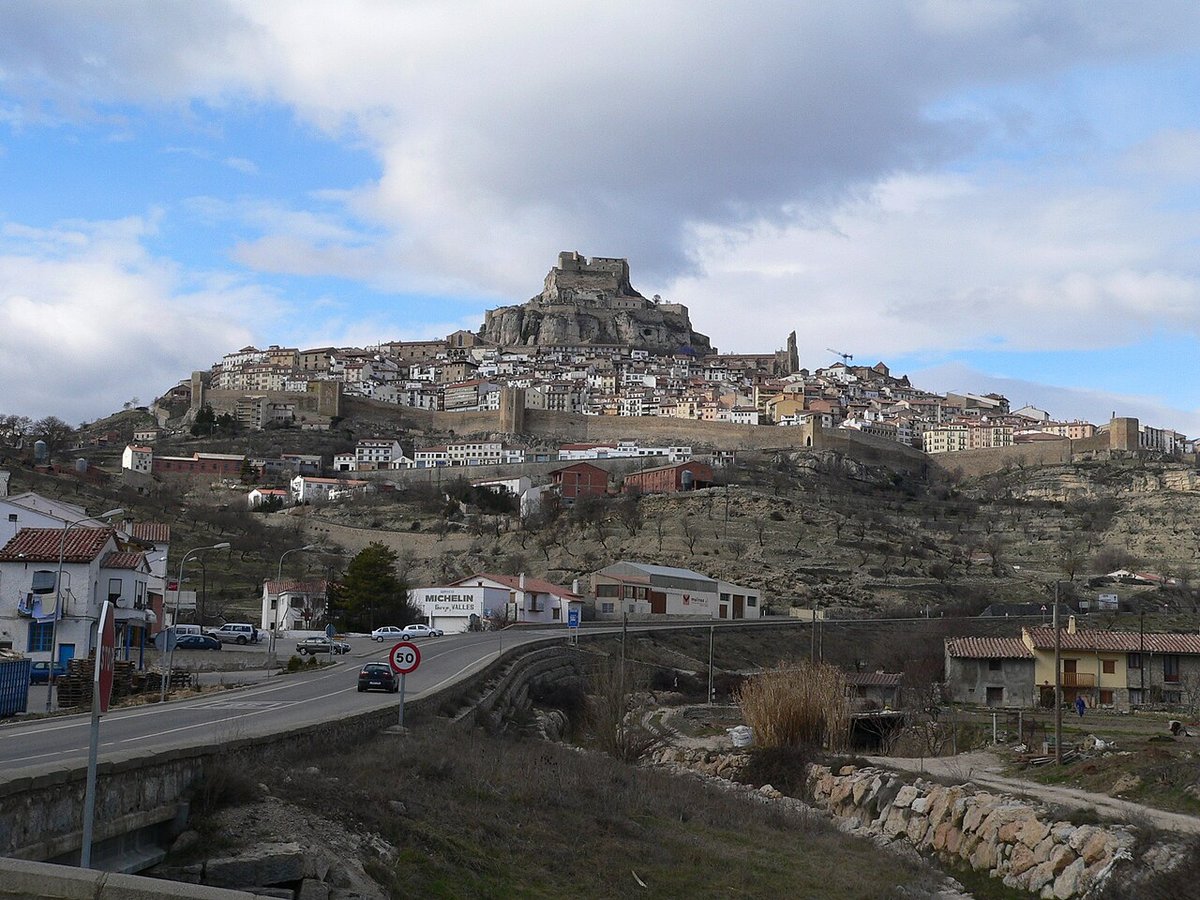
Some places seem to exist to remind you that the province of Castellón is more than beaches. Castellfort is one of them. After a steady run of bends through the comarca of Els Ports, the village appears high above the road, set on top of a broad, flat-topped rise as if placed carefully on a table.
With little more than a handful of streets and just over a hundred residents, life moves at a slower pace here than in any regional centre. Castellfort sits at more than 1,000 metres above sea level, and the difference is immediate. The air feels cooler, and the landscape carries the rugged tones typical of the interior mountains of Castellón.
For centuries, daily life revolved around farming and livestock. That history is still visible in the way the village is built and in what you find, and do not find, along its streets. There is little in the way of distraction. The setting and the landscape do most of the talking.
Stone, Wind and San Miguel
The parish church of San Miguel Arcángel shapes the village skyline. It is not an oversized structure dominating every corner, yet it has the steady presence of an old building that has always been there. Its stone matches that of many of the surrounding houses, which gives the centre a sense of cohesion.
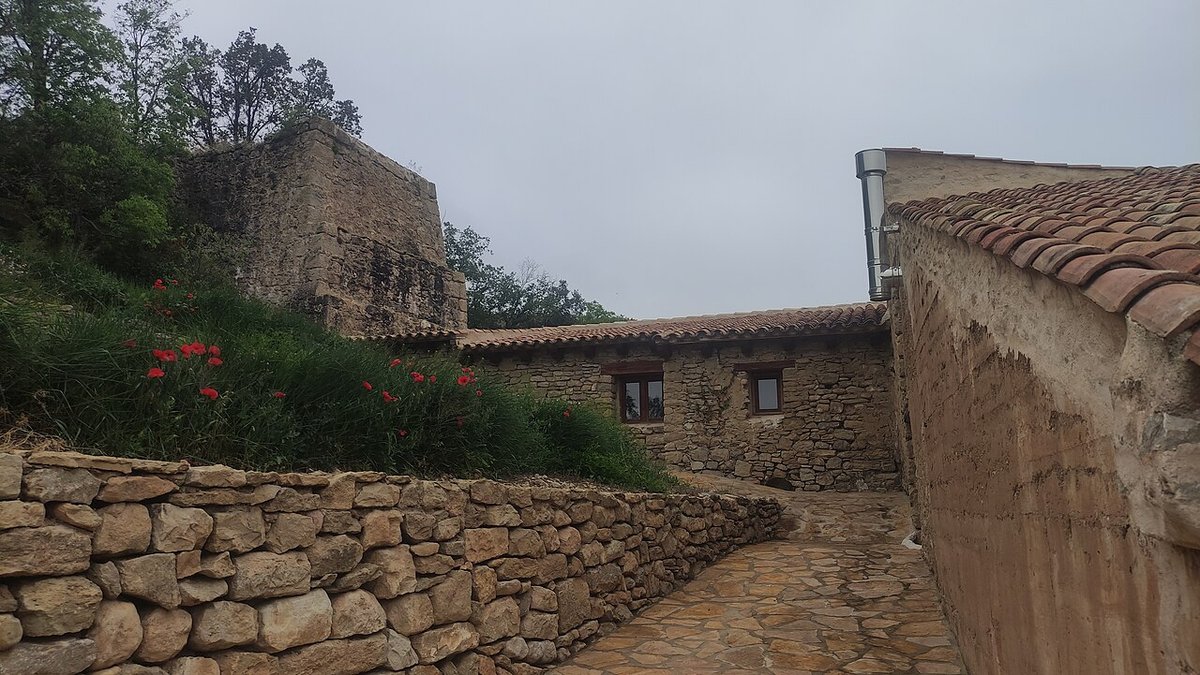
Around the church lies the old nucleus: short streets, some paved with cobbles, and houses with thick walls. Anyone familiar with other villages in Els Ports will recognise the pattern. Wooden balconies, generous eaves designed to cut the wind, façades built to endure long winters rather than to impress.
There are no major monuments or museums. What Castellfort offers instead is a consistent example of rural mountain architecture. A brief walk is enough to form a clear picture of how people have lived here over generations. The scale is small, the layout practical, and everything seems shaped by climate and necessity.
The Muela and Open Horizons
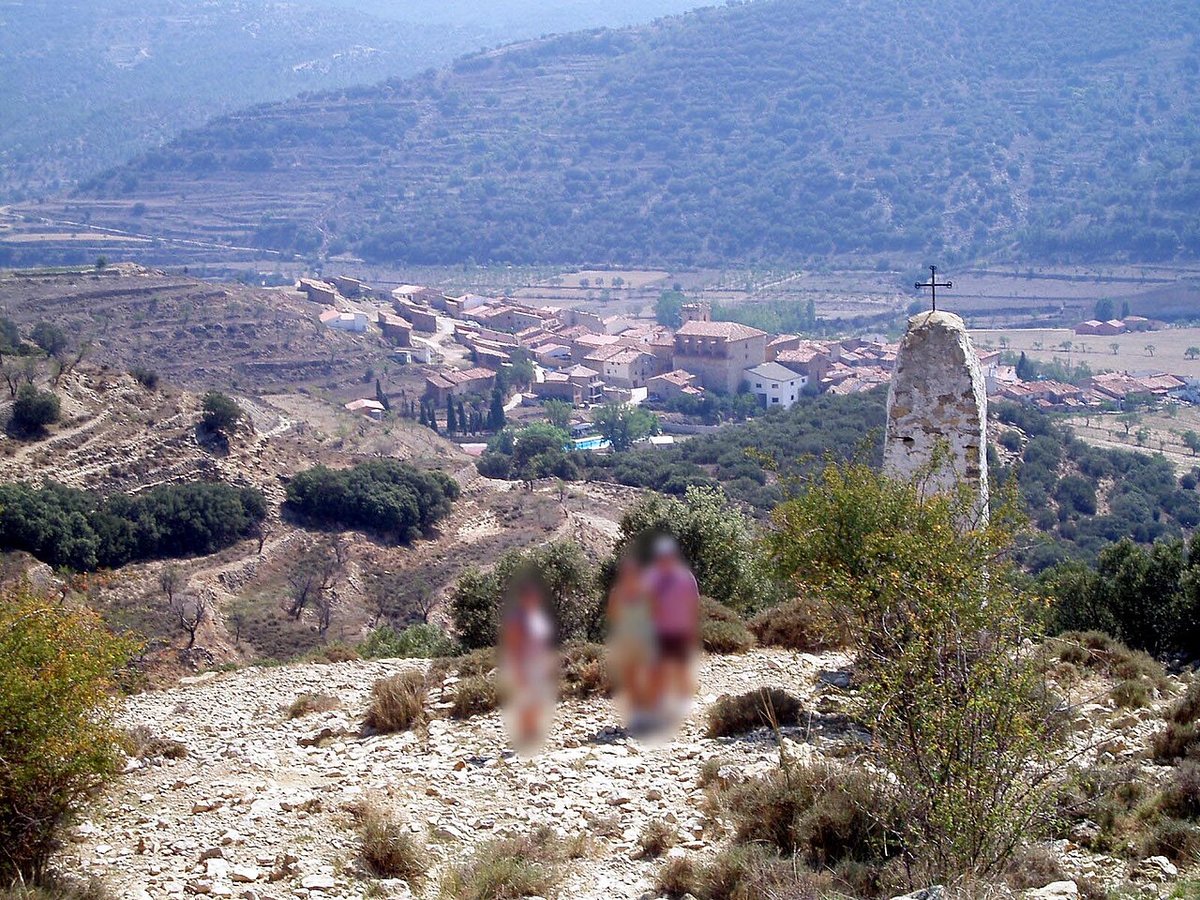
One of the most distinctive features in the surrounding area is the Muela de Castellfort. A muela is a flat-topped hill or plateau, common in parts of inland Spain, and this one stands out clearly in the landscape. For generations it has served as a natural reference point for nearby villages.
From the top, the character of this corner of Els Ports becomes clear: ravines cutting into the land, limestone plateaus, and a mix of pine, holm oak and some oak in the cooler patches. The terrain is uneven and marked by height differences, typical of this comarca.
Within the village itself there are several spots where the view opens out across kilometres of mountain scenery. These are not formal viewpoints with panels or benches. They are simply edges of streets or corners where the houses give way and the land drops away. Step towards the edge and the scale of the surroundings becomes obvious.
Traces of Agricultural Life
A short distance beyond the built-up area, the marks of past agricultural work begin to appear. Old terraces shape the slopes, dry stone pens stand in fields, and low walls outline former plots. Many of these are no longer in use, yet they remain as reminders that every piece of land once mattered.
This is common across the comarca. Fields that now look almost wild were worked by hand for generations. Walking around Castellfort means repeatedly coming across these structures. They are not presented as attractions, but as part of the everyday landscape.
The sense of continuity is strong. Even when abandoned, the terraces and walls still define the terrain. They explain why the village sits where it does and how people managed to make a living at this altitude.
Walking in Els Ports
Castellfort works well as a base for exploring the area on foot. Paths leave directly from the village, connecting with ravines, wooded stretches and forest tracks that lead towards other settlements in Els Ports.
The long-distance footpath GR‑7 passes relatively close by, and some walkers use the village as a stopping point or detour. The ground here is rarely gentle. There are noticeable ascents and stony sections, which is typical for this part of the province.
For those who prefer walking without many people around, these routes make sense. The terrain demands a bit of effort, but the reward lies in the quiet and the open space rather than in any single landmark.
Wildlife in the Mountain Landscape
In these mountains, signs of wildlife are still relatively easy to spot. Wild boar are common. With some luck, roe deer may appear in quieter areas at dawn or dusk. Birds of prey often circle above rocky walls, riding the air currents.
There is no need for a complicated expedition to feel close to nature. Leaving the village and walking at an unhurried pace is enough to notice how present the natural environment remains. The sense of space and the absence of noise make small details more apparent.
Simple, Hearty Cooking
Local cooking tends towards the straightforward and substantial. Lamb from the comarca, honey from nearby hives, mushrooms when autumn brings enough rain, and in some years black truffle in winter.
Castellfort is not a destination with a wide gastronomic offer. Quite the opposite. What is available is usually based on local produce and long-established recipes. The focus is on ingredients from the surrounding land rather than elaborate presentation.
Roads That Test Cyclists
Anyone arriving by bike should know what to expect. The access roads to Castellfort gain every metre through bends and gradients. For road cycling or mountain biking, the terrain can be engaging. It is not gentle country.
Put simply, if long climbs are appealing, there are several here. The altitude and the topography define the experience, and the same curves that make the drive memorable also shape the ride.
Festivities and Village Life
The main festivities revolve around San Miguel Arcángel at the end of September. They are largely local celebrations, with traditional events and strong participation from residents.
In August there is usually a little more activity as well. Even then, Castellfort does not lose its scale. It remains a small mountain village in Els Ports, perched above 1,000 metres, where the rhythm of life continues to follow the landscape more than the calendar.