Full Article
about Olocau del Rey
Historic village on the Aragón border, noted for its castle and stone architecture amid high-mountain terrain.
Hide article Read full article
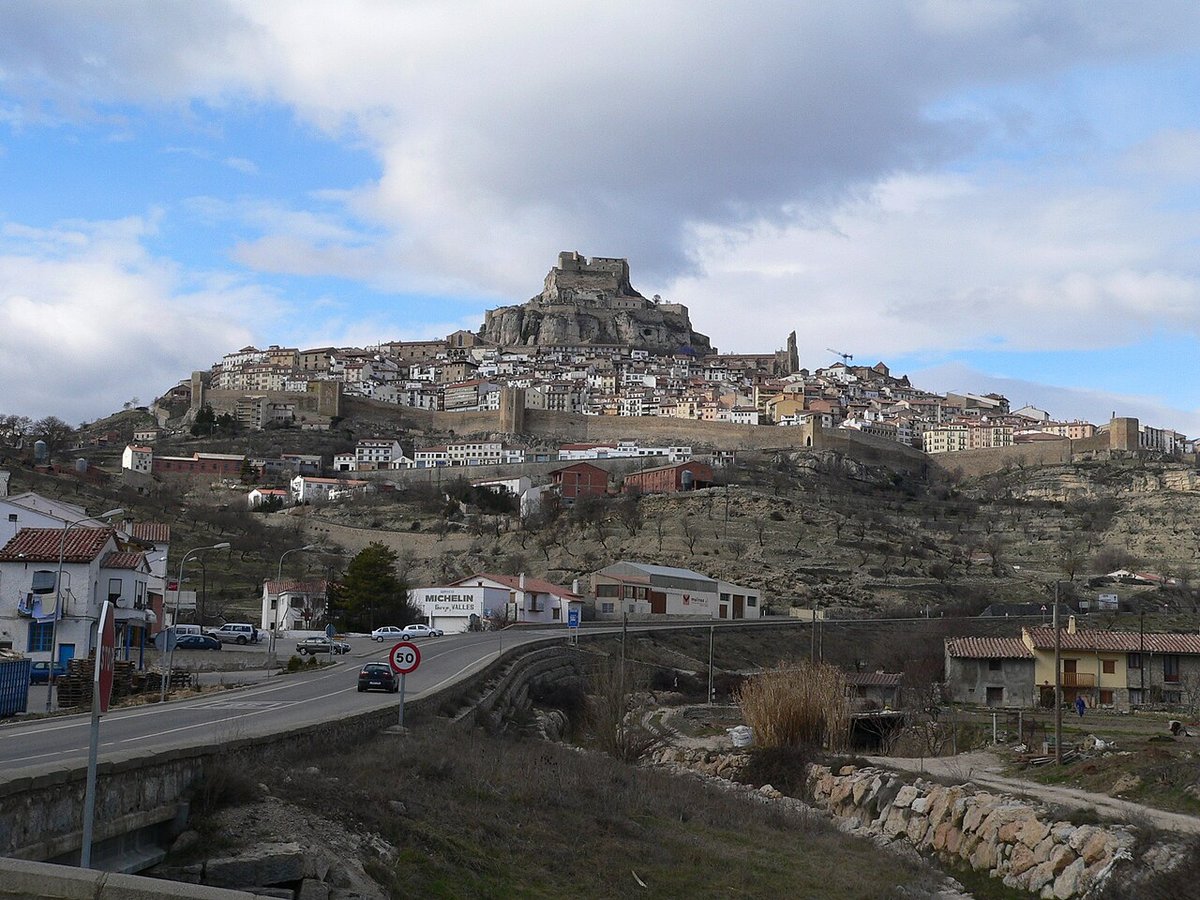
At first light the main square is almost silent. A wooden door closes somewhere, the wind brushes against the flags on the town hall, and little else moves. Olocau del Rey comes into view slowly, its stone still holding the night’s cold, the light slipping sideways between façades. This small municipality in the comarca of Els Ports has around 135 inhabitants and stands more than 1,000 metres above sea level, on a slope open to the north. When the air is clear, the horizon feels wider than expected for a place of this size.
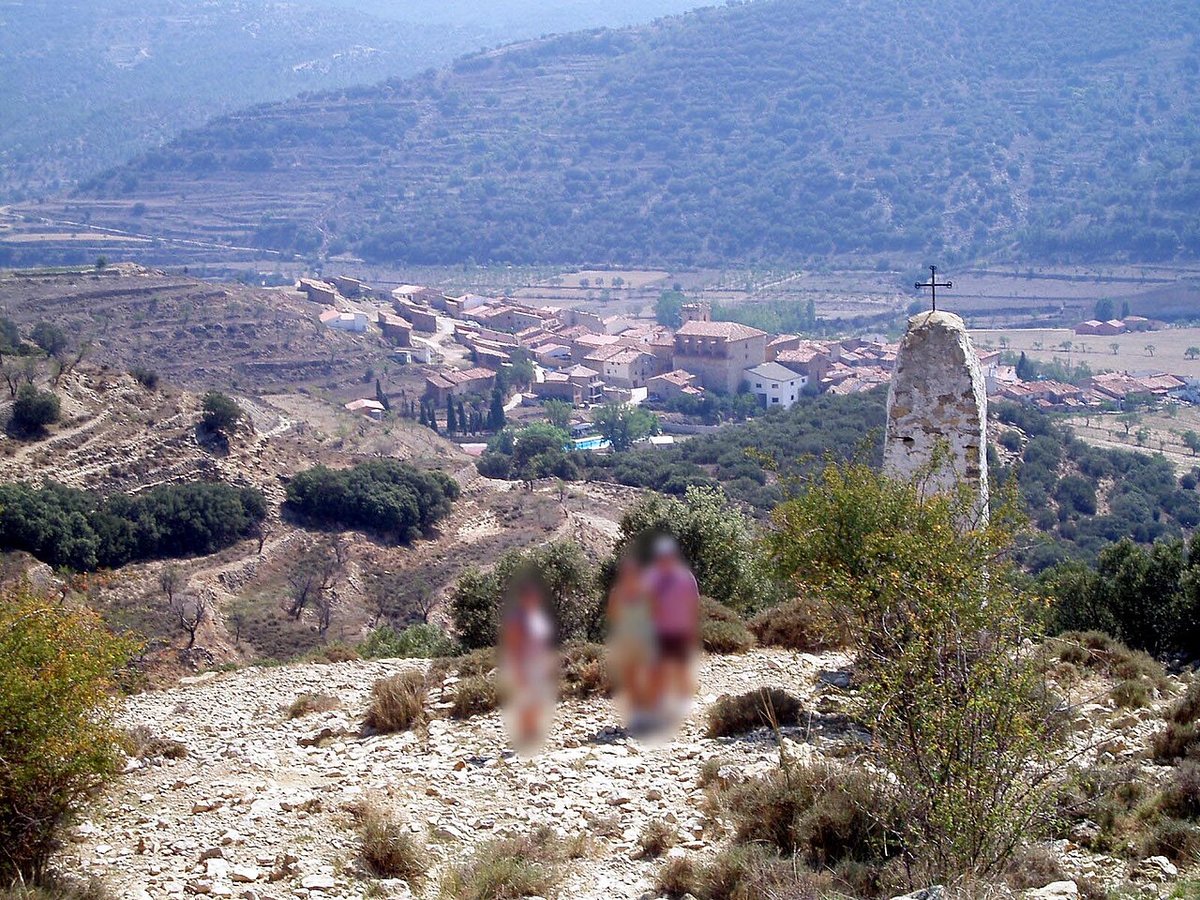
The village on the hillside
The historic centre can be explored without effort. Short streets, the odd incline and, on weekdays, a great deal of quiet. The parish church of Santa María dominates the square, its thick stone walls and austere outline in keeping with the rest of the village. It was built in the 16th century, although the complex has been adjusted over time.
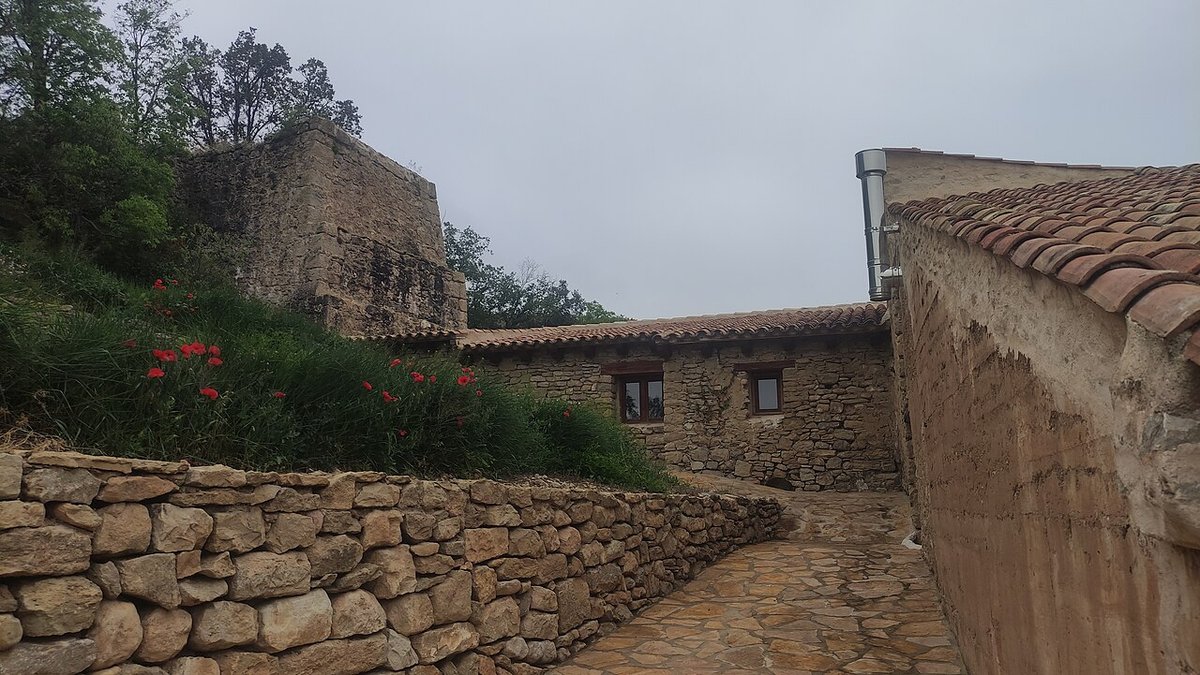
A slow walk reveals details that might slip by in a hurried visit: doorways framed by large voussoirs, heavy iron grilles on low windows, tiled eaves casting shade across the street. In some corners there are stone basins and small wells set against the walls. They feel practical rather than decorative, elements shaped by use.
In the morning, low light brings out textures in the stone. By mid-afternoon the village becomes more subdued, with long shadows stretching along narrow streets. The sense of height and exposure remains constant. Olocau del Rey does not sprawl; it sits compactly on its slope, with the land falling away beyond the last houses.
Natural viewpoints over Els Ports
A short walk from the centre is enough for the landscape to take over. The municipality unfolds between flat-topped limestone formations known as muelas, ravines and hills covered in pine. The terrain is rugged, yet the overall impression is one of space.
There are several high points around the village that help make sense of the geography of Els Ports. From these rocky platforms, forested hollows and, on clear days, the mountain ranges marking the boundary with Aragón come into view. The wind often blows hard at these elevations, particularly in winter.
Even when conditions feel mild lower down, it is worth carrying an extra layer. Exposure is part of the character of this area, and the weather can shift quickly at over 1,000 metres above sea level.
Rock shelters and prehistoric art
In the surrounding countryside there are several rock shelters containing Levantine-style cave paintings. They form part of a protected group of prehistoric art sites that extends across much of the Mediterranean arc of Spain. These paintings, created thousands of years ago, are typically found in shallow rock overhangs rather than deep caves.
They are not always easy to locate without good knowledge of the area. Some paths are not clearly signposted, and tracks can become awkward after rainfall. It is sensible to check access in advance or ask in the village before setting out. Here, the terrain sets the terms.
The experience of seeking out these shelters is closely tied to the landscape itself. Limestone walls, scrub and pine, the shifting light across rock surfaces. The paintings are part of a broader environment that remains largely rural and sparsely populated.
Walking the surrounding landscape
Footpaths lead out from Olocau del Rey towards nearby ravines and smaller muelas. They may not be spectacular in a conventional sense, yet they hold something very characteristic of this comarca: silence, the scent of resin in warm weather and open stretches where the only sound is the faint clanging of bells from a distant flock.
In summer, the sun can be intense in exposed sections. Setting out early is the most sensible option. By mid-afternoon the heat still presses down, and shade is limited on some stretches.
Footwear with a good sole and sufficient water tend to matter more here than the overall distance of the walk. Surfaces can be uneven, and conditions change with the seasons. The appeal lies less in dramatic landmarks and more in atmosphere: the steady rhythm of walking, the openness of the views, the feeling of being far from busier routes.
Dark skies and village life
Night alters the village noticeably. Lighting is sparse and the sky turns deep, with far more stars than are visible in urban areas. Amateur astronomers often come here because light pollution is very low.
Even in summer, temperatures drop after dark. Cold air descends from the sierra and makes a jacket necessary. The altitude that brings those wide views by day also shapes the evenings.
Throughout the year, the local calendar maintains several traditional celebrations. In summer, patron saint festivities usually take place, when relatives return and the village becomes livelier than usual. In winter, celebrations linked to San Antonio are still observed, with bonfires in the square and an atmosphere that feels more neighbourly than festive.
Outside these dates, the pace is calm. Some services do not open every day, and opening times can vary considerably. It is worth keeping in mind that this is a small community with a limited year-round population.
The road that leads here crosses mountainous terrain, with bends and narrow stretches. It is not especially difficult, but it is slow. That too forms part of the journey. By the time Olocau del Rey comes into view, the rhythm has already shifted. The village does not demand much in the way of plans or schedules. It asks for time, a willingness to adapt to the wind and the light, and an acceptance of the quiet that defines this corner of Els Ports.