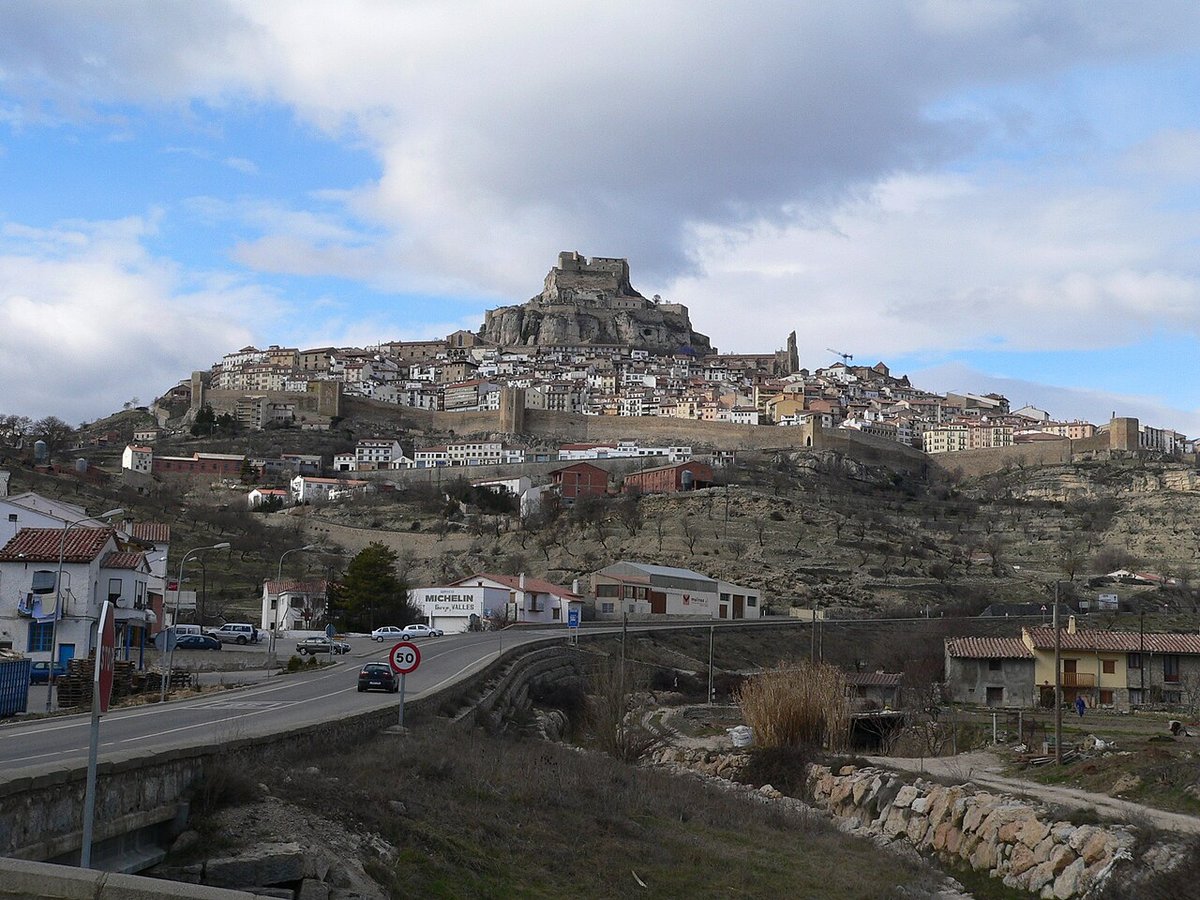
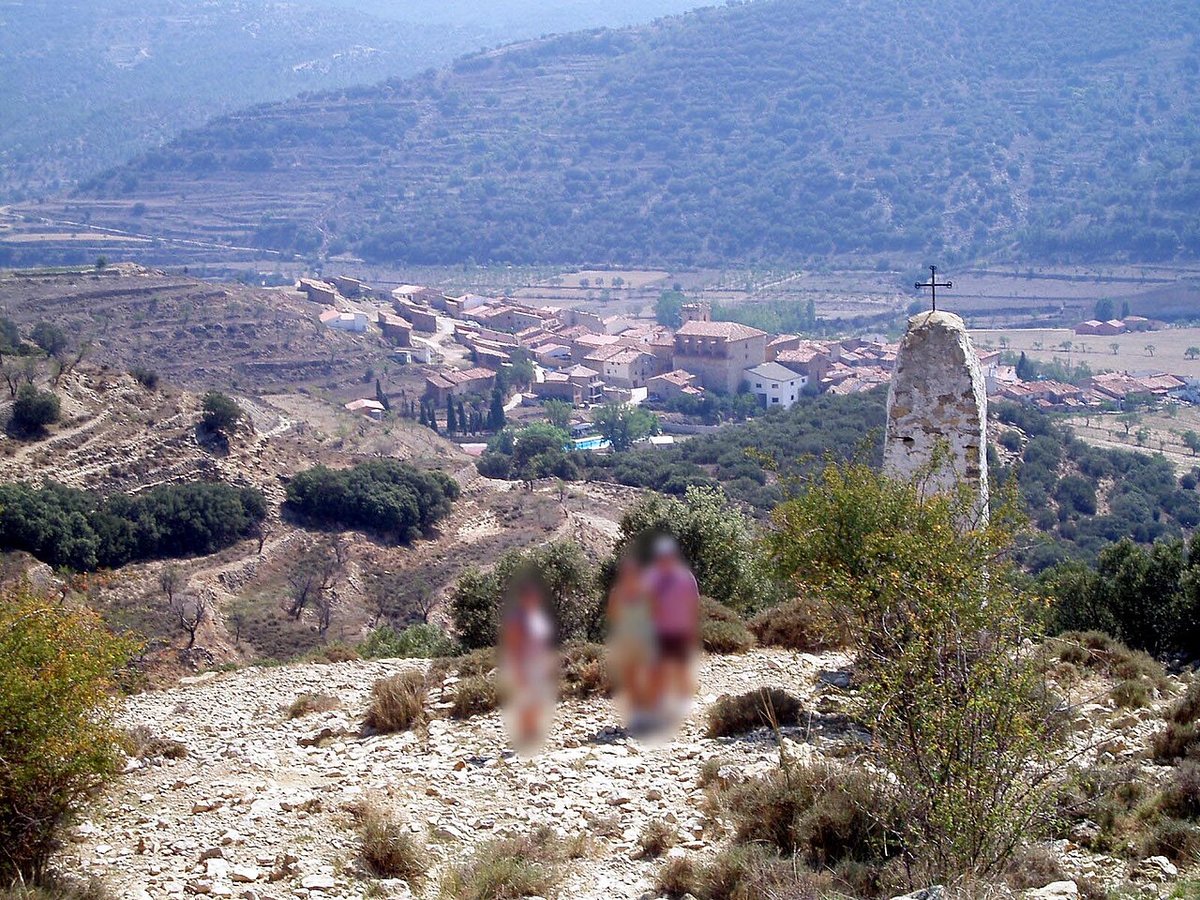
Vista aérea de Palanques
Instituto Geográfico Nacional · CC-BY 4.0 scne.es
Comunidad Valenciana · Mediterranean Light

Palanques

The church bell in Palanques strikes noon, yet only two shutters are open. A woman waters geraniums on a stone balcony; the water drips three store...

34 inhabitants · INE 2025
670m Altitude

Why Visit

Mountain Church of the Assumption Hiking

Best Time to Visit

summer

San Cosme and San Damián festival (August) agosto

Things to See & Do
in Palanques

Heritage

  • Church of the Assumption
  • Bergantes Lookout
  • Cingle Rock Paintings

Activities

  • Hiking
  • Vulture watching
  • Cave-painting visit

Festivals
& & Traditions

Fecha agosto

Fiestas de San Cosme y San Damián (agosto)

Las fiestas locales son el momento perfecto para vivir la autenticidad de Palanques.

Full Article
about Palanques

Small village perched on a rock beside the Bergantes river; offers spectacular views and cave paintings nearby.

Ocultar artículo Leer artículo completo

The church bell in Palanques strikes noon, yet only two shutters are open. A woman waters geraniums on a stone balcony; the water drips three storeys into an alley so narrow it never sees direct sun. At 661 metres, the village sits higher than Sheffield’s highest peak, yet fewer than forty people call it home. You can walk from one end to the other before the echo of the bell fades.

Where the road gives up

From Castellón de la Plana the CV-10 inland road narrows twice: first at Zorita del Maestrazgo, then again at the turn-off for CV-118. The last twenty kilometres climb 500 metres through holm-oak and sudden limestone scars. Google Maps shows the route as a wiggly grey vein; sat-nav signal drops out twice, once just before a bend where wild boar root among last autumn’s chestnuts. In winter the same bend ices over and the village can be cut off for a day or two—check the DGT traffic app before setting out, and carry snow socks even in April.

There is no petrol station, cash machine or shop. The only public amenity is the ayuntamiento, open Tuesday and Thursday mornings, where the mayor doubles as tourist information. Park by the stone trough at the entrance—room for six cars, seven if everyone breathes in—and start walking. Traffic noise is replaced by the dry click of cicadas and, somewhere below the crags, a pair of golden eagles turning thermals.

Stone, sky and abandonment

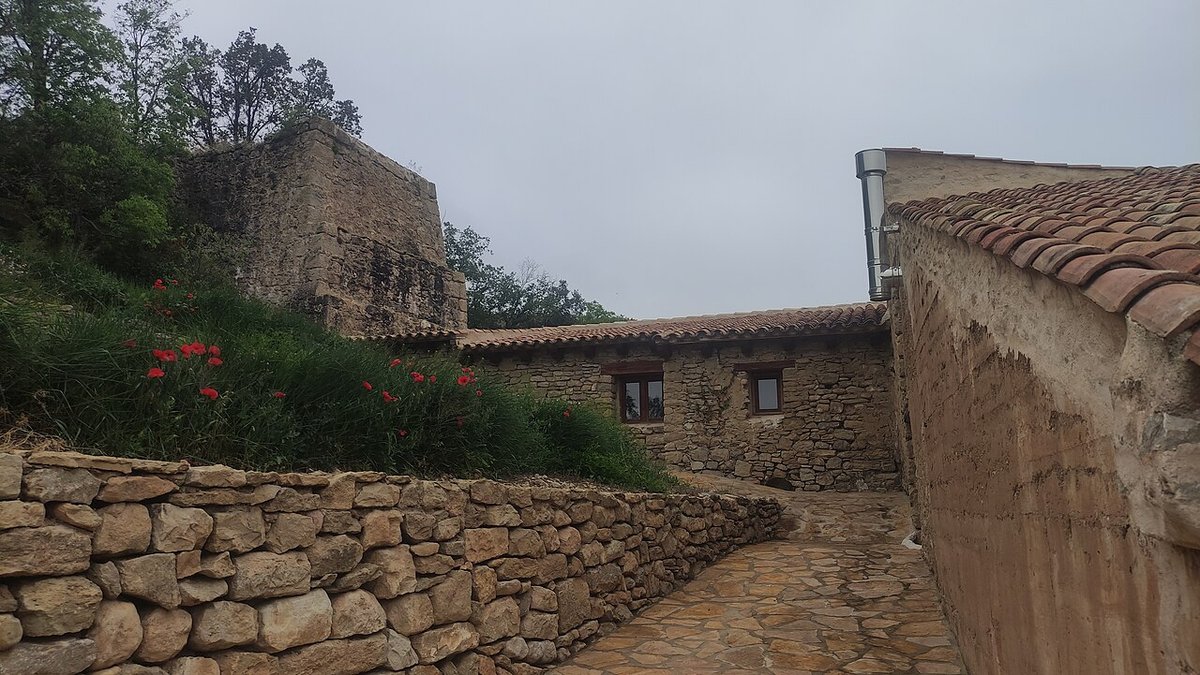
Palanques grew in tiers because flat ground is scarce. Houses are built straight onto bedrock; their back walls are literally the mountain. Rooflines dip and rise like a row of broken teeth, some freshly capped with new clay tiles, others open to the weather. Abandonment is part of the architecture: half-ruined masías appear every few minutes, their stone archways filled with rubble and fig saplings. Yet the pattern of habitation is clear—holiday-makers tend to buy the upper terraces, leaving the lower streets to shutters that stay shut eleven months a year.

The parish church of Sant Miquel is unlocked. Inside, the temperature drops ten degrees. A single fluorescent tube buzzes above a baroque altar smothered in gold leaf so dark it looks bronze. The bell rope hangs temptingly close; resist it—the last visitor who rang was asked to donate 150 euros toward roof repairs.

Continue uphill past the last street lamp and the path turns into a mule track. Within fifteen minutes the village shrinks to a grey smear among grey rocks. Ahead, the Els Ports massif rolls out a saw-toothed horizon that separates Valencia from Aragón. On a clear day you can pick out the steel roof of Morella’s bullring, 25 kilometres away as the eagle flies, three times that by road.

Walking without way-marks

Official hiking routes stop at the municipal boundary, but old connecting paths still exist. One leads south-east to la Moleta de Palanques, a 1,020-metre summit that takes two hours at English Sunday-stroll speed. The track starts between houses numbers 26 and 28—look for the cement water tank painted with a fading Real Madrid crest. After the last gate the trail dissolves into goat prints; keep the stone wall on your left and the skyline straight ahead. A plastic shopping bag snagged on a rosemary bush is the final cairn.

Early mornings bring the best chance of wildlife: wild boar prints pressed into damp clay, a southern grey shrike impaling a lizard on buckthorn. Summer walkers should carry two litres of water; the altitude may be moderate but the sun reflects off limestone like a mirror. In October the same slopes smell of damp thyme and gunpowder—local hunters drive the boar down-valley, and gunshots echo until lunchtime.

What passes for lunch

Back in the village, Pension El Forn opens its door at 13:30 sharp. The dining room has five tables, checked oilcloth and a television permanently tuned to the Spanish equivalent of BBC News. There is no menu; the owner announces what her husband cooked at dawn. Expect baked rice with pork rib and black pudding, or mountain rabbit stewed with snails. Portions are built for agricultural labourers: one dish feeds two British appetites comfortably. A carafe of local Garnacha tinta costs €4; pudding is usually carton tiramisu, defrosted with goodwill rather than skill. Payment is cash only—there is no card machine and the nearest ATM is 19 kilometres away in Morella.

If the pension is full (weekends in May fill up with bird-watchers) the alternative is self-catering. Stock up in Morella’s Consum supermarket before you leave: fresh milk, decent cheddar substitute, and something green—the village shop closed in 2003 and the next vegetable plot belongs to an octogenarian who barters tomatoes for English cigarettes.

When the fiesta finally arrives

Visit in August and the population quadruples. Grandchildren arrive from Valencia with inflatable pools strapped to car roofs; someone ropes fairy lights between balconies and the plaza hosts a foam party that ends at 3 a.m. with communal hot chocolate. The patronal feast falls on the second weekend—Saturday brings a brass band that knows three songs, Sunday a mass followed by paella for 200 cooked outdoors in a pan the size of a satellite dish. Outsiders are welcome but anonymity is impossible; expect to be asked whose cousin you are.

Out of season the village reverts to hibernation. November can be glorious—clear air, copper beech on the lower slopes—but by late afternoon the sun slips behind the ridge and temperatures dive to single figures. Bring layers and a torch; street lighting switches off at midnight to save the municipality €400 a month.

Driving home, if you must leave

The return journey always feels shorter. Perhaps it is the knowledge that the nearest traffic light is 70 kilometres away, or the satisfaction of having filled a weekend with nothing noisier than church bells and boot soles on grit. Palanques will not change your life, but it might recalibrate your sense of scale: forty souls, one bar, zero souvenirs. Pack a paperback, a pair of sturdy shoes and enough cash for rice and wine. Then climb the hill at dusk, watch the clouds pool in the valley like milk in a saucer, and remember what quiet sounds like.

Key Facts

Region
Comunidad Valenciana
District
Els Ports
INE Code
12087
Coast
No
Mountain
Yes
Season
summer

Livability & Services

Key data for living or remote work

2024
EducationElementary school
Housing~5€/m² rent · Affordable
Sources: INE, CNMC, Ministry of Health, AEMET

Official Data

Institutional records and open data (when available).

  • Mas Torre Amela
    bic Monumento ~0.2 km
  • Torre Molino o Masía Torreta
    bic Monumento ~1.3 km
  • Torre de Dionisio
    bic Monumento ~1.1 km
  • Torre de Folch
    bic Monumento ~2.4 km

Planning Your Visit?

Discover more villages in the Els Ports.

View full region →

More villages in Els Ports

Traveler Reviews