Full Article
about Portell de Morella
Livestock-farming village on a high plateau with sweeping views; it keeps its dry-stone traditional architecture and an unspoiled rural setting.
Hide article Read full article
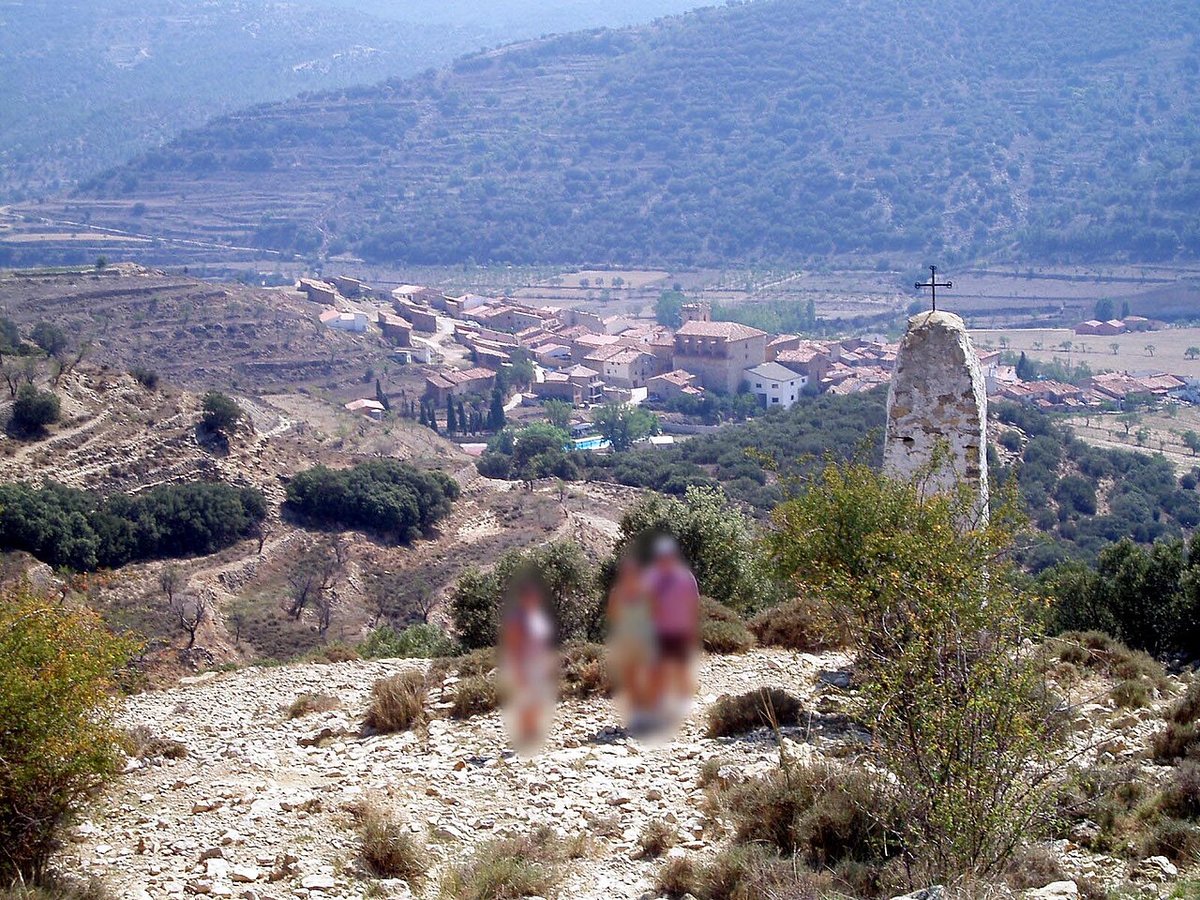
Portell de Morella occupies a limestone plateau in the comarca of Els Ports, over a thousand metres up. The terrain here is not gentle; it fractures into ravines and rounded hills. The village clings to one of these rises, a position chosen for control over the routes between valleys. This is a landscape of historical scarcity, where settlements were always small and dispersed.
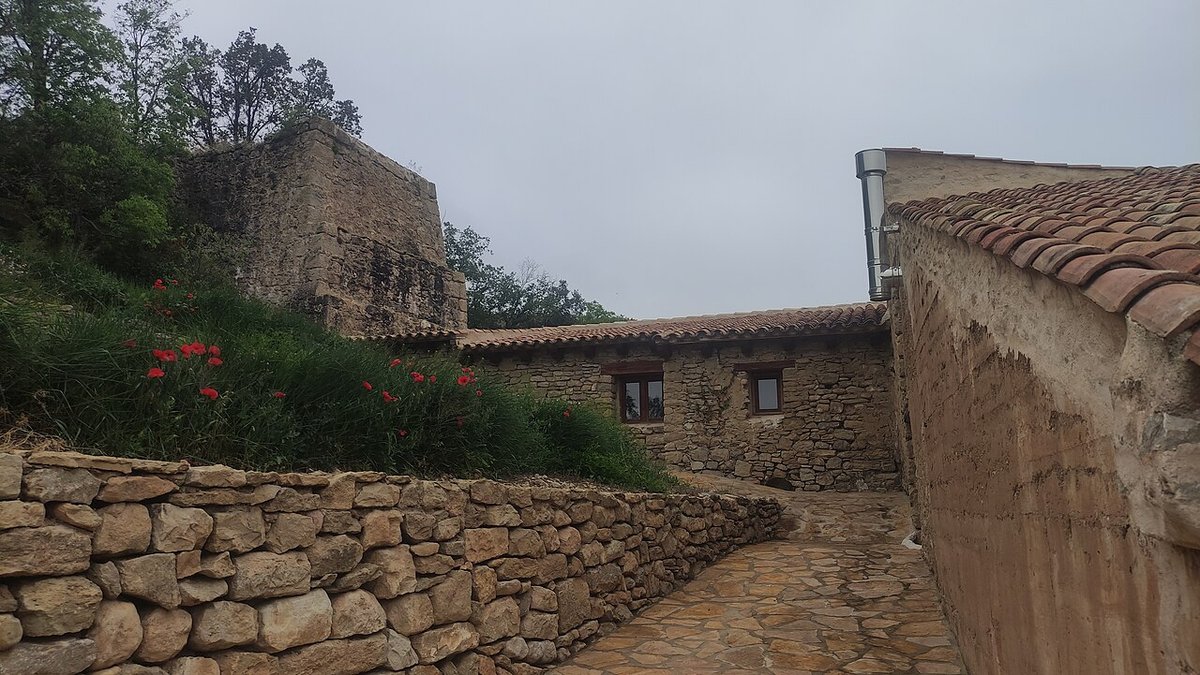
The population now stands at about one hundred and fifty-five. The scale is immediately apparent. Streets follow the incline of the hill, paved in sections with old stone. Construction is simple and austere: thick masonry walls, roofs of curved tile. There are no grand civic buildings. The parish church of San Pedro serves as the visual anchor, a modest structure altered over centuries. Its current form is a palimpsest of those changes, not a single architectural statement.
From the church, the view clarifies the village’s circumstance. The land falls away into wooded ravines and bare slopes. Agriculture here was never easy. Portell looks like a practical answer to that difficulty, not an attempt to overcome it.
A landscape of limestone and flight
The municipality is defined by its geology. Pine forests cover much of the limestone, mixed with holm oak, juniper, and mountain scrub. The vegetation is not uniform; it thins out on rocky south-facing slopes. In the deeper ravines, cliffs provide nesting sites for birds of prey. Griffon vultures are often seen circling on thermal currents. Eagles and falcons inhabit the more remote sectors. Human activity is present but does not dictate the shape of things.
The dispersed logic of the masías
To understand this territory, look to the masías. These isolated stone farmhouses dot the entire municipal area. Some remain in use, others are abandoned. They represent the historical system of settlement: small family holdings scattered across a demanding landscape, connected by a network of dirt tracks and paths. There was no single centre of control. Each masía was a node in a wider web of grazing and cultivation. That pattern of dispersal is still legible in the terrain today.
Walking the old necessities
A web of traditional paths links the masías, passes, and former cultivated plots. Many are not formally signposted but remain in use by locals. Walking here means constant ascent and descent; long flat stretches are rare. The effort is part of it. The reward, on the higher passes, is a sudden opening of vista across the sierras of Els Ports. These routes were laid down for work and movement, not leisure. Their logic is pragmatic.
Practicalities of access and stay
Reaching Portell requires mountain driving. From Castellón de la Plana, it is roughly seventy kilometres via secondary roads like the CV‑124. The routes are narrow and winding, as is typical for Els Ports. Once arrived, the village is traversed on foot in under an hour. Accommodation options are limited and seasonal; it is wise to plan ahead. The social rhythm shifts dramatically with the seasons—busier in summer, quiet and inward-focused in winter. Local food reflects the pastoral history: lamb, kid goat, cured sausages, and wild herbs. It is a cuisine of sustenance, shaped by climate and work.