Full Article
about Todolella
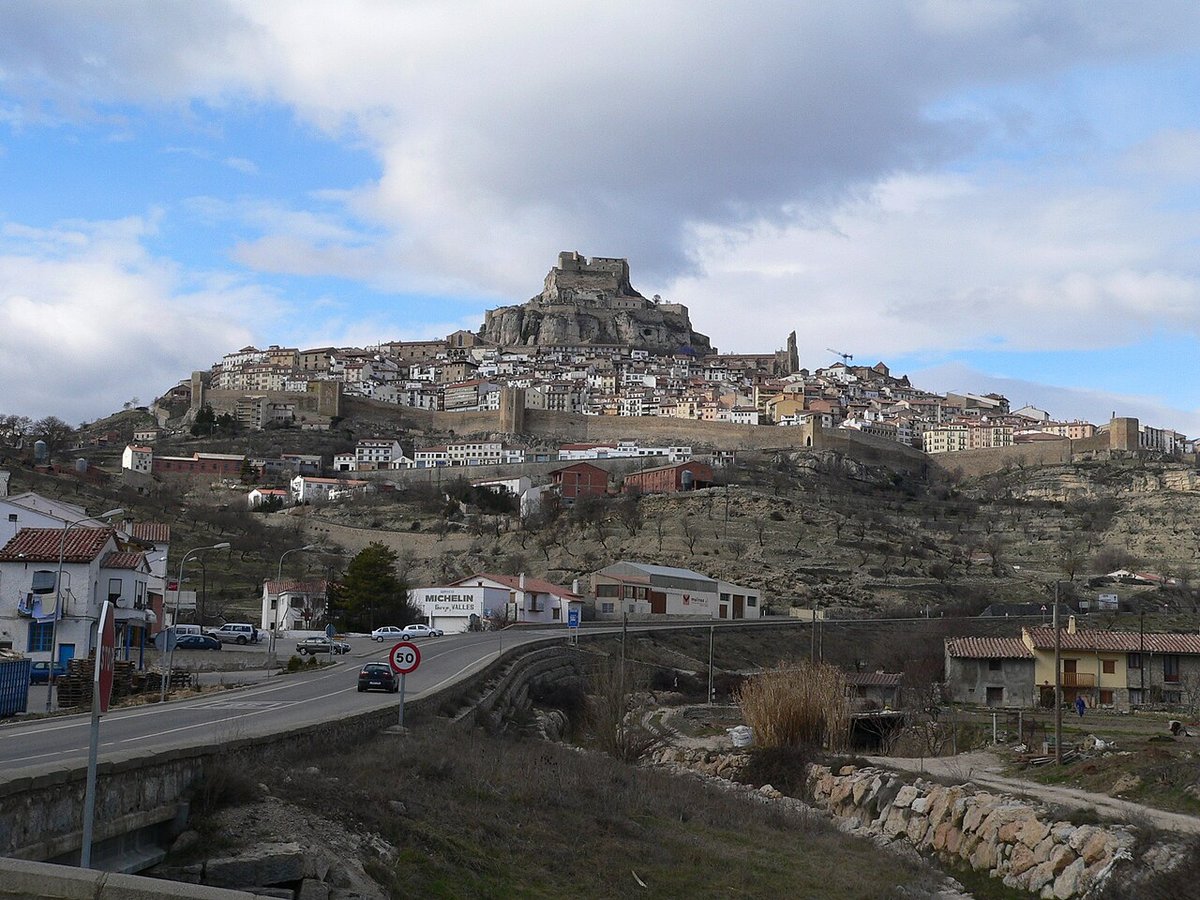
Small town dominated by a lived-in, well-preserved medieval castle; stone architecture and medieval atmosphere in the comarca of Els Ports.
Hide article Read full article
A Hilltop Village of Light and Stone
Early in the morning, when the sun slips sideways between the houses, the stone of Todolella takes on an almost golden tone. The silence feels so complete that the wind brushing across roof tiles becomes audible, along with the occasional dry thud of a closing door. Tourism in Todolella does not begin with a checklist of sights. It begins with the atmosphere of a very small village, home to barely 136 residents, where each street seems to pause for a moment before turning a corner.
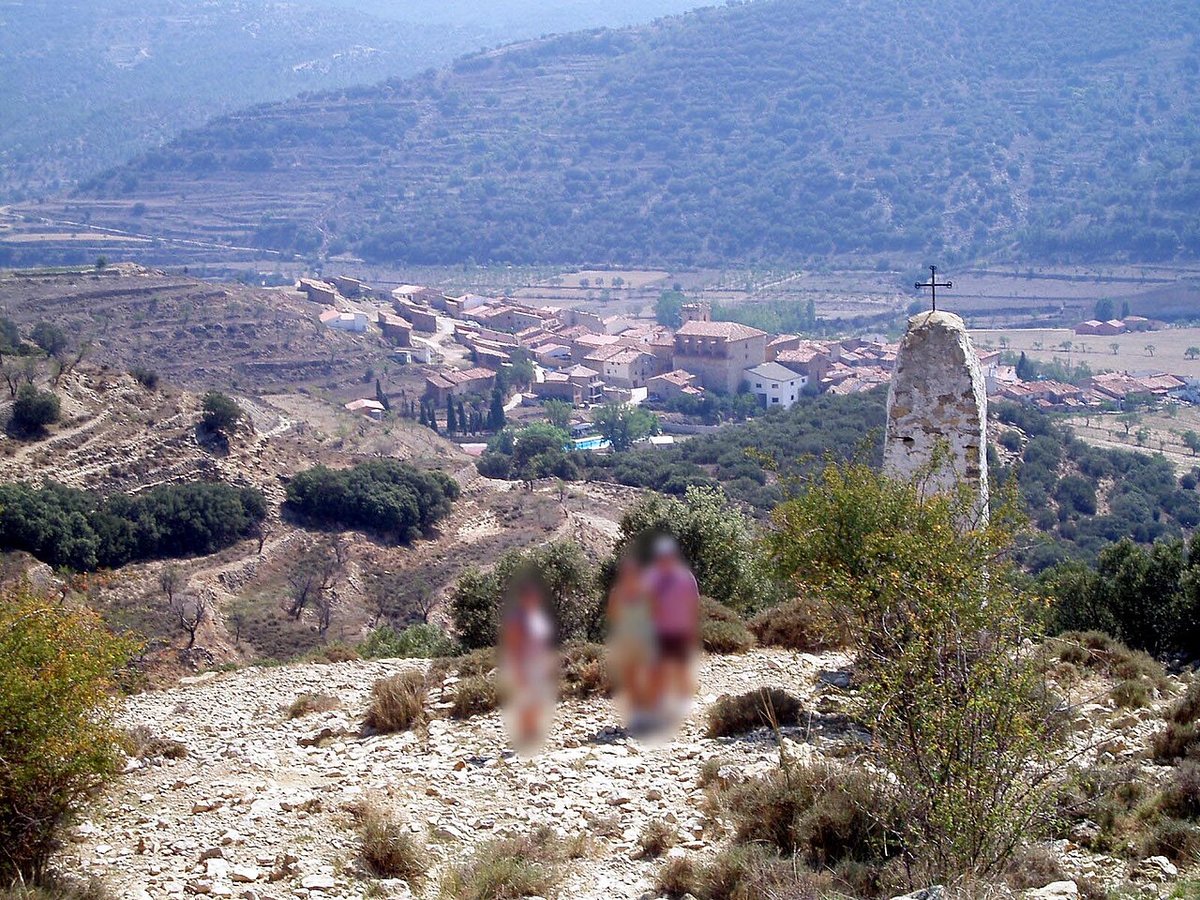
The historic centre stands on a rocky promontory at around 800 metres above sea level, with open views towards the mountain ranges that mark the boundary between Castellón and Teruel. From the edge of the village, the landscape unfolds in pale, shifting tones: almond groves, old terraced fields and low hills covered with holm oak and pine. In February, when the almond trees are in blossom, the contrast between the white fields and the grey stone of the village is clearly visible, even from the access road.
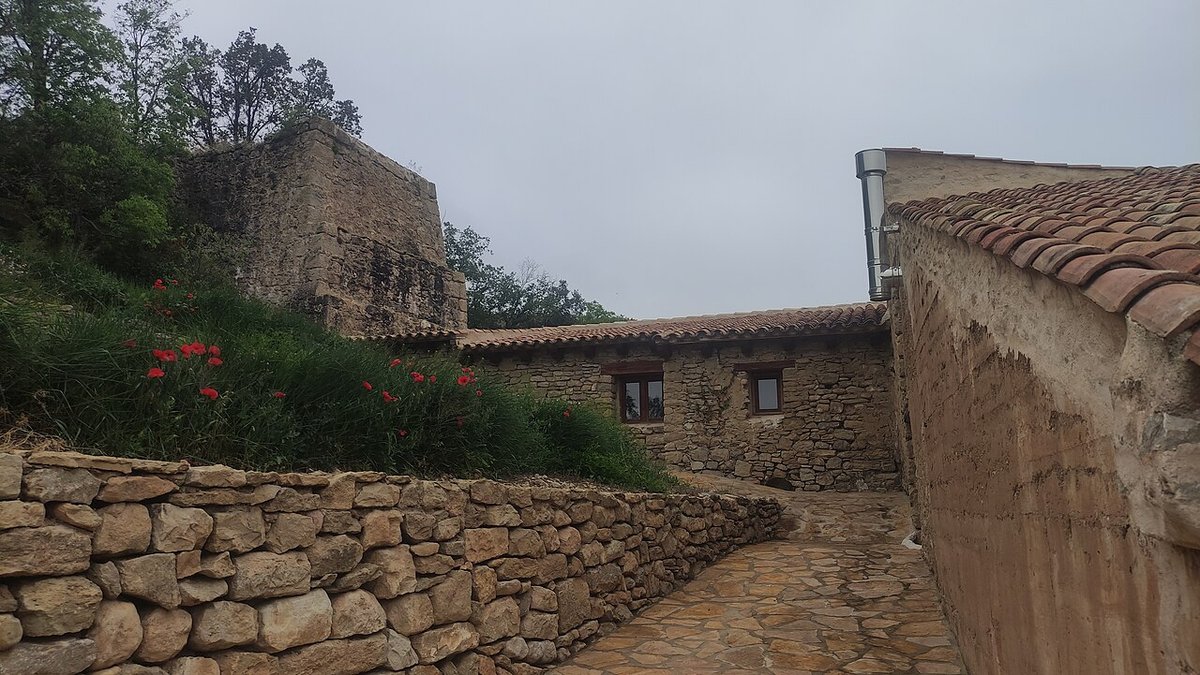
The houses follow the familiar pattern of Els Ports, the comarca or county to which Todolella belongs. Thick stone walls, slightly uneven Arab tile roofs and wrought-iron balconies define the look, sometimes softened by flowerpots or lines of washing. The streets rarely run straight. Instead, they adapt to the terrain, climbing, dipping and narrowing to the point where people must pass one by one.
Todolella forms part of the scattered mosaic of villages across Els Ports. Many visitors arrive by linking it with other nearby stops, following quiet roads that cut through ravines, pinewoods and cultivated fields.
The Castle-Palace and the Village Streets
The first feature to catch the eye is the castle, more precisely a castle-palace, which dominates the village skyline from one end. Its stone mass rises above the rooftops and is visible even before entering the historic centre. The current structure combines defensive sections with more residential elements, a common evolution in fortresses that were adapted over the centuries to changing needs.
Nearby stands the parish church of the Asunción. Built from local masonry, it is a sober structure with a simple bell tower that can be seen from almost anywhere in the village. Inside, the atmosphere reflects the austerity typical of many rural churches in the area: thick walls, filtered light and very little ornamentation.
The historic centre itself rewards unhurried wandering. Stone doorways with heavily worn lintels hint at centuries of use. Narrow passageways slip between houses, and small corners reveal tiny vegetable plots protected by low walls. In some places, the street suddenly opens up to reveal the surrounding landscape, deep ravines and hills that change colour with the seasons.
There is no need for a strict route. Todolella is best understood by allowing its irregular layout to guide the way, noticing how architecture and terrain fit together.
Walking Through Els Ports
The countryside around Todolella is well suited to walking. Paths leading out of the village connect with old terraced fields, dry-stone animal pens and small ravines where the sound of running water can be heard after rainfall.
The landscape shifts noticeably throughout the year. At the end of winter, almond blossom takes centre stage. In spring, the fields turn greener and the scrubland releases the scent of thyme and rosemary. Summer brings harsher light and faded colours, with the sun beating down on the limestone rock. At that time of year, it makes sense to set out early in the morning or later in the afternoon to avoid the strongest heat.
Not all paths are clearly signposted. Those planning to extend their walk are usually advised to carry a map or a hiking app, as some trails split off among abandoned terraces and can be confusing.
The setting is typical of inland Castellón, where altitude and exposure shape both vegetation and daily life. The views are wide and open, and the sense of space is constant.
Mountain Flavours and Seasonal Traditions
The cooking of the area reflects its mountain climate. Winters in Els Ports are cold, and the traditional dishes are substantial. Stews made with lamb, cured sausages and recipes built around bread, olive oil and almonds form the backbone of local cuisine.
In autumn, when rainfall has been sufficient, it is common to see residents heading into the hills to look for mushrooms. This is a widespread practice across the comarca. Identifying edible species requires experience, something that locals tend to acquire over time.
Celebrations in Todolella revolve around the church and the agricultural calendar. In August, festivities linked to the Asunción take place, combining religious events with gatherings in the streets. These occasions bring movement and conversation to spaces that are otherwise quiet for much of the year.
Outside these moments, daily life is calm. Winter is especially silent. Many houses remain shuttered for days at a time, and chimney smoke rises straight into the cold air.
The Road Into the Interior
Reaching Todolella means travelling along inland roads with plenty of bends and changes in altitude. From the coast of Castellón, the usual approach is to head inland across the province and, once in the comarca of Els Ports, continue along regional roads that link several of the area’s villages.
The final kilometres run between scrubland and cultivated fields. It is worth taking them slowly. Some stretches are narrow, and there are natural viewpoints where the temptation is to stop the car for a moment and look out across the hills before driving into the village itself.
Todolella does not present itself with spectacle or grand gestures. Its appeal lies in the meeting of stone and landscape, in streets shaped by the ground beneath them, and in the steady rhythm of a small community perched high above the surrounding fields.