Full Article
about Villafranca del Cid/Vilafranca
Capital of dry-stone walls and huts in a one-of-a-kind landscape; major textile industry set in high-mountain country.
Hide article Read full article
A las siete de la mañana, el aire que baja de Els Ports todavía tiene filo y huele a tomillo machacado en los senderos. En la Plaza Mayor, alguien cruza los adoquines con una barra de pan envuelta en papel. La luz tarda en llegar a las calles estrechas; cuando lo hace, va iluminando tejas negras y balcones de hierro forjado uno a uno, como comprobando que todo sigue en su sitio.
Vilafranca está por encima de los mil metros, y las mañanas tienen su propio compás. El sonido viaja con facilidad aquí, y las campanas de la iglesia de la Asunción suelen marcar el ritmo. Se oyen desde casi cualquier calle.
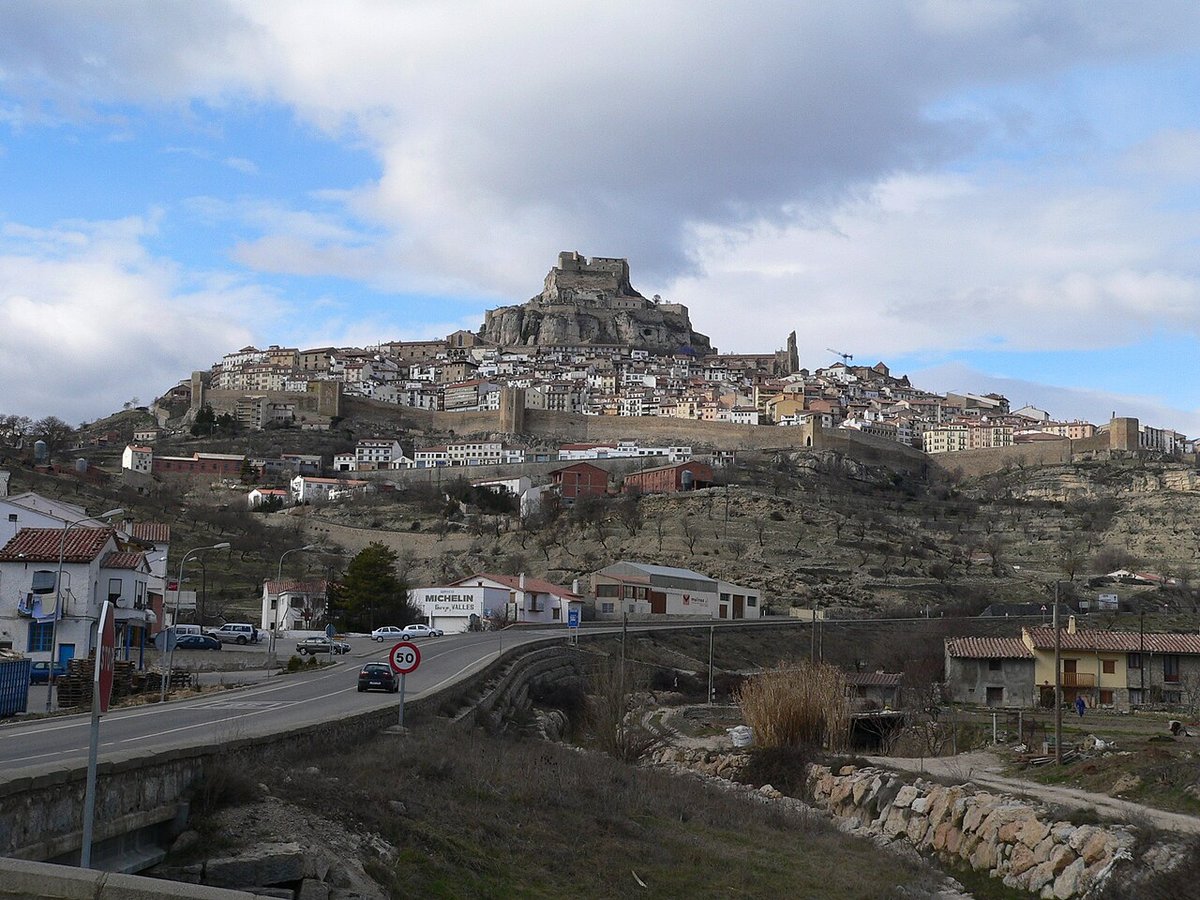
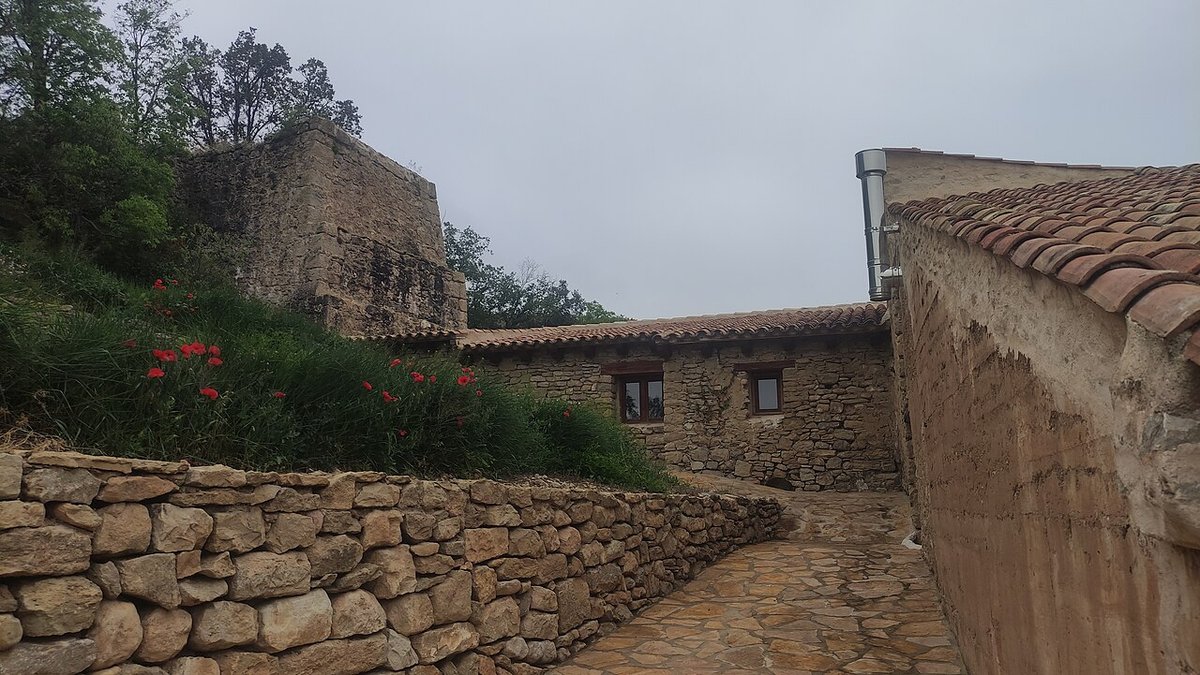
El núcleo histórico conserva la traza de cuando todo estaba rodeado por una muralla. La mayoría ha desaparecido, pero queda un acceso: el Portal de San Roque. El arco de piedra muestra un desgaste claro en la base, alisado por siglos de carros, animales y pies. Más allá, las calles se retuercen entre casas de piedra altas, que sorprenden en un entorno de montaña. Algunas fachadas aún tienen blasones y fechas grabadas en los dinteles. Si caminas sin prisa, aparecen los detalles: una ventana minúscula con reja torcida, la piedra gastada por la cuerda de un pozo antiguo.
En una de estas calles hay un horno comunal muy viejo que se enciende ciertos días de la semana. No está preparado para ser una atracción; funciona como siempre lo ha hecho, cociendo pan para las casas del pueblo. Cuando está encendido, el humo de leña de encina se queda pegado a la ropa horas después.
La cocina aquí sigue el clima y lo que la tierra da. Cuando llega el frío, en muchas casas se prepara la olla de la Plana, un guiso lento de garbanzos, cerdo y verduras que se hace en cazuelas grandes y está pensado para compartir. Las comidas se alargan, y las conversaciones llevan el mismo paso.
Otra constante es la coca de ceba, una base fina cubierta generosamente con cebolla. Sale del horno con los bordes crujientes mientras el centro se queda blando y ligeramente dulce.
El invierno también trae la matanza, que aún se hace en algunas casas y masías cercanas. Esos días, el aire huele a pimentón, ajo y humo. Las longanizas se cuelgan para curar en sitios bien ventilados, donde permanecen semanas.
La miel que se vende por la zona suele venir de colmenas dispersas en el matorral bajo de la comarca. Las abejas liban romero, tomillo y aliaga. El resultado es una miel pálida y fragante que mucha gente toma simplemente con pan y aceite, o revuelta en una bebida caliente cuando el termómetro baja.
Calles que cambian por un día
El aspecto de Vilafranca se transforma por completo el día del Corpus Christi. Antes del amanecer, los vecinos empiezan a tender alfombras hechas con pétalos y plantas recogidas de los campos de alrededor. Visto desde arriba, tramos enteros de calle se convierten en superficies con dibujos. Algunos son religiosos, otros geométricos; unos pocos se repiten año tras año.
Cuando pasa la procesión, el olor a romero recién cortado y a flores silvestres se mezcla con el polvo de la calle. El efecto es breve. En cuestión de horas, las alfombras se deshacen y el pueblo vuelve poco a poco a su aspecto habitual.
Las fiestas mayores llegan hacia finales del verano. Durante unos días, la plaza se llena del sonido de la dolçaina y el tabal. Por la noche hay hogueras y bailes. Por la mañana, la gente se junta al aire libre para chocolate caliente y buñuelos, muchos todavía con la chaqueta del día anterior sobre los hombros.
Senderos hacia los manantiales
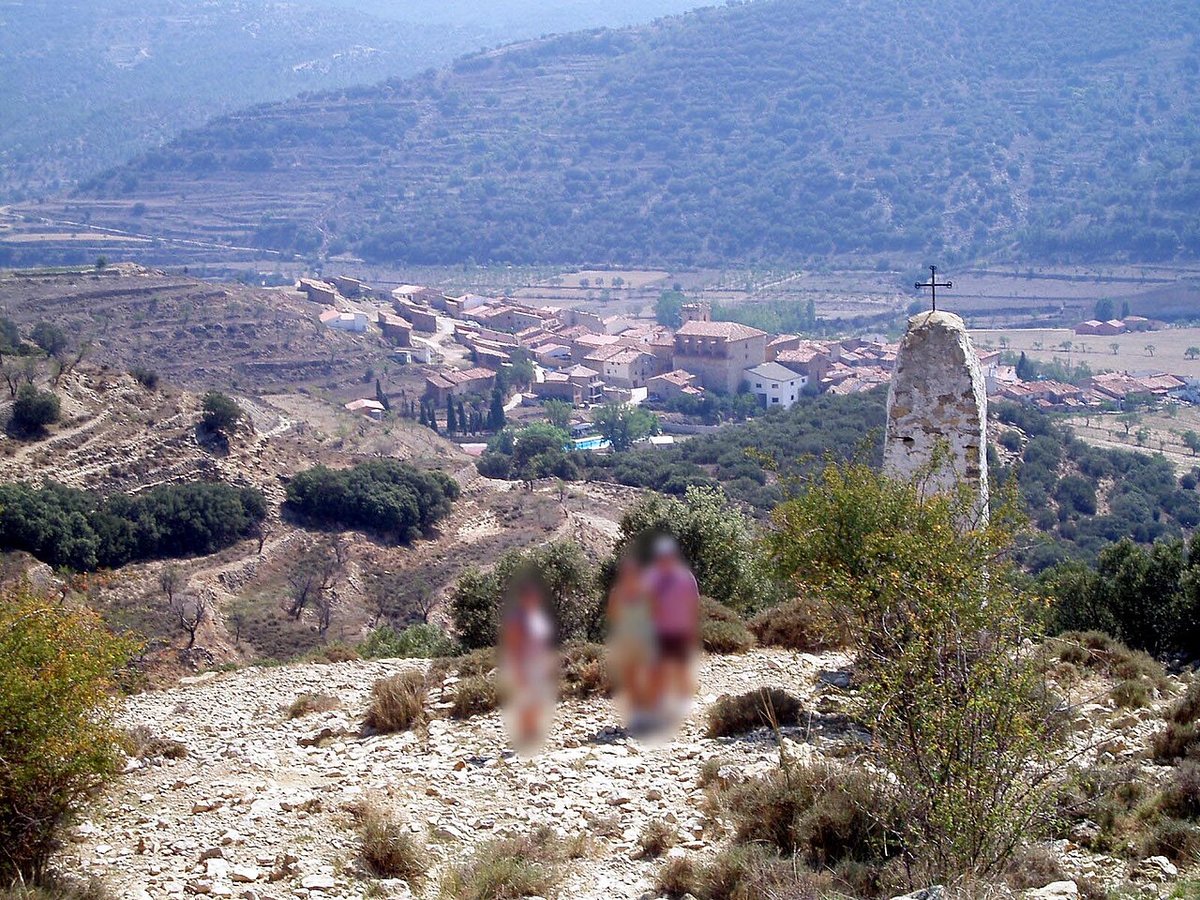
Varios caminos salen de Vilafranca hacia manantiales viejos y aldeas dispersas. Una ruta frecuente sigue una serie de fuentes históricas justo a las afueras. El sendero discurre entre muros de piedra seca, encinas bajas y matas de aliaga. Cuando corre el agua, lo hace sobre musgo oscuro y mantiene fresco el entorno incluso en verano.
Si continúas hacia la Pobla de Bellestar, el paisaje se abre. Las casas quedan más separadas y el silencio se hace más profundo. Esta aldea tiene muy pocos vecinos fijos. El edificio de la escuela sigue en pie, y el frontón tiene las marcas de muchos partidos, aunque ahora pasa más tiempo vacío que en uso.
Cómo llegar y cuándo venir
Llegar a Vilafranca implica carreteras interiores con curvas y cambios de altitud. El último tramo atraviesa tierras de cultivo y matorral bajo, donde la cobertura del móvil va y viene.
La primavera suele ser un buen momento para venir. Los vientos son más suaves y los campos alrededor del pueblo se llenan de flores silvestres entre los cereales. El otoño también tiene un carácter propio a esta altura; el aire trae olor a leña quemada y tierra húmeda.
Si vienes en agosto, hazlo entre semana. Los fines de semana cambia el pulso del pueblo: hay más coches aparcados en las cuestas, más voces en las terrazas hasta tarde. Para verlo despiertarse despacio, mejor un martes cualquiera.