Full Article
about Albalat dels Sorells
Municipality in the northern Valencian huerta known for its count’s palace and quiet residential feel.
Hide article Read full article
A village framed by the huerta
North of Valencia, the landscape quickly shifts from urban streets to cultivated land. Within a short distance, the surroundings open into the fertile plain of l’Horta Nord, where irrigation channels and small plots define the terrain. In this setting sits Albalat dels Sorells, a small municipality that remains closely tied to agriculture.
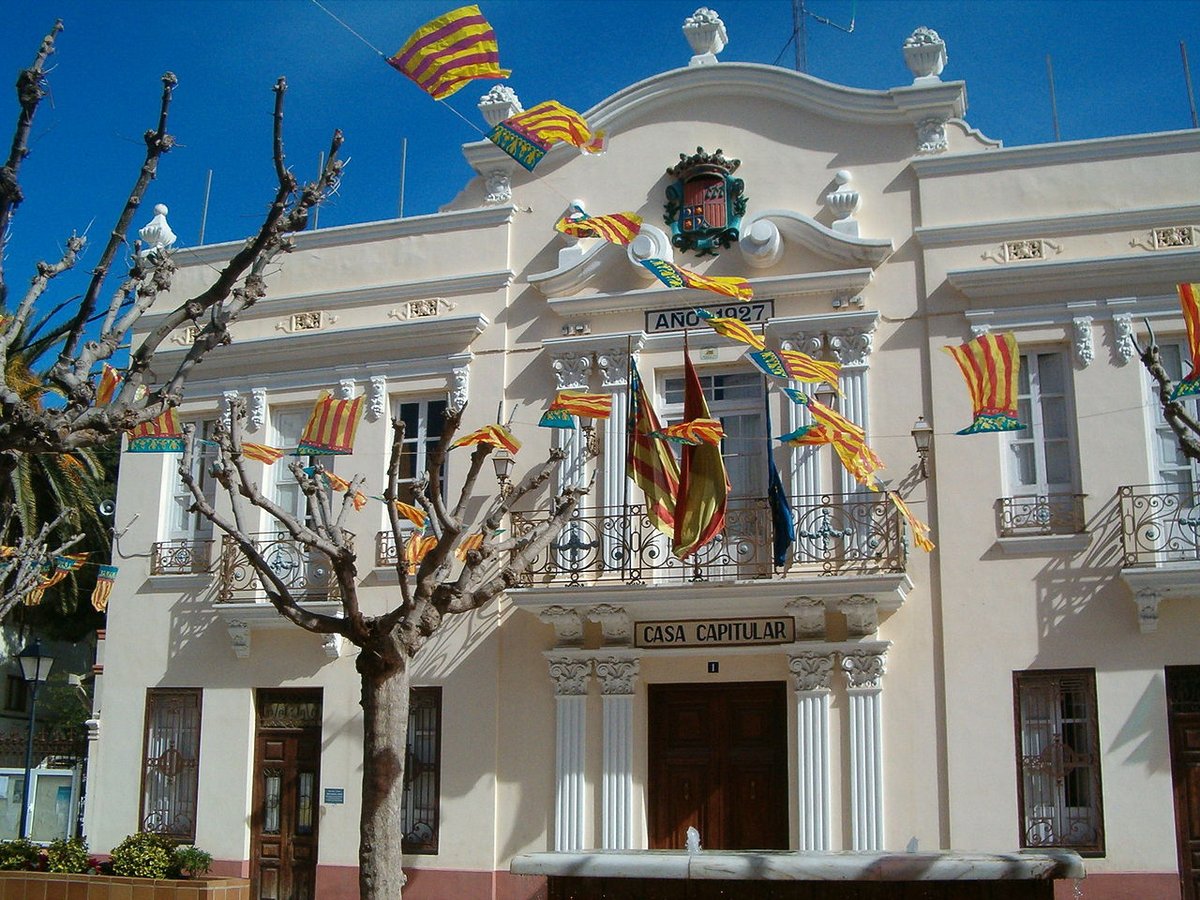
The town appears almost unexpectedly among citrus groves and rural tracks. Its buildings rise modestly from the flat land, with the Castell de Sorells standing out above the rooftops. Despite its name, this is not a conventional military fortress. It began as a fortified stately residence in the late Middle Ages and today serves as the town hall. Its presence still anchors the centre of daily life.
The proximity between town and farmland shapes the experience of the place. Fields begin almost as soon as the last houses end, and the transition feels immediate rather than gradual.
A name shaped by history
For centuries, the settlement was known simply as Albalat. The name has Arabic roots and is often linked to the idea of a road or paved passage, a reference that fits settlements connected to the agricultural routes of the Valencian huerta. After the Christian conquest in the 13th century, control of the area passed through different lords.
The addition of “dels Sorells” dates from the late 15th century. At that time, the lordship was acquired by the Sorell family, Valencian merchants who were active in the city’s political life. Their influence left a visible mark on the town through the construction of the building now known as the Castell de Sorells, developed between the late 15th and early 16th centuries.
The structure presents a sober appearance. Thick walls and an internal courtyard define its layout, while defensive features seem more symbolic than practical. Inside, the arrangement reflects a Valencian stately home of the period, with rooms organised around the courtyard and remains of old cisterns still visible.
Today, municipal offices occupy the building. Administrative routines unfold within walls that have stood for more than five centuries, creating a quiet overlap between past and present.
The parish and the shape of the town
At the centre of Albalat dels Sorells stands the church of the Santos Reyes. Its current form largely reflects 18th-century alterations, expressed through restrained Baroque architecture. Inside, later altarpieces and devotional objects from different periods add layers to the space.
The church’s importance goes beyond its architecture. Its position helps explain how the town developed. After the medieval conquest, scattered rural farmsteads across the huerta gradually lost population. Settlement became more concentrated around the parish and the nearby stately residence, forming the nucleus that still defines the town today.
The surrounding streets retain a clear connection to the agricultural landscape. A short walk leads to irrigation channels, service paths and cultivated plots. These elements belong to the historic irrigation system of the Valencian huerta, a network that has structured life in the region for centuries.
A small municipality within a historic landscape
Albalat dels Sorells has just over four thousand inhabitants and a very limited municipal area. This small scale explains why the huerta remains so close to the built-up area. Distances are short, and farmland begins almost immediately beyond the last row of houses.
The agricultural layout follows the system of irrigation channels established during the Andalusi period. Many plots still reflect traditional geometry, and rural tracks link the town with nearby places such as Foios, Meliana and Museros.
Local food traditions are closely tied to what is grown in this fertile strip of land. Dishes such as arroz al horno, espencat and savoury cocas continue to appear in home cooking. These recipes are especially common during family gatherings and at weekends, reinforcing the connection between agriculture and everyday life.
Festive rhythms throughout the year
The local calendar marks key moments with celebrations rooted in tradition. In January, festivities honour San Antonio Abad and the Santos Reyes, combining religious observances with customs linked to domestic animals. This association is typical of towns across the huerta.
March brings the Fallas, a well-known festival throughout the Valencian region. In Albalat dels Sorells, the celebrations take place on a smaller, more neighbourhood scale than in the city of Valencia.
Summer usually includes events dedicated to San Jaime, while autumn features celebrations for the Virgen del Rosario, which remain part of the parish calendar. These occasions are primarily designed for local residents, something that shapes the atmosphere in the streets.
Walking through town and fields
The urban centre can be explored in a relatively short time. Attention tends to focus on the Castell de Sorells, the parish church and a few older streets around the main square.
The wider setting offers a different perspective. The surrounding huerta provides the clearest insight into the character of the place. The terrain is completely flat, which makes it easy to move around on foot or by bicycle. Irrigation channels run alongside paths that connect neighbouring towns, forming a network that reflects centuries of agricultural organisation.
A slower pace suits Albalat dels Sorells. The interest lies as much in the landscape as in the buildings. The irrigated fields that still encircle the town explain why it developed here and why it continues to maintain its close relationship with the land.