Full Article
about Museros
Market-garden town with the historic Masía de San Onofre and bullfighting tradition
Hide article Read full article
Where the huerta still shapes daily life
The scent of orange blossom often arrives before the town itself. After crossing the V‑21 and leaving behind the last villa on the edge of Valencia, the landscape shifts quickly: dirt tracks between cultivated plots, low houses with porxets, and the church tower rising among palm trees. Museros sits firmly within l’Horta Nord, a region where the huerta, the traditional irrigated farmland around Valencia, still organises both the land and the rhythm of life.
This is not a place that reveals itself all at once. It makes more sense at a slower pace, walking along irrigation channels and streets that took shape long before the city of Valencia expanded so close. The layout reflects centuries of agricultural use rather than modern planning, and that older logic is still visible in how the town connects to its surroundings.
From Muslim roots to an 18th-century parish
The name Museros is often linked to a Muslim family, the Muzas, who are thought to have cultivated these lands before the Christian conquest of the 13th century. After James I took control of the region, the territory passed to the Order of Santiago. It was organised as a small agricultural community based on irrigation, tied closely to the séquia de Montcada, one of the historic water channels that still define the Valencian huerta.
Medieval records describe a structured rural life. Land was divided into irrigated plots, obligations were clearly set out, and agricultural work followed a calendar dictated by water. The foundations of the town were laid during this period, and although much has changed since, that basic structure remains recognisable today.
During the Early Modern period, a Dominican convent dedicated to San Onofre stood here. It is often mentioned because one of its priors was Saint Luis Bertrán, a figure closely associated with Valencia. The convent disappeared over time, but its presence survives in local street names and in some religious pieces preserved in the parish.
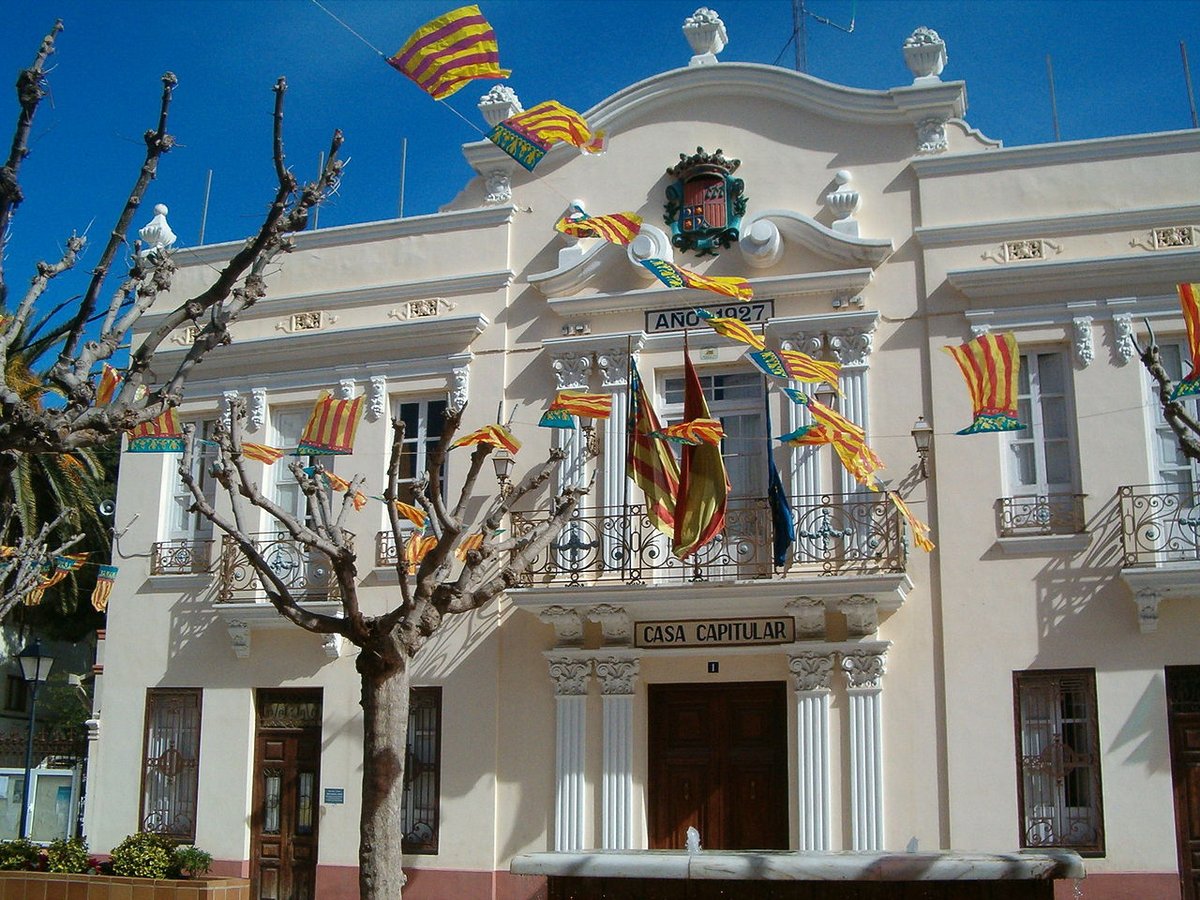
The current parish church dates from the 18th century. Its size can feel surprising when considering how small Museros was at the time, largely a community of farmers. Part of the building stands on the site of an earlier fortification, probably of Islamic origin. That structure has long since disappeared, and some of its stone was reused in municipal buildings and nearby constructions, a common practice in towns across the huerta.
Streets, water and traditional houses
The old town still follows the logic of agricultural land rather than a formal grid. Streets turn without strict geometry, and small paths often continue out towards the fields. Irrigation channels run alongside or between them, marking the boundaries of plots just as they have for centuries.
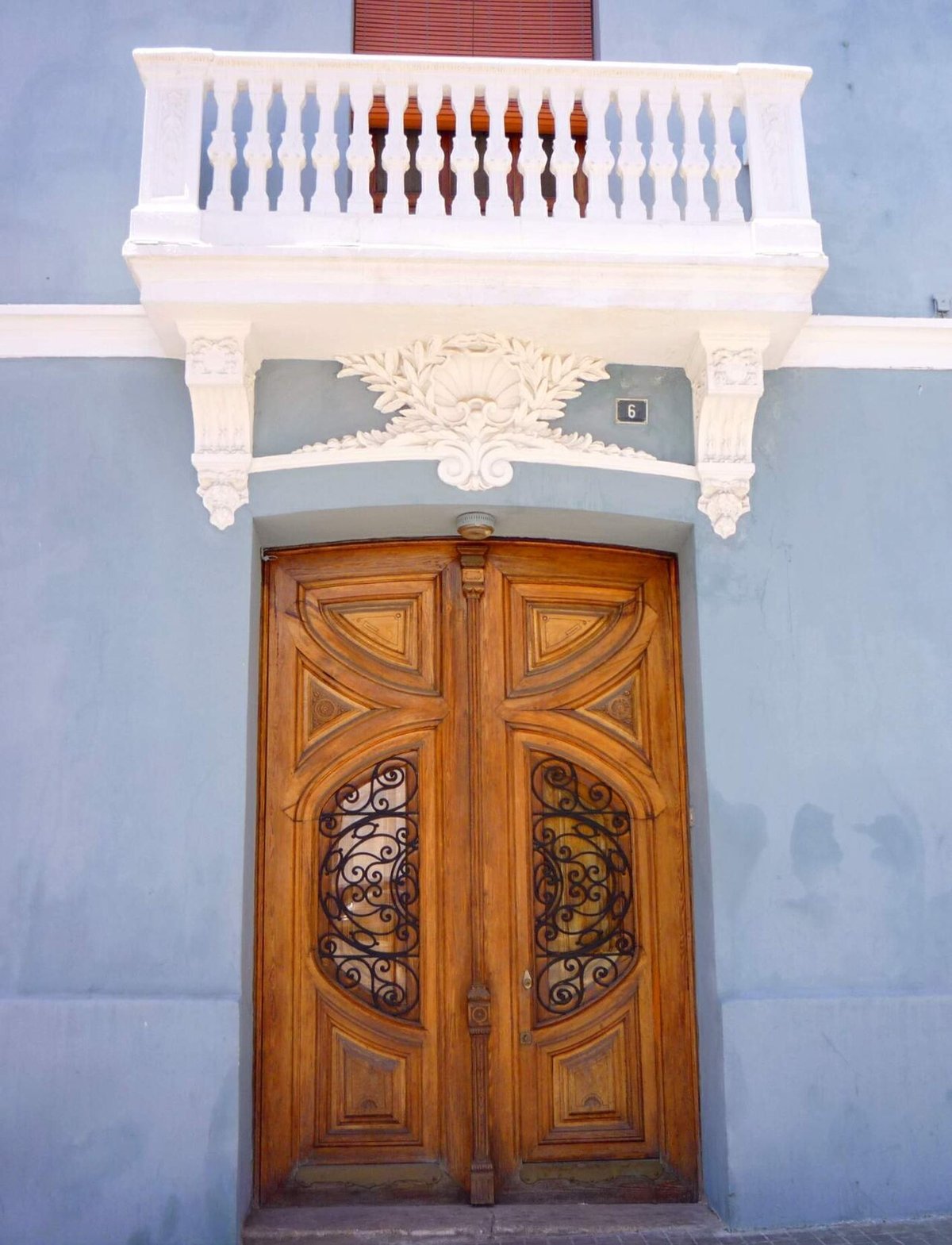
Traditional houses are usually one or two storeys high, with narrow façades and a patio or corral at the back. Many include wooden porxets, sometimes little more than a deep overhang, used in the past to store tools, carts or part of the harvest. These structures often face south to make the most of winter sunlight.
Near some of the irrigation channels, old stone llavadors can still be found. These communal washing places were once part of daily routine, serving both as workspaces and as informal meeting points. Most have lost their original function, although a few have been restored as small reminders of a way of life closely tied to water.
Much of the municipality is still occupied by farmland. Citrus trees dominate, their presence especially noticeable in the flowering season, though plots of vegetables continue to appear. Despite its proximity to Valencia and the residential growth of recent decades, the agricultural landscape remains a defining feature around the urban centre.
An Enlightenment figure from a farming town
Museros also has a place in the intellectual history of the 18th century as the birthplace of Juan Bautista Muñoz. He was among the first historians to work systematically with archival documents to study Spain’s expansion in the Americas.
He became cronista mayor de Indias and played a role in organising the documentary collections that would later form the Archivo General de Indias in Seville. His best-known work, Historia del Nuevo Mundo, was published towards the end of the 18th century.
The house where he was born still stands in the old town, marked by a commemorative plaque installed in the mid-20th century. It does not always draw immediate attention, yet it offers a quiet reminder that even small agricultural communities were connected to broader intellectual debates of their time.
Festivals through the year
Like many towns around Valencia, Museros marks Las Fallas in March. Local groups, known as commissions, build and display their monuments in different squares and streets. The atmosphere is more neighbourhood-focused than in the city itself, with a strong sense of local participation.
Semana Santa is observed mainly within the town, with processions accompanied by the local band and religious brotherhoods. These events follow a more intimate scale, closely tied to community traditions.
The main annual celebrations usually take place in August, centred on San Roque and the Virgen de la Asunción. The programme varies from year to year but keeps several established elements: religious acts, shared meals, and evening music. One of the most distinctive moments is the entrà de la murta, when residents decorate balconies and doorways with myrtle branches, a custom found in several towns across the huerta and rooted in older festive practices.
Getting there and moving around
Museros lies a few kilometres north of Valencia and is easily reached by road via the V‑21. It is also connected to the metropolitan public transport network, making it accessible without a car.
Once there, the town is best understood on foot. Walking allows the details to come into view: the turns of the streets, the presence of water, and the gradual transition from built space to cultivated land. It is in these small shifts that Museros reveals its character, shaped over centuries by agriculture and still closely tied to it today.