Full Article
about Rocafort
Prestigious residential municipality with historic quarries and stately villas
Hide article Read full article
The irrigation channels run alongside the station platform, and if you arrive before eight, the water carries the scent of freshly cut grass and damp earth. The commuter train pulls in with a metallic screech that cuts through the quiet of the surrounding fields. In fifteen minutes you can be in Valencia, yet in Rocafort time seems to move differently, slower, as if the oranges hanging heavy in the trees set the pace of the day.
Rocafort does not try to draw attention to itself. It sits quietly among citrus groves and former summer houses that have gradually become permanent homes. On a first visit, you notice wide streets, schools, cars heading towards Valencia early in the morning. By the third day, other details begin to stand out: the low murmur of irrigation workers, the flicker of sprinklers at dusk, the scent of orange blossom that sometimes slips into the metro carriages when the doors open.
Long shadows in the centre
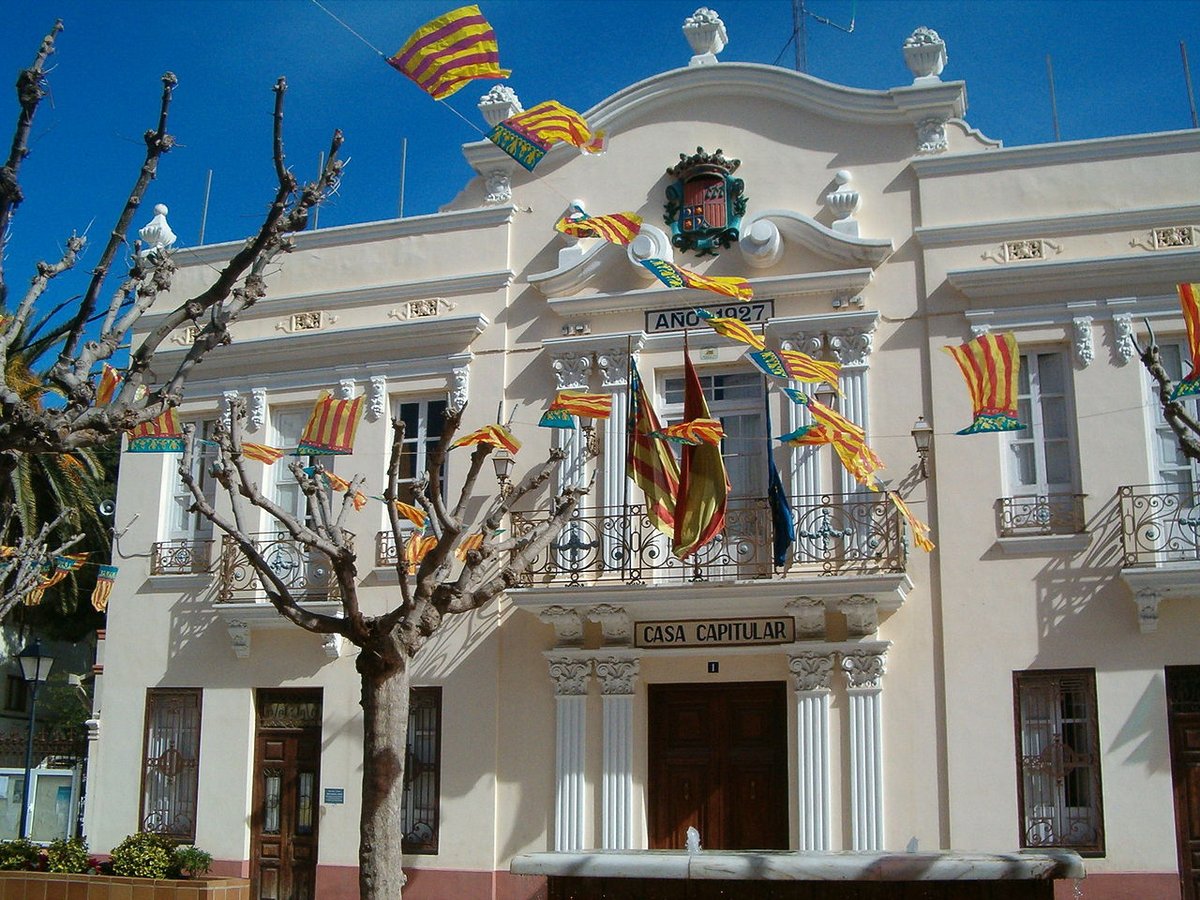
The church of San Sebastián comes into view where the farmland begins to give way to the town streets. It is not striking from a distance, but closer up the marks of damp can be seen on the southern wall, stains that resemble old maps. At midday the bells ring with a tired echo that lingers over the square.
From there, the medieval tower that gives the town its name is easy to spot. Its stone carries that toasted tone left by years of sun. In the evening, when the light falls at an angle, the surface turns almost orange.
During summer, some nights the square fills with folding chairs and people who come down after dinner. At times, films are projected outdoors against a pale wall of the municipal buildings. Children run about while adults talk quietly. The air still holds some of the day’s heat and carries the smell of fresh bread from a nearby street.
The land beyond the streets
A short walk out towards the agricultural paths is enough for the landscape to shift. Between plots of mandarin trees stand small field huts, many built from concrete blocks with simple roofs. By the door there is usually a faded plastic chair and, almost always, a half-asleep dog.
Inside, there is very little: a table, a small gas coffee maker, tools leaning against the wall. These are the places where vegetable paella is often cooked using produce from the surrounding fields: bajoqueta, garrofó and ripe tomatoes. It is eaten in the shade, with the sound of irrigation in the background and the sweet scent of orange trees all around.
Horchata is also part of life in this area, a traditional drink made from tiger nuts. In Rocafort there are not many places dedicated to it, so people tend to go to nearby towns or drink it at home when it is made by hand. Served very cold, often with ice, it is thick and slightly earthy, reminiscent of freshly ground chufa.
When the town fills with voices
At the end of August, when the heat still lingers well into the night, the patron saint festivities take place. During these days the square changes its rhythm: temporary stages, music that continues late, neighbours meeting again after months without seeing much of one another.
The local fallas committees, part of the wider Valencian tradition of community groups linked to the famous Fallas festival, are responsible for much of the atmosphere. They organise open-air dances, shared dinners and activities for children. In the early hours, the streets smell of gunpowder and spilled soft drinks, and there is always someone dragging chairs away as the music comes to an end.
Another important date arrives in spring, with the celebration of San Vicente Ferrer. That day unfolds slowly from early morning. Some houses hang shawls from their balconies, and older residents bring chairs out to their doorways to watch the day pass. There are few visitors. Most of the people in the streets are neighbours who know each other by family name.
Paths between orchards and hills
Behind the sports centre, several dirt tracks lead out between pine trees and fields. One of them heads towards the low hills of Tos Pelat. The terrain changes gradually: reddish soil at first, then loose stones as the path climbs. At the top, the wind moves freely and a wide stretch of the Valencian plain comes into view, thin roads like threads, scattered housing developments and green patches of orange groves.
For those who prefer cycling, there are gentle routes linking Rocafort with nearby towns in the northern huerta. Many sections run alongside irrigation channels where, at dusk, frogs can be heard and the water moves slowly between earthen banks. It is not a demanding ride, though in summer it is wise to carry water, as the sun falls directly on the paths.
On the way back towards the station, as the light begins to fade, the streets grow almost silent. The train arrives and departs with the same metallic sound as always. From the window, the town’s lights can be seen switching on one by one, while the irrigation channels continue to flow in the darkness, just as they did long before the railway tracks were laid.