Full Article
about Dos Aguas
Mountain municipality with rugged terrain and the ruins of Madrona castle
Hide article Read full article
A small village between hills
Tourism in Dos Aguas starts with something practical: the car. There is very little space to park inside the village itself, so most people leave the car at one of the entrances and continue on foot. It works well enough, as the streets are short, though some come with a bit of a slope.
Dos Aguas sits about 60 kilometres from Valencia, in the Hoya de Buñol. Around 340 people live here. This is not a place of major monuments or a historic centre that demands constant photos. It is a small inland Valencian village, surrounded by scrubland and scattered patches of cultivated land.
That sense of scale defines the visit. Nothing feels designed for crowds, and there is no attempt to turn the place into something it is not. It is simply a lived-in village, shaped by its landscape and its routines.
The road in
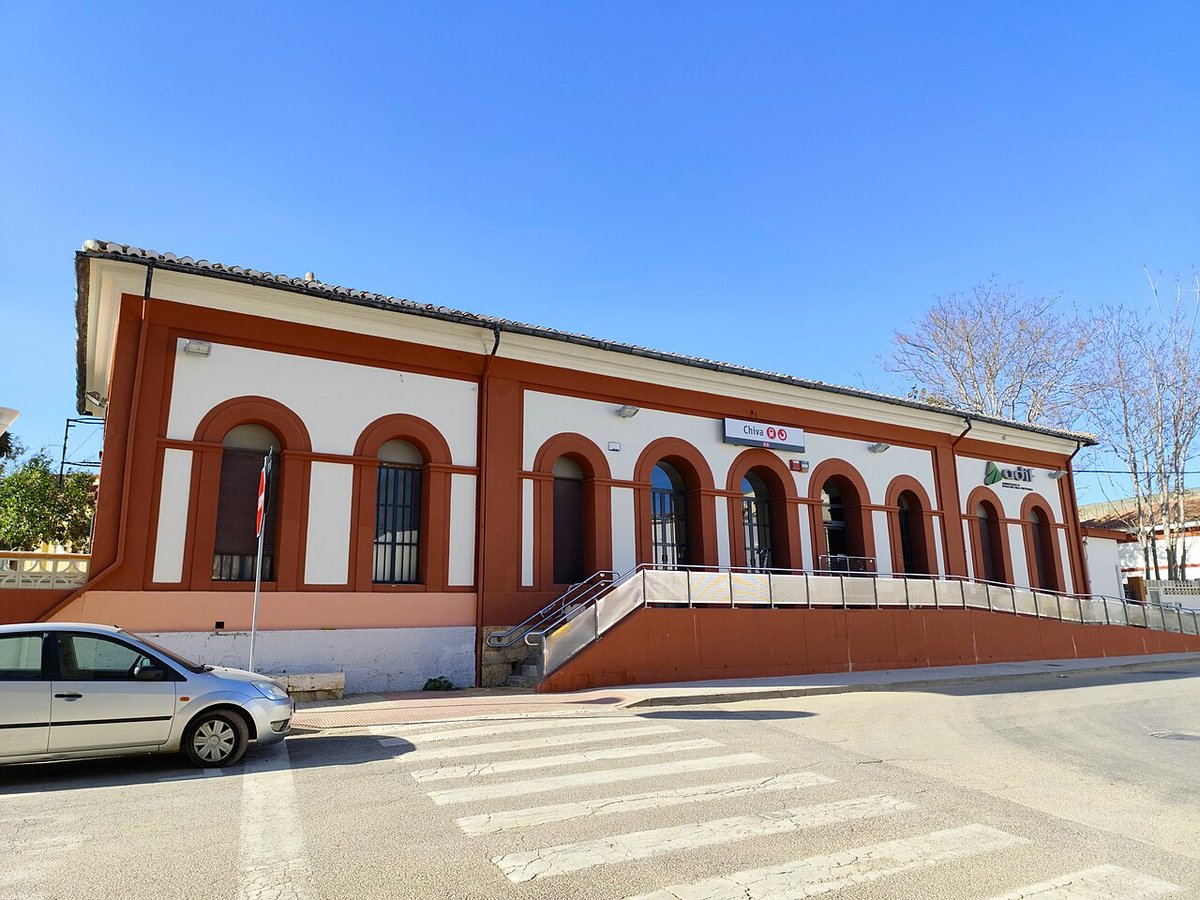
Getting here from Valencia usually involves taking the A‑3 towards the area of Chiva, then switching to smaller regional roads that head inland. The final stretch includes bends and a few narrow sections. In normal conditions, the journey takes about an hour.
After heavy rain, it is worth slowing down. There are ravines nearby and the road surface is not always in perfect condition.
Summer brings long hours of heat. Anyone planning to walk in the surrounding hills will find it far more manageable early in the morning or later in the afternoon.
Streets and everyday details
The centre of Dos Aguas can be covered quickly. A couple of small squares, short streets, and houses that mix older structures with more recent renovations. Some façades remain whitewashed, while others have been updated with exposed brick or newer finishes.
There are still traces of when daily life revolved almost entirely around agriculture. Large wooden gates hint at former storage spaces or animal access. Old corrals have been converted into patios. A public washhouse remains as a reminder of how communal tasks were once organised.
At the centre stands the church of San Pedro Apóstol. It is simple in design, with a tower that can be seen from several points around the village. Inside, there are modest altarpieces and an old baptismal font. Its significance lies more with local residents than with visitors, but it anchors the village all the same.
Hills, fields and open space
The surroundings carry more weight than the village itself. Around Dos Aguas there are low hills, ravines and terraced plots of land. Some are still cultivated, others have been left behind. Almond trees appear here and there, along with small vegetable plots and Mediterranean pine.
From higher ground, the view opens out towards the Hoya de Buñol. On particularly clear days, some say it is just possible to make out the sea in the far distance, though this does not always happen.
Tracks and paths run through the area, linking old farmhouses and crossing fields. Not all of them are signposted. A map on a phone can be useful, as paths intersect and it is not always obvious which way to continue.
One of the defining features of the area is the lack of crowds. It is entirely possible to walk for a long stretch without encountering anyone else. For those who prefer quiet over activity, that alone can shape the experience.
Food and daily rhythm
The food here follows the logic of the surrounding land. Expect dry rice dishes made with seasonal vegetables, simple stews and olive oil produced locally. There is nothing elaborate or designed to impress visitors.
There is also no visitor-focused food scene. Dos Aguas is small, and what exists caters to the people who live here rather than those passing through. Anyone planning to spend the entire day should keep that in mind.
Daily life continues at its own pace. There is no sense of performance or adaptation for tourism, and that is part of what defines the place.
Local celebrations
Festivities in Dos Aguas tend to revolve around San Pedro, towards the end of June. These include processions, events in the main square and broad participation from residents. The atmosphere is local rather than outward-facing.
In August, summer celebrations bring outdoor music and simple activities. They do not attract large crowds, but they do bring more movement and energy than at other times of the year.
A place to pause, not to stay
Dos Aguas works best as a quiet stop rather than a full-day destination. The advice often given is straightforward: arrive without high expectations, take a walk, look out over the landscape, and then continue through the surrounding region.
It is a place that does not try to hold attention for long, but offers a brief pause instead.