Full Article
about Costur
Hilltop village overlooking the Plana; farming tradition, quiet setting perfect for walks among almond and olive groves.
Hide article Read full article
Where the Almonds Fall
Almonds hit the ground with a dry crack, small knocks against the soil. In March, the fields around Costur look as if someone has washed them in too much white. From the doorway of a masía, a traditional farmhouse typical of eastern Spain, the valley of l'Alcalatén opens out in uneven terraces. These stone and earth steps descend towards the bottom of the ravine. The air carries the scent of freshly turned soil and wood smoke drifting from a nearby kitchen. This is often how tourism in Costur begins, walking without hurry along the paths that circle the village.
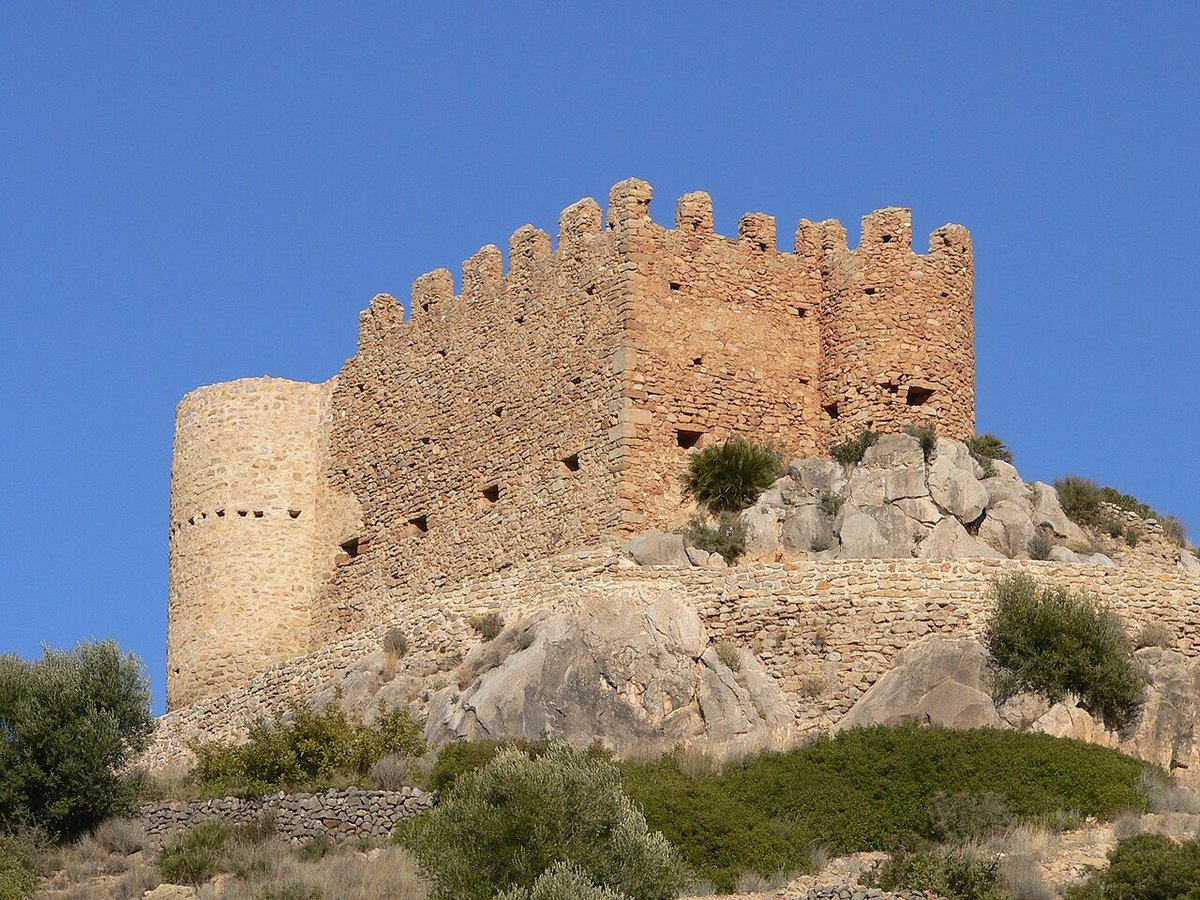
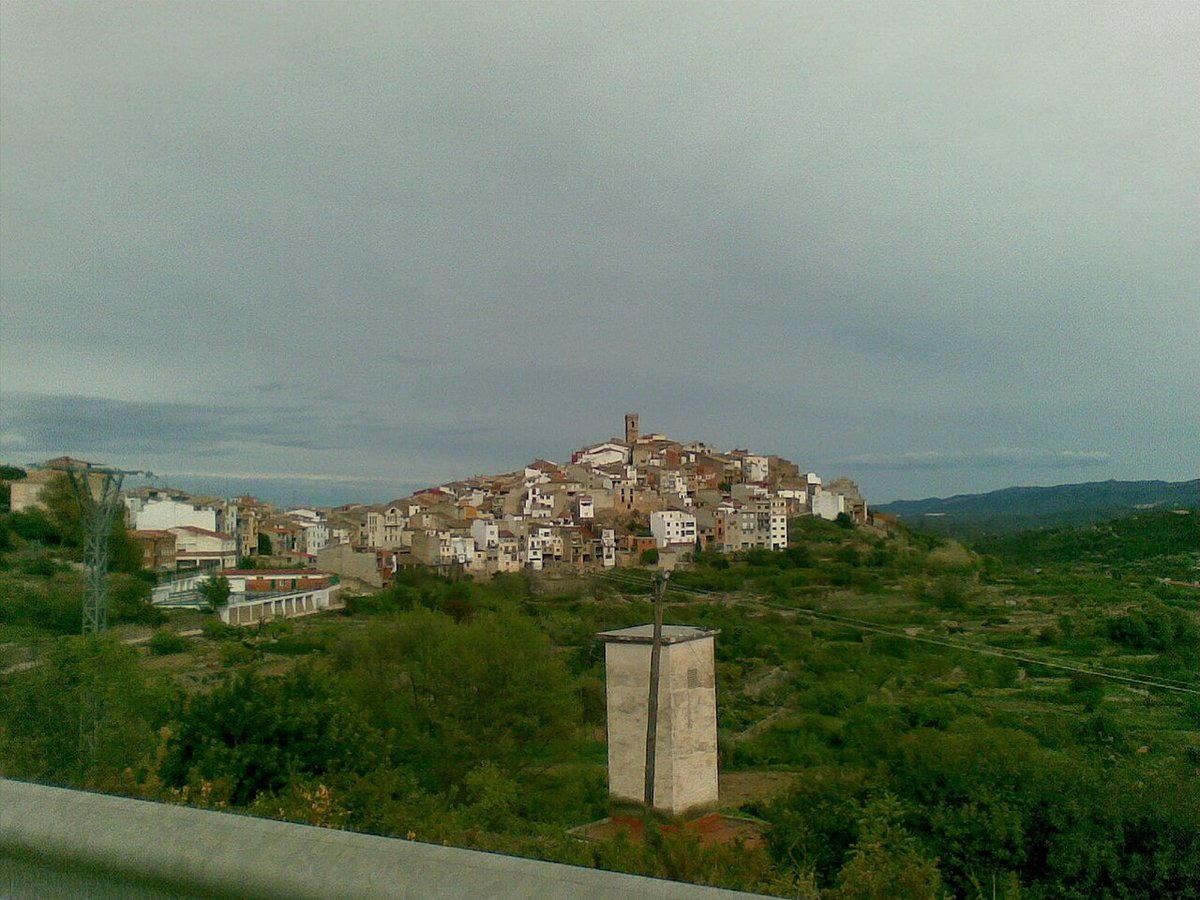
Costur sits halfway up the sierra, a little above four hundred metres above sea level. It has just over five hundred inhabitants. The houses cluster around the slope, their pale façades reflecting the sharp interior light of Castellón province. The name of the village is usually linked to the Arabic Qusṭūr, a reference to a castle. None is visible today, yet Penya Blanca, the large rocky mass that dominates the skyline, fills that role in another way. From below, it seems to watch over the whole valley.
A Calendar Marked by Harvests
On the village square, conversations tend to move at an unhurried pace. People talk about whether the almond trees have flowered early this year, or if the rain arrived in time for the olives. Here, the calendar still follows the fields. After storms, the land turns a deep green. In summer, it shifts to yellow. Later come the brown shades, when the earth has given what it had to give.
Old masías appear among the terraces. Some are still inhabited, others have been closed for decades. Their wooden doors are swollen by damp, their roofs slightly bowed. From a distance they resemble stranded ships among the olive trees. When the wind rises in the afternoon, loose roof tiles knock against one another and the sound travels down the valley like the ringing of small bells.
Life in Costur unfolds at this steady rhythm. It is shaped less by timetables than by crops and weather. The changes are subtle yet constant, written in blossom, dust and the colour of the hills.
Climbing Penya Blanca
Penya Blanca is a constant presence when walking in Costur. The ascent usually begins on a path at the edge of the village, winding upwards through stands of Aleppo pine. On warm days the air smells of resin and thyme crushed underfoot.
Halfway up, a glance back reduces the village to a handful of pale roofs scattered among the terraces. From the top, just over a thousand metres high, the landscape opens across the whole comarca of l'Alcalatén. A comarca is a local administrative area, smaller than a province. On clear days, several white villages can be picked out across the valley, along with the straight lines of cultivated fields.
It is best to start the climb early during the warmer months. Shade is scarce on the final stretch and the midday sun is strong.
Up there, the sense of height changes the scale of everything below. What seemed close from the square becomes part of a much wider landscape of hills and farmland. Penya Blanca does not offer monuments or built structures at the summit. Its appeal lies in the view and in the steady effort of the climb itself.
Cooking at Home
In Costur, recipes still circulate from kitchen to kitchen without ever being written down. One of the most frequently mentioned is gazpacho de almendras. Despite the name, it has nothing to do with tomato. This version is made with ground almonds, garlic, olive oil and cold water, sometimes with raisins when they are in season. Each family prepares it in its own way.
Food here is closely tied to gathering. On spring weekends, long tables sometimes appear along a quiet street. Family members who live elsewhere return, and lunch stretches well into the afternoon. The scent of rosemary, roast meat or slow-burning firewood mixes with the constant birdsong from nearby orchards.
These meals are not staged events. They are part of village life, repeating with small variations. The focus is on sharing time rather than presentation. Conversation drifts, plates are passed around, and the pace remains unhurried.
Quiet Hours and Honey-Coloured Light
After lunch, Costur slows even further. Blinds are lowered halfway and the streets empty. Even the dogs seek shade against stone walls that hold on to the coolness. The village seems to pause.
This is a good time to wander aimlessly through the side streets. Old doorways appear with twisted iron fittings. Interior courtyards reveal an orange tree. A well might sit beneath an old stone slab. In some places, the whitewash has fallen away from the walls, exposing the irregular stone beneath.
If visiting in spring, the surrounding almond trees keep part of their blossom for several weeks. The atmosphere shifts noticeably between weekdays and weekends. On Saturdays and Sundays, more cars arrive from Castellón and nearby villages. During the week, silence returns as the norm.
As evening approaches, light drops from the sierra and the façades take on a honey tone. Near the ermita, there is a small viewpoint overlooking the entire valley of l'Alcalatén. From here, the scale of the landscape becomes clear once more. When the sun disappears behind Penya Blanca, the air cools quickly and the first lights in the village flicker on.
Soon after come the everyday sounds. A door closing. A television heard through an open window. A car crossing the square at low speed. Costur settles again until the following morning. The day always seems to end this way, without haste.
In Costur, there are no grand statements or headline attractions. The draw lies in walking through almond fields in bloom, climbing Penya Blanca for the view across l'Alcalatén, and sitting at a long table while conversation stretches into the late afternoon. Time is measured in harvests and light, in blossom and stone.