Full Article
about Lucena del Cid
Known as the Pearl of the Mountain; a noble town surrounded by nature, with a river for swimming and hiking trails.
Hide article Read full article
Light on Stone in the Hills of Castellón
By mid-afternoon, when the sun begins to drop towards the west, the pale stone of the houses in Lucena del Cid turns warm, almost coppery. A door bangs somewhere in the square, a car rolls past at low speed, and now and then a blackbird sings insistently from a tree. In the colder months the air often carries the smell of dry earth and firewood.
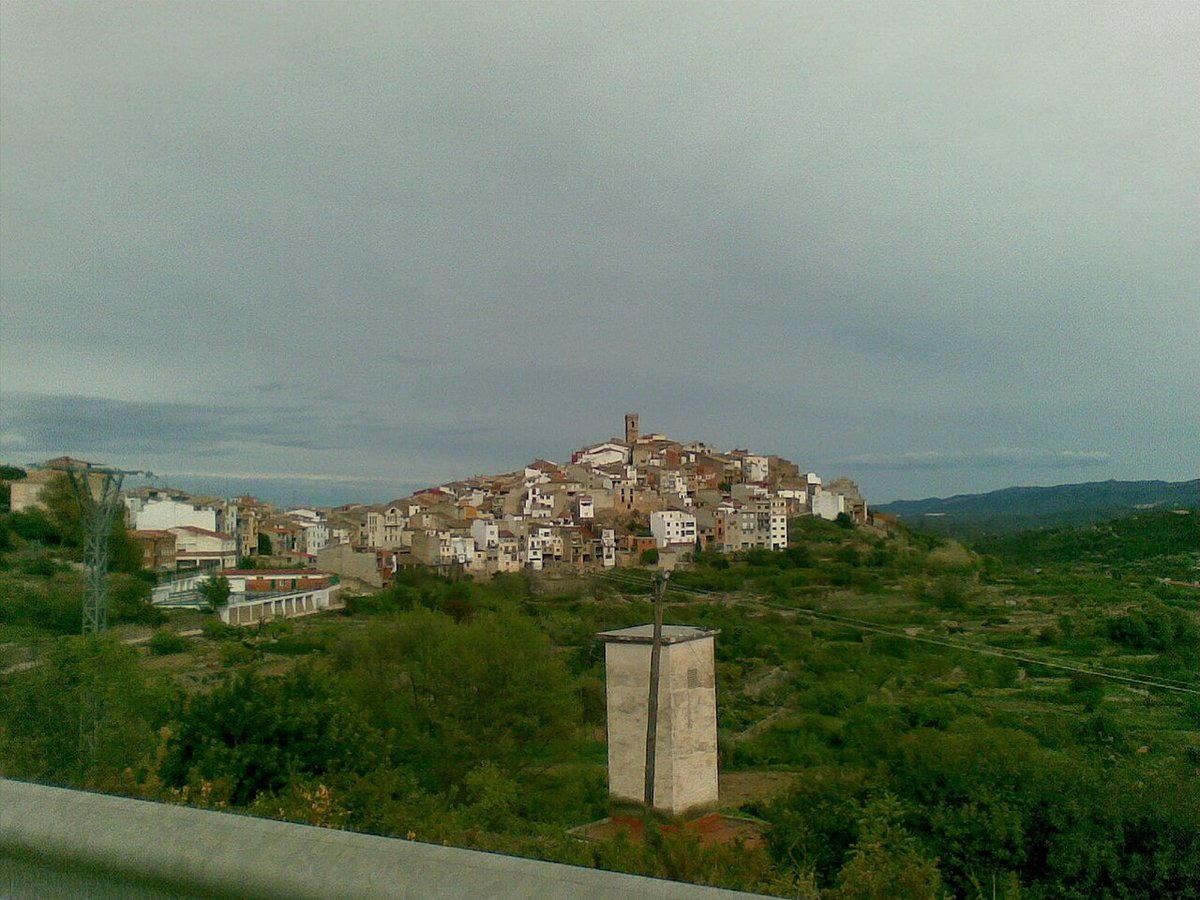
Lucena del Cid has just over 1,300 inhabitants and sits on a hillside in the comarca of l’Alcalatén, inland from Castellón in the Comunidad Valenciana. The streets rise and fall in short slopes that naturally slow your pace. Many still have uneven cobbles underfoot and thick-walled houses built to cope with both winter cold and the dry heat of summer. Iron railings remain on balconies, with pots of geraniums that manage to survive even in August.
This is a village shaped by climate and terrain. Life follows the gradient of the land, and the architecture reflects a need for shelter rather than display.
Around the Iglesia de la Asunción
The historic centre is organised around the parish church of the Asunción. Its bell tower rises above the rooftops and acts as a clear reference point when arriving by road. The square that surrounds it works as a daily meeting place: benches in the shade, neighbours greeting one another by name, cars pulling up briefly while someone runs a quick errand.
Several older houses still have wide entranceways that once allowed carts and animals to pass through. Look closely at the stone lintels and dates sometimes appear carved into the surface, along with simple symbols that hint at the age of these homes. The details are modest, but they anchor the present to earlier centuries.
Daily life unfolds without much fuss. Conversations happen at doorways and from balconies. The square fills and empties according to the rhythm of the day rather than any formal schedule.
Tracks Through Pines and Terraces
Step beyond the edge of the village and the landscape changes quickly. Olive groves and almond trees alternate with scrubland and holm oak pines. In spring, after several days of gentle rain, the scent of rosemary and thyme is noticeable even from the path.
There are numerous agricultural tracks and footpaths that descend towards ramblas and ravines. Some follow very old routes used for decades by shepherds and farmers moving between isolated farmhouses known as masías. Walking here tends to be quiet. Wind moves through the pines, and occasionally the distant sound of a tractor carries across the cultivated terraces.
From certain high points in the municipal area, more open clearings than built viewpoints, the view stretches towards the inland sierras. On very clear days a faint blue line sometimes appears on the horizon. That line is the Mediterranean, although it lies far from the village itself.
Summer requires some care. The sun beats down hard on the slopes at midday and there are stretches with little shade. Outside the hottest hours, the paths are more forgiving and allow time to take in the changing textures of field and forest.
Early Hours and Birds of Prey
The first hours of the day are particularly still around Lucena del Cid. With a little patience it is easy to spot birds of prey using the air currents above the ravines. Woodpigeons and small woodland birds can also be heard among the pines.
No special equipment or marked route is required. An early start along any of the paths that circle the village is enough. A slow walk and a willingness to stop are often all that is needed to notice movement in the sky or a rustle in the undergrowth.
Silence plays a large part in the experience. Sound carries differently here, and even distant activity feels softened by space.
Food Rooted in the Land
Local cooking remains closely tied to the countryside. Olive oil produced in the area appears in almost everything, from spoon dishes to slices of toasted bread at breakfast.
Many households still prepare traditional recipes such as inland gazpachos, a hearty dish typical of Spain’s interior, along with cured embutidos and dry sweets that keep well for several days. Honey from the surrounding hills finds its way into certain desserts and sweet preserves that have been made for generations.
During the colder months, more substantial stews are common. These are often linked to game or to the matanza del cerdo, the traditional pig slaughter that in many inland villages is remembered as a collective moment in winter. It is part of a rural calendar that once structured the year and still echoes in family kitchens.
The food reflects necessity as much as taste. Preservation, seasonality and shared labour shape what appears on the table.
Festivities Close to Home
The main celebrations revolve around the parish and the agricultural calendar. Processions pass through the narrow streets of the old quarter while residents watch from doorways or balconies.
There are also events connected to rural traditions, where older ways of preparing embutidos or working with agricultural produce are shown. These days are not usually presented as spectacles for outsiders. They function more as a way of maintaining customs that continue to make sense locally.
The tone is familiar rather than theatrical. Participation often comes from those who live there, and the emphasis lies on continuity.
When to Visit
Spring and early autumn are generally the most pleasant times to explore Lucena del Cid and its surrounding paths. The countryside feels more alive and temperatures allow for unhurried walks.
Summer can be intense, especially at midday. In those months it makes sense to set out earlier in the day or leave longer walks until later in the afternoon.
At times, while strolling along a quiet street or near a fountain, someone may pass by carrying tools back from the fields, or a tractor might head towards the terraces. These are simple scenes. They are reminders that beyond the routes and distant views, Lucena del Cid remains a working village where agriculture and daily routines still shape the rhythm of life.