Full Article
about Vistabella del Maestrat
The highest municipality in the Valencian Community, at the foot of Penyagolosa; mountain climate and starting point for hikes to the peak.
Hide article Read full article
A Village Shaped by Height and Landscape
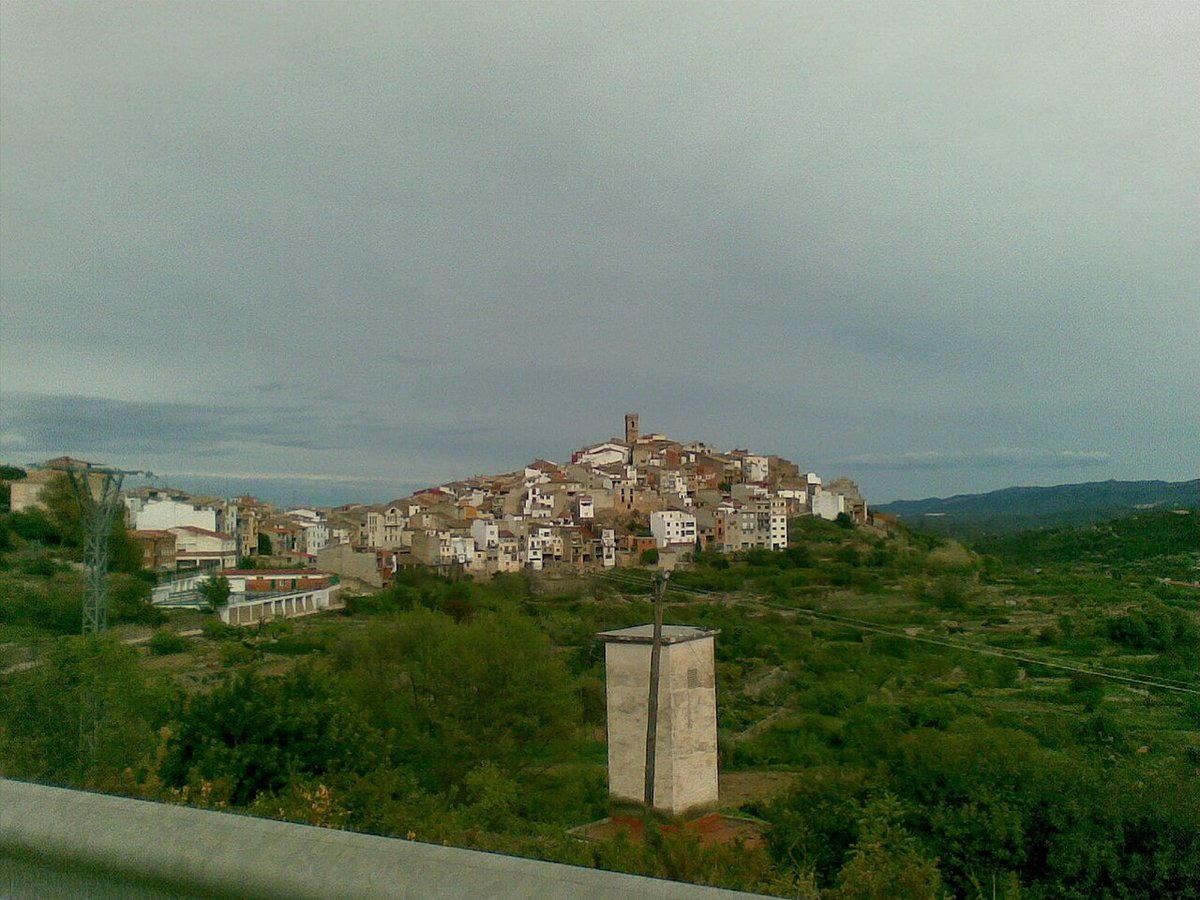
At over 1,200 metres above sea level, Vistabella del Maestrat sits on the slopes of Penyagolosa, deep in the mountainous interior of Castellón. Its altitude and position within the Maestrat region have always defined the way people live and travel here. The climate is noticeably harsher than along the coast, and that difference shows clearly in the architecture. With just over three hundred residents, it remains a small settlement where daily routines still set the pace.
The layout of the village follows the incline of the terrain. Streets are narrow and paved with stone, lined with solid houses built to withstand rain and, in some winters, snow. Roofs slope steeply for practical reasons. The overall plan is compact, with the church and main square forming the centre, much like in many historic mountain communities in this part of Spain.
On clear days, the edge of the village opens out to wide views across the sierras of the Maestrat and l’Alcalatén. The silhouette of Penyagolosa dominates the nearby landscape. It is more than a landmark on the horizon. For centuries, it has also held a strong cultural presence across this inland area of the Valencian region.
The Fabric of the Old Town
The church of the Asunción defines the skyline of Vistabella del Maestrat. Much of the current structure reflects later renovations, although the parish itself dates back further. The building is restrained in style, constructed in stone, and draws interest less from decoration and more from its role in shaping the historical organisation of the village.
Around it, the urban fabric remains fairly consistent. Most houses are built from masonry, with iron balconies and large wooden doors. In some corners and arches, there are hints of a medieval street layout, even if many buildings have been altered over time. In mountain villages like this, changes tend to follow practical needs rather than aesthetic trends.
Just beyond the built-up area, the landscape quickly shifts. Terraced plots, animal enclosures and old access paths leading to scattered farmhouses, known locally as masías, begin to appear. These elements help explain how the land was traditionally used. Farming and livestock were organised in small parcels, carefully adapted to the slope of the terrain.
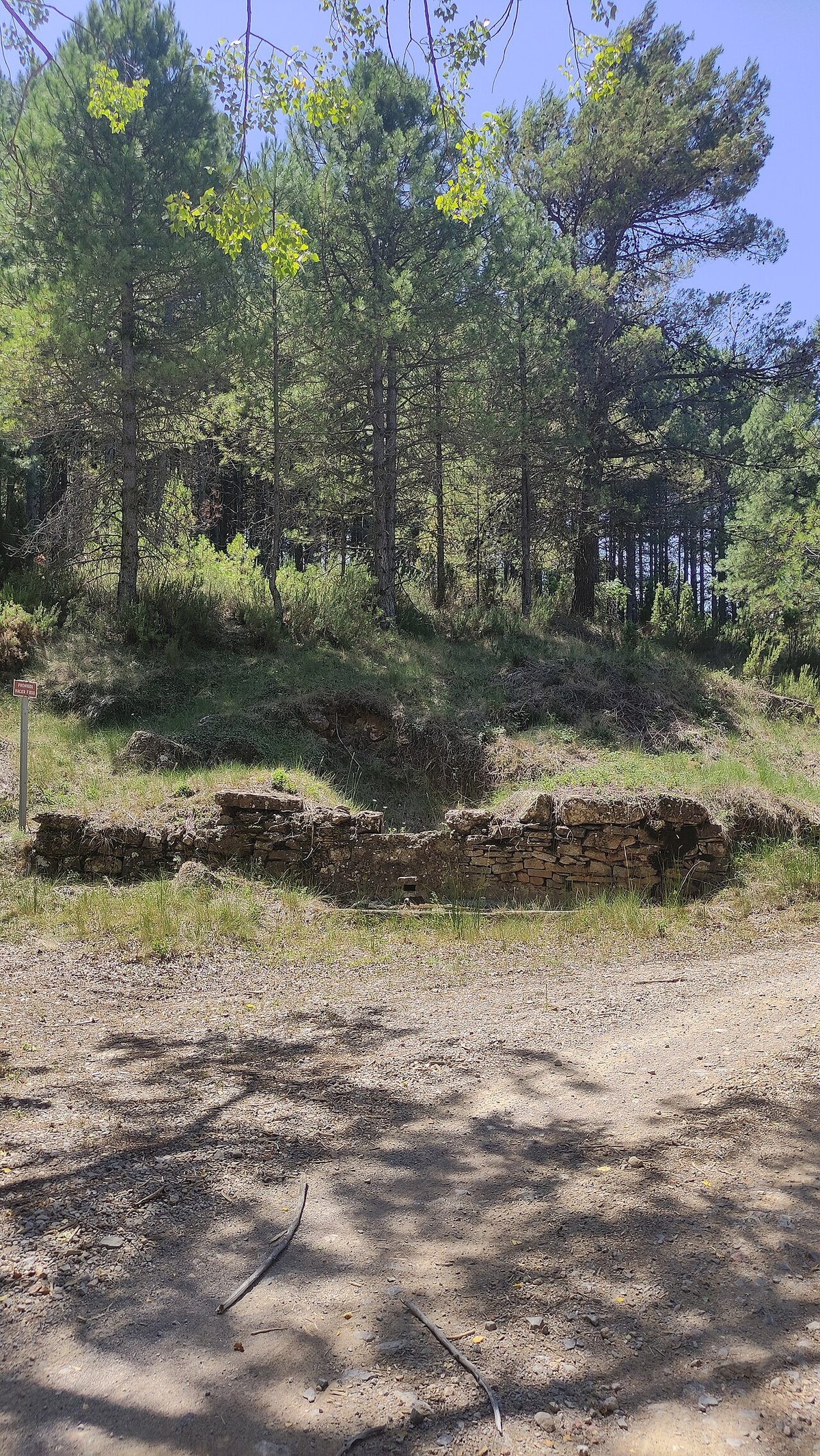
Water sources also played a key role. The village fountain and traditional washhouses point to a shared system of water use. In high-altitude areas, such places were central to daily life, serving not only as infrastructure but also as meeting points for the community.
Walking the Surroundings
The municipality of Vistabella del Maestrat covers a wide and mountainous area. Several marked paths leave from the village and lead into forests of laricio pine and open grazing land. Some routes approach ravines, while others connect with old masías scattered across the countryside. It is worth checking conditions before setting out, as the altitude and changes in elevation can make routes more demanding than they appear on a map.
The vegetation reflects a mix of environments. Mediterranean species grow alongside others more typical of colder climates. In spring and autumn, shifts in colour across the hillsides are particularly noticeable. Wildlife tends to remain out of sight, although birds of prey can often be seen riding the air currents above the sierra.
Within the village itself, wandering without a fixed route can be just as rewarding. Small details emerge along the way: worn doorways, old walls, subtle changes in street level. These features reflect a place that has grown gradually, without modern planning, shaped instead by terrain and necessity.
Local food mirrors the mountain setting. Hearty stews are common, along with cured meats and, when conditions are right, wild mushrooms. The range of options is limited, in keeping with the size of the village.
Winter brings a noticeable drop in temperature. Snow sometimes falls in the higher areas near Penyagolosa, although it does not settle in the village every year. Wind can be strong, so preparation is important when heading out into the surrounding hills.
Traditions Through the Year
Festivities in Vistabella del Maestrat follow a traditional calendar. The main celebrations take place in August, centred on the Virgen de la Asunción. During these days, many former residents return, and the atmosphere shifts as the population increases significantly.
Holy Week is marked by more restrained observances. Processions move through the narrow streets of the old town, following forms that have been passed down over generations.
In autumn, if rainfall has been favourable, mushroom gathering becomes an important activity across the Penyagolosa area. Some years include events linked to mycology and seasonal cooking, reflecting the close relationship between the landscape and local traditions.
When the Mountain Sets the Rhythm
Spring and autumn generally bring milder temperatures, making them good times to explore both the village and its surroundings. Summer days can be warm, but nights tend to cool down thanks to the altitude. Winter is cold and sometimes windy. Anyone travelling during that season should check road conditions and bring suitable clothing.
In Vistabella del Maestrat, the mountain shapes everything. From the layout of the streets to the rhythm of daily life, the influence of altitude and landscape remains constant throughout the year.