Full Article
about Banyeres de Mariola
The highest municipality in the province; gateway to the Sierra de Mariola and rich in industrial heritage.
Hide article Read full article
A village above the Vinalopó
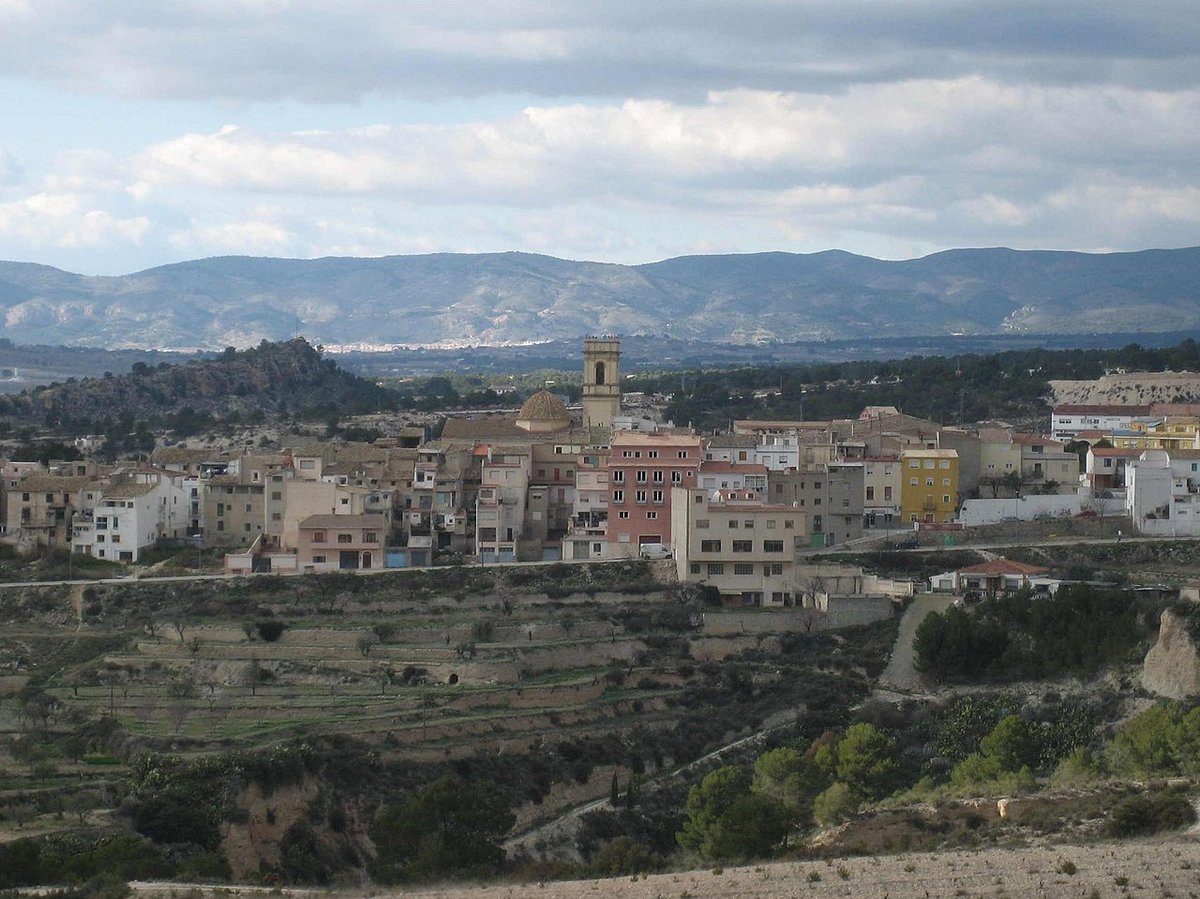
The Vinalopó begins here, at 830 metres, and then spends the rest of its course heading down. Banyeres de Mariola stays up high, looking out from its castle across four provinces. It is the highest village in inland Alicante, and that shows in everyday life. Winters bring frost, summer air feels lighter than on the coast, and most drives involve more climbing than cruising.
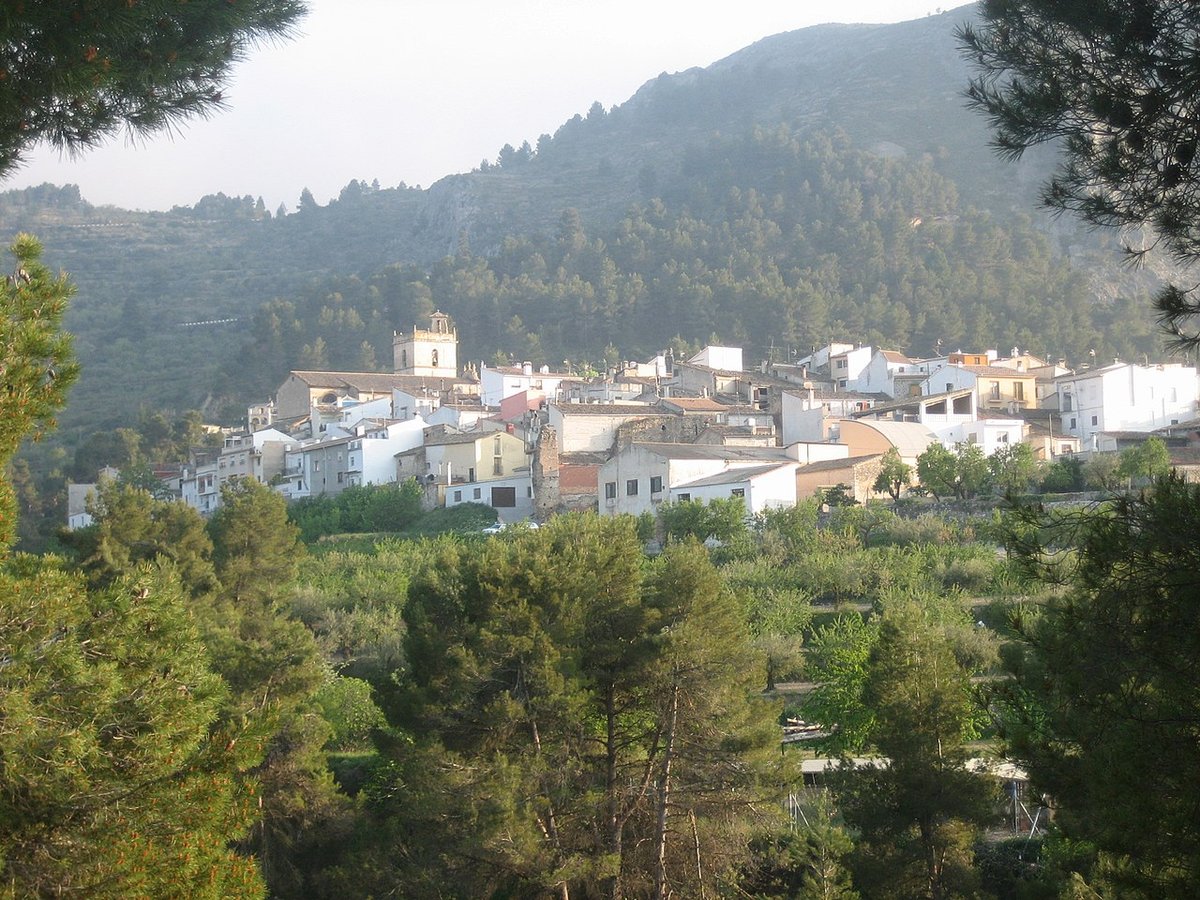
The setting shapes the rhythm of a visit. Streets rise and fall sharply, views open wide when the sky is clear, and the landscape around the village quickly gives way to the sierra. Banyeres is not a place that spreads out. It gathers itself on the slopes beneath its castle and then drops away into countryside.
Getting in, parking, and the uphill reality
Access comes via the CV‑795 from Alcoy or Villena. The old town is a tight maze of narrow streets and serious gradients. Large cars are not a great fit here. Many visitors leave the car near the sports centre or in the lower part of the village and continue on foot. There is also parking close to the castle, though it fills up quickly.
Walking is unavoidable. Almost everything sits either above or below you.
The castle crowns the highest point. From the nearby parking area, the walk takes about ten minutes, and the slope makes itself felt. The structure is austere, more military than decorative. Thick walls and a tall tower define it. On a clear day, the views stretch far across the surrounding provinces. The interior does not take long to see, which suits the pace of a short stop.
Museums, mills and what earns your time
The Museu Valencià del Paper stands in a former mill just outside the centre. It focuses on the local papermaking tradition, which once defined much of the area’s activity. Demonstrations of the process sometimes take place. Anyone who has already visited restored mills elsewhere may find it familiar. For those who have not, it explains why so many workshops existed here.
The route dels Molins makes a stronger impression. It follows the river for several kilometres and passes a series of former paper mills. Some remain in good condition, while others are reduced to walls and scattered stone. The path is straightforward and easy to follow. A relaxed return walk takes around a couple of hours, which makes it a practical way to see how industry and landscape once worked together along the water.
The Museu de l'Espardenya is much smaller in scale. It is essentially a single room dedicated to the history of the local espadrille. Visitors step in, look at the displays, and step back out again. It is brief and to the point.
Food that keeps things simple
Local menus often include olla de pencas. This is a stew made with cardoon and beans. It does the job, though it does not aim to surprise.
Gazpacho banyerense is a heavier option. It combines game meat with pieces of flatbread and a rich broth. It suits colder weather and feels designed for days when the air has a bite.
Bakeries usually sell rollos de anís. These are sweet, dry biscuits that fill you up faster than expected. Buying one makes sense before committing to a whole bag.
After meals, herbero appears in many places across the comarca. This herbal liqueur comes from the surrounding sierra. Some versions are homemade, others are bought ready-made, but the idea remains the same: a strong, aromatic finish.
When to go, and when to think twice
April tends to be the busiest month. Moros y Cristianos, a festival common in parts of Spain that recreates historical battles between Moors and Christians, fills the streets here. Gunfire from arquebuses echoes for much of the day. The village becomes lively, and finding accommodation is more difficult.
Summer heat reaches Banyeres too, though the altitude usually makes it more bearable than on the coast. Even so, the old town quietens at midday, when the streets empty out.
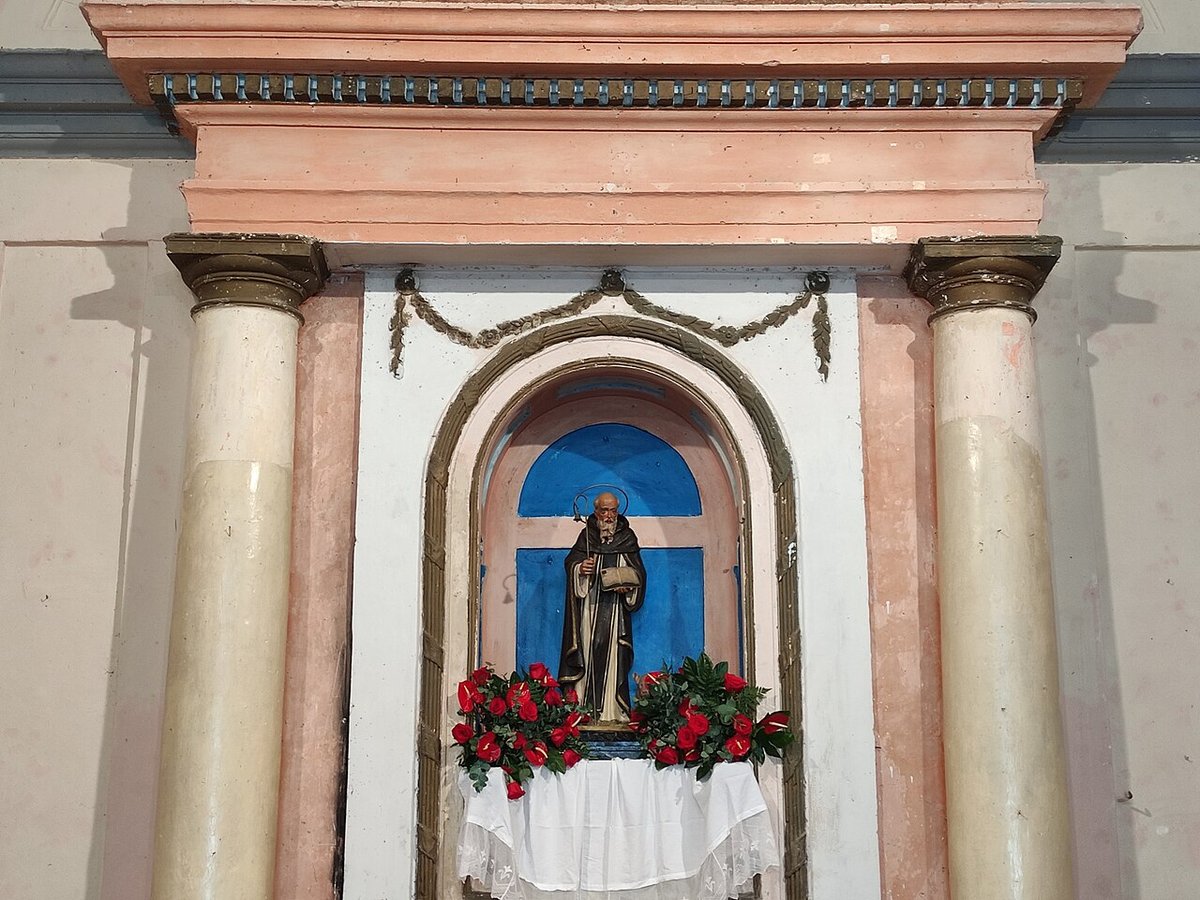
July brings religious celebrations dedicated to Santa María Magdalena. These are very local events. Residents take part and the tone stays serious. It is not a spectacle designed for visitors.
Into the sierra: Montcabrer and beyond
Montcabrer is visible from almost anywhere in the village. It is the best-known peak in the Sierra de Mariola. Several paths begin from roads near Banyeres and head up towards it.
One of the common routes passes old snow wells carved into the rock. These were once used to store snow, later sold as ice during the summer months. Today they appear as large circular pits with stone walls, reminders of a different way of managing the seasons.
The climb to the summit is not technical, but it is long and includes demanding stretches. At the top, the landscape opens across the sierra. On clear days, a large part of inland Alicante comes into view.
A straightforward approach works best here. Use Banyeres as a starting point for the Sierra de Mariola. The village itself can be seen fairly quickly. Park in the lower area, walk up to the castle, take a turn through the centre, then head out towards the hills. The most rewarding part begins once the streets fall away behind you.