Full Article
about Castalla
Capital of the Hoya de Castalla; dominated by a spectacular castle and known for its gazpachos.
Ocultar artículo Leer artículo completo
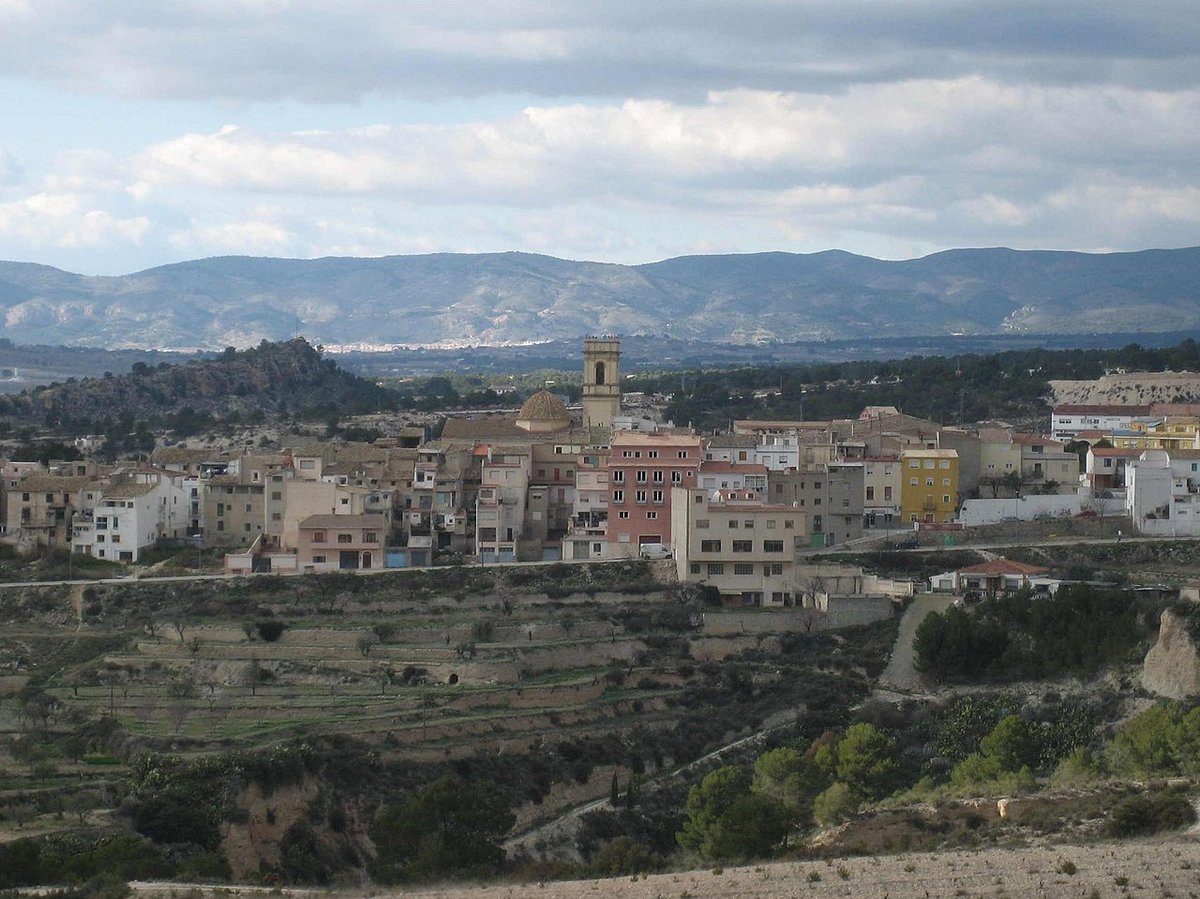
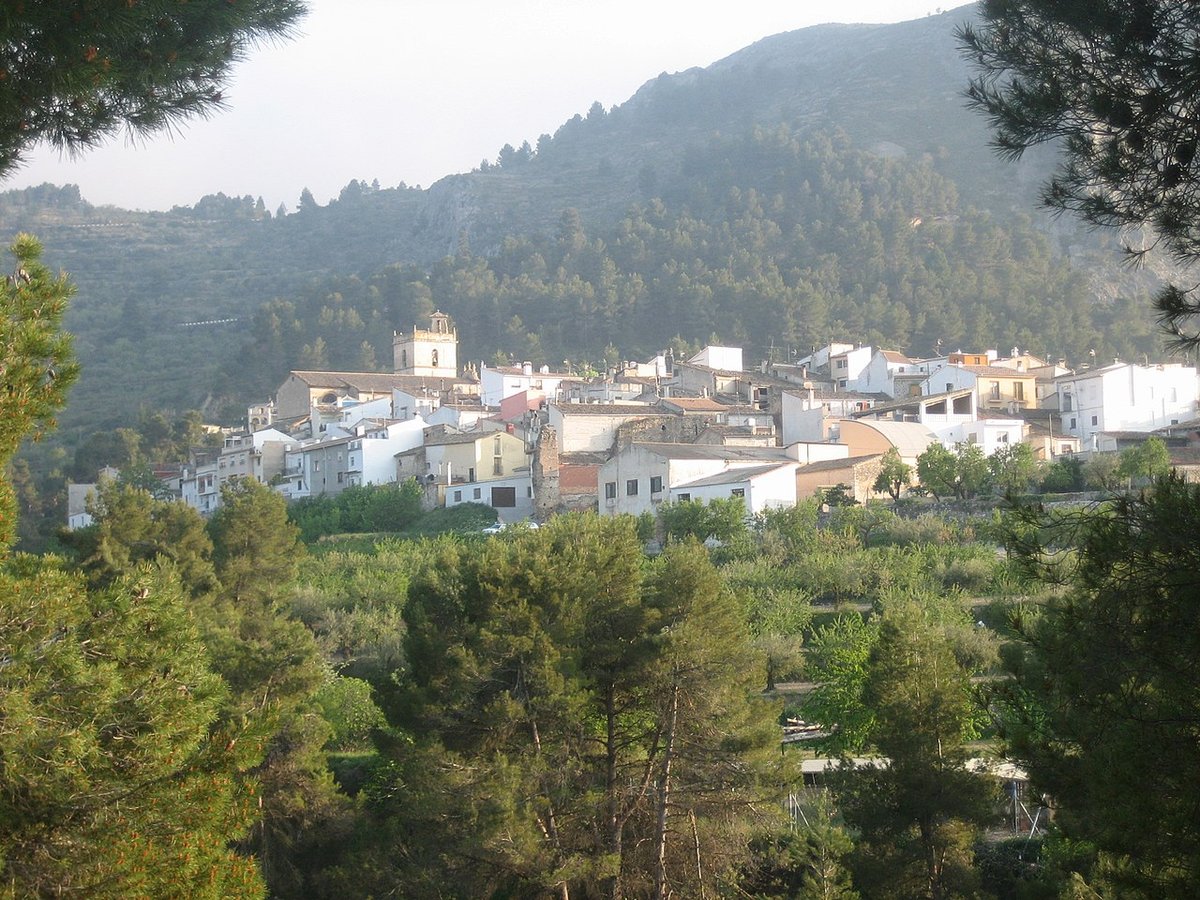
The castle keep appears first—an ochre silhouette against chalk-white walls that seem to grow straight from the limestone. From the AP-7 motorway it looks almost close enough to touch, yet the road still has to wind upwards for another twenty minutes before Castalla reveals itself at 675 metres. At that height the air thins and the Mediterranean, visible on clear winter days, becomes a distant stripe of cobalt. This is the Alicante province that package brochures rarely mention.
A Town That Looks Down on the Coast—Literally
Castalla's altitude shapes everything. August afternoons may hit 35 °C but by 10 pm the thermometer often drops to 18 °C; locals keep cardigans on the backs of chairs even in July. The steep streets—Carrer Major, Carrer de la Font—follow medieval goat tracks, so the 400-metre walk from the Saturday market to the castle gate gains 60 metres. Park on the western industrial estate (free, no time limit) and save yourself the clutch-burning ordeal of one-way lanes designed when donkeys set the width.
The castle itself is no postcard ruin. Rebuilt after the 13th-century Reconquista, it mixes serviceable stone with sections left deliberately raw. English leaflets (pick one up in the town hall, Tue-Fri 10-2) identify the old cistern and the tower where the garrison once poured boiling oil. Climb the keep before 11 am and you share the ramparts only with swifts and the occasional German hiker. The 360-degree view takes in the Carrascal de la Font Roja natural park to the north and the ribbon of plastic greenhouses that mark the coastal plain—proof that the Costa Blanca is only 45 minutes away by car but climatically another country.
Market Day and the Art of Not Spending
Every Saturday the Plaza de la Constitución fills with stalls that have traded since 1331. There is no tourist tat: knives are sharpened on a pedal wheel, socks sold in bulk and saffron measured out from jam jars. Prices are pinned to cardboard—€3 for a kilo of spring onions, €6 for a rabbit ready for the paella pan. British residents turn up for the chorizo stall run by a third-generation family from Soria; their morcilla de cebolla (blood pudding with onion) survives the journey to UK freezers better than most.
Afterwards most people drift into Bar Central on the corner. Coffee still costs €1.20 and the house wine arrives in a misted glass, not a labelled bottle. If you need cash, walk fifty metres to the Santander ATM—many bars inside the old quarter don't take cards and the castle certainly doesn't.
Walking Tracks That Begin at the Town Gate
Castalla's mountain location is not scenery; it's infrastructure. Three way-marked trails start at the castle gate. The shortest, Ruta del Castell, is a 2.5 km loop that drops into pine woods and returns via the ermita de la Sang. Allow 45 minutes and carry water even in April; the sun reflects off white rock.
Keener walkers can tackle the 12 km link to the Fonts de l'Algars, a spring where snow-melt emerges at 12 °C year-round. The path joins the PR-V-147 that continues north into the Sierra de Mariola, a 17,000-hectare park of rosemary-scented scrub and abandoned snow pits once used to chill lemon shipments to Victorian Britain. Spring is best for orchids and wild peonies; after heavy rain the clay sections become skating rinks, so decent boots matter.
Mountain-bikers use the same web of old drovers' roads. GPS tracks are downloadable from the tourist office, but paper maps cost €3 and double as emergency sun-hats. August cyclists set out at dawn; by midday the surface temperature of the limestone can hit 50 °C.
Food Meant for Cold Nights
Coastal rice dishes thin out here. Instead menus list arroz al horno—baked rice with pork ribs, chickpeas and black pudding finished in a wood oven. Portions are built for labourers who once worked the almond terraces; most restaurants will split a single order if you ask. Try La Torreta on Calle Poeta Miguel Hernández: the house special is cordero a la castellana, lamb shoulder slow-roasted with garlic and rosemary until it slips from the bone. A two-course menú del día, bread and half-bottle of wine is €10 mid-week, €12 at weekends.
Puddings tread the line between nursery and nunnery. homemade custard with a caramel film (crema casera) sits alongside coc de la marmita, a sticky sponge of almonds and sweet potato that keeps for a week—useful if you're self-catering and the nearest large supermarket is in Alcoy, 20 minutes down the A-7.
Vegetarians survive but don't thrive. One starter is ensalada de bacalao (salt cod salad); even the green beans arrive with scraps of jamón. Best tactic: order the gazpacho de interior, a thick game-and-bean stew, and pick out the meat.
Fiestas: Gunpowder, Brass Bands and 4 am Wake-Up Calls
Castalla's Moros y Cristianos festival, late February, is Alcoy's little brother: same elaborate costumes, half the crowds. Comparsas march to a soundtrack of cornets and bass drums; the acoustics between stone houses turn every beat into a physical punch. Ear-plugs recommended unless you grew up with military tattoos. Expats rate it "better value than Alcoy" because hotel rooms don't triple in price and you can still find a bar stool at 1 am.
August brings the Fiestas Patronales in honour of the Virgen de la Asunción. Processions are followed by midnight firework castles launched from the castle slope—sparks rain down on the orchards below. Light sleepers should note that the pyrotechnic crew tests mortars at 7 am daily during fiesta week. If that matters, book a rural casita outside the town limits.
The Practical Bit Without the Bullet Points
Alicante–Elche airport is 75 km south; allow 55 minutes by hire car. There is no direct public transport: buses run twice daily Monday-Friday, zero on Sunday. A pre-booked taxi (Castalla Taxis, WhatsApp +34 666 55 88 77) charges €70 to the airport—cheaper than three days' parking at many UK terminals.
Accommodation is thin on the ground. Inside the historic core there are two small guest-houses totalling nine rooms; both close for two weeks in January. Most visitors rent village houses via Spanish sites; expect €90 a night for a three-bedroom place with roof terrace and working fireplace. July and fiesta weeks book up six months ahead; the rest of the year you can be spontaneous.
Winter can surprise. January nights occasionally drop to –2 °C and the castle access path ices over. The town owns one gritting lorry—if it breaks, you walk. On the plus side almond blossom appears in late January, turning the surrounding hills into a froth of pink that photographs far better than anything the coast can muster in February.
Leaving Without the Hard Sell
Castalla will never compete with the coast for convenience or nightlife. Its appeal lies in the opposite: the way the evening light catches the castle walls while you sit in a bar where the waiter remembers your order from yesterday. Buy a bag of freshly shelled almonds from the Saturday market, drive the winding road back down to the motorway and the castle shrinks in the rear-view mirror. Forty-five minutes later you're stuck behind a Heathrow-bound transfer coach on the N-332. The contrast is the point—and it's free.