Full Article
about Ibi
Toy town; industrial center ringed by mountains and home to the Museo del Juguete
Ocultar artículo Leer artículo completo
The smell of warm plastic drifts across the playground at 11 a.m. while the school bell still rings. It is not litter; it is the scent from the injection-moulding sheds that back onto the infant playground, proof that Ibi never stopped making the dolls, cars and robots that filled Spanish Christmas stockings for three generations. The town sits 748 m above the Mediterranean, far enough inland that the salt breeze never arrives, yet close enough that you can breakfast in Alicante and still be propping up the bar in Ibi before the coffee cools.
A bowl-shaped balcony over Alicante province
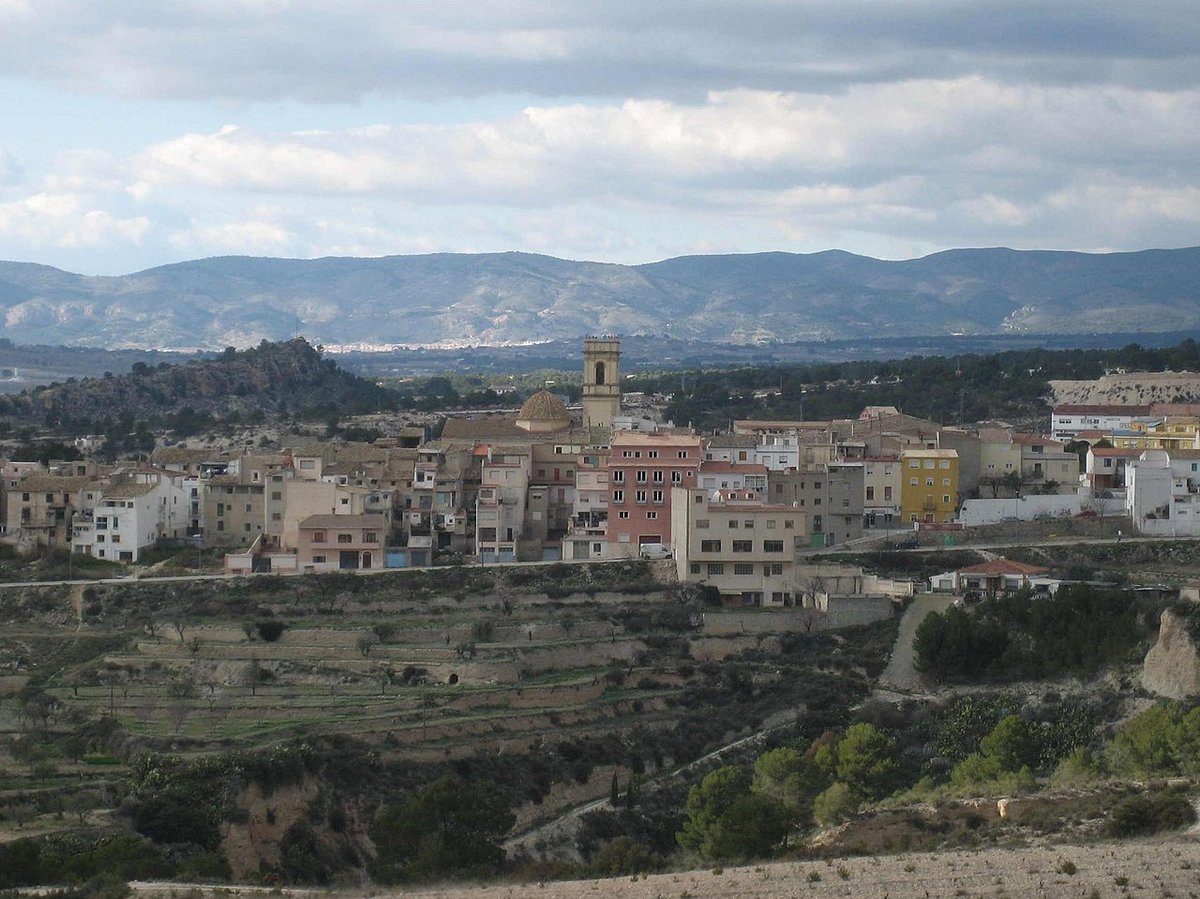
Approach on the CV-80 and the road tips suddenly into a natural amphitheatre of pine and almond terraces. Stone houses run in tiers to the valley floor, their upper windows looking straight across to the crag-topped Castell d'Ibi. The climb from car park to castle takes fifteen minutes if you are fit, twenty-five if you stop to read every information panel and pant. The fortress is a ruin – no gift shop, no audio guide, just wind and a 270-degree view that lets you plot tomorrow's walk into the Carrascar de la Font Roja without unfolding a map. Bring a jacket: even in May the breeze can slice straight through a cotton shirt.
Down in the bowl the streets are narrow enough that delivery vans fold their mirrors to squeeze past. Locals call the layout el embudo – the funnel – because cold air pools at night and summer heat rises at midday. The system works: the upper lanes stay five degrees cooler than the lower square, so pensioners shuffle uphill after lunch while teenagers loiter outside Heladería Sirvent arguing over whether the turrón flavour counts as a balanced meal.
Toys, pigs and other local industries
The Valencian Toy Museum occupies a former washing-powder factory on Calle de la Industria. From the outside it looks shut; ring the bell and the caretaker appears with a bunch of keys and the resigned air of a man who has reset the model railway 400 times this month. Inside, glass cases trace the journey from tin soldiers moulded in 1905 to the first plastic Paya cars that rolled off local lines in 1964. Admission is €3, children free, and you are encouraged to press buttons that activate sirens, Ferris wheels and a miniature football pitch where the players kick with the enthusiasm of clockwork. Allow three-quarters of an hour; longer if you grew up with Spanish toys and feel the sudden Proustian hit of a 1980s Micronaut.
Across the river the industrial estate hums with forklifts shifting crates labelled Clementoni and Famosa. Most plants are closed to visitors, but the morning shift change at 6 a.m. produces a brief, cinematic flood of neon jackets and motorcycle helmets heading for the cafés that open before the sun. Order a bocadillo de longaniza (€3.20) and you will get a mild, paprika-spiced sausage that tastes closer to Lincolnshire than chorizo; the barman will ask if you want it con tomate, which means the bread is rubbed with ripe tomato and a whisper of garlic. Vegetarians should ask for coca de mollitas – a crisp-topped flatbread that arrives in diamond pieces and keeps well for trail snacks later.
Walking without the coast
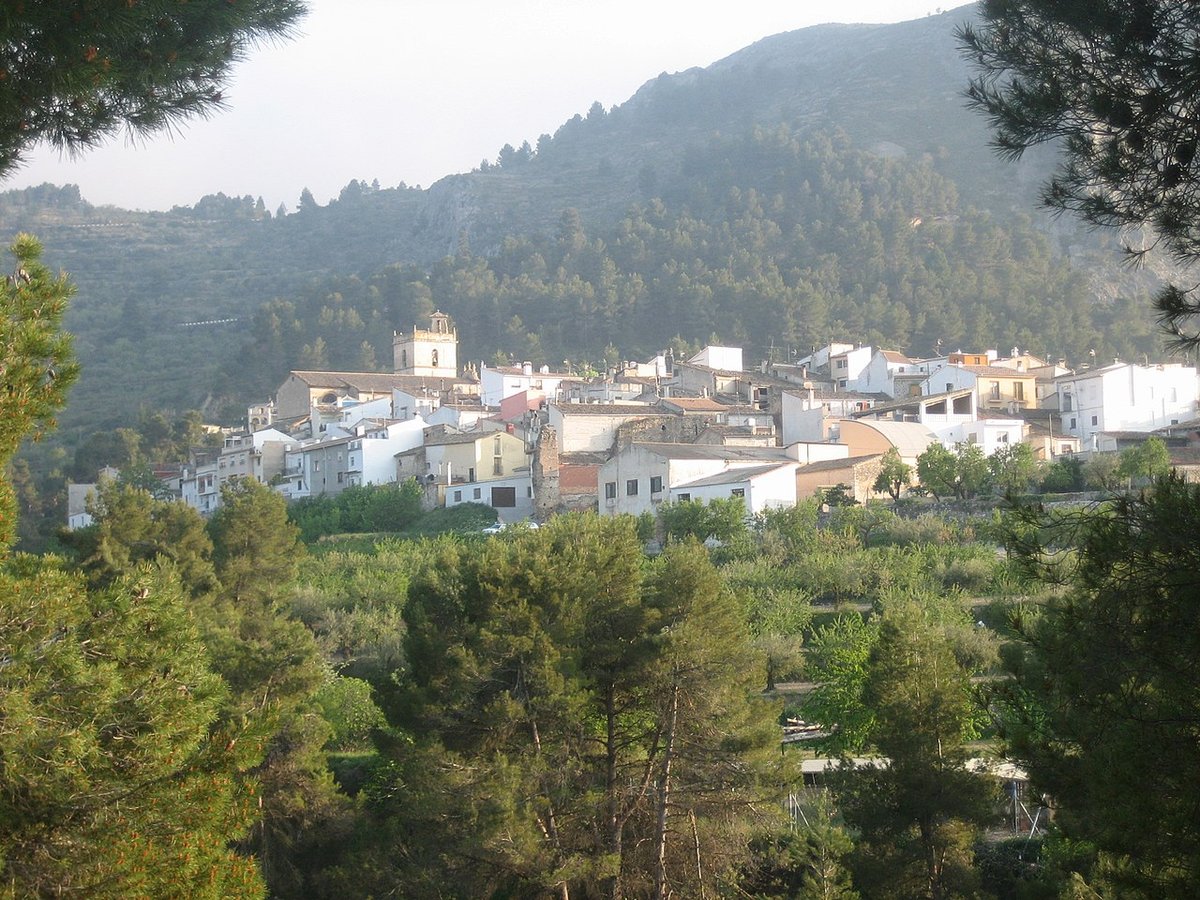
Ibi is not a hill-top village; it is a valley town that happens to be high. That distinction matters, because many visitors arrive with coastal expectations – flat promenades, beach bars, evening paseos along the water – and find instead a terrain tilted 15 degrees in every direction. The reward is access to the Carrascar de la Font Roja within ten minutes of leaving your hotel door. A signed loop, Ruta de les Neveres, climbs past old snow pits where farmers stored ice for summer markets. The path is 6 km, gains 300 m of height, and delivers you to an iron-age lookout used during the Reconquista. Winter walkers may find frost on the north slope as late as March; in July the same stretch smells of hot pine and almond husk.
Road cyclists use the town as a pit-stop between the Alcoy climbs and the inland plains. The CV-705 north-east to Castalla is a steady 8 km ascent at 5 %, quiet enough that you can ride two abreast until the bread van appears round a bend. Mountain bikers have a tighter network of forest tracks; hire bikes at BiciSport on Avenida d'Alacant (€25 per day) but phone the day before – the owner still works part-time in a toy factory and may be on the late shift.
Calendar quirks the Costas never mention
Visit on 5 January and you will share the streets with the Festa dels Tions, a parade of dancing tree-trunks that spit sweets instead of sawdust. Children beat the logs with sticks while brass bands play The Final Countdown in Valencian; bystanders wear wooden masks handed out by the local scouts. British visitors who stumble on it describe the event as “like May Day morris dancing, but with power tools”. Arrive after 17:00 and the centre is closed to traffic; parking is free in the Polígono de la Pedrera, a ten-minute walk that feels longer when dragging a reluctant toddler dressed as a dinosaur.
May brings the patronal fiestas: processions, paella contests held in the municipal car park, and late-night verbenas where cider costs €2 a cup and the band plays until the neighbours start dropping shoes onto corrugated roofs. August repeats the formula for returnees who missed it first time round; book accommodation early if you want a room in the old town – the lower barrio is cheaper but you will lie awake listening to scooters racing the ring road.
November is matanza season. Restaurants post hand-written menus offering olleta de blat, a thick wheat-and-bean stew that arrives in a bowl the size of a satellite dish. One portion feeds two hungry walkers; order media ración if you plan to move afterwards. The same month sees the Ruta del Turrón, a self-guided tapas crawl where each bar re-invents the almond nougat in savoury form: turrón ice-cream, turrón cheesecake, even turrón craft beer that tastes like liquid Bakewell tart. Pace yourself – there are nine stops and the trail climbs 100 m.
Practical odds and ends
Alicante airport to Ibi takes 40 minutes by hire car (A-7 to CV-80). There is no direct public bus; ALSA runs to Alcoy every hour, then a local line covers the last 14 km three times daily except Sunday. Monday is museum closing day; most bars shut between 16:00 and 19:00, so plan lunch before the siesta horn sounds. Double rooms in the casco antiguo start at €55; the modern lower town is €10 cheaper but you will drive everywhere.
Rain is rare but spectacular – streets become water-courses within minutes and drains gurgle like hungry drains anywhere. Pack a light waterproof even in July; afternoon storms build over the mountains and break at teatime. Snow visits two or three nights a year, enough to close the CV-705 but rarely for more than a morning. If you wake to white roofs, head for the castle quickly – the photo opportunity melts by coffee time.
Ibi will not hand you the Mediterranean on a plate. What it offers instead is a working town where the whirr of toy lathes replaces the crash of waves, and where the evening light picks out almond blossom rather than white yachts. Stay a night, walk the castle at dusk, and you will understand why the Spanish keep it for themselves most of the year.