Full Article
about Onil
Cradle of the Famosa dolls; a stately town with an impressive palace and mountain setting.
Hide article Read full article
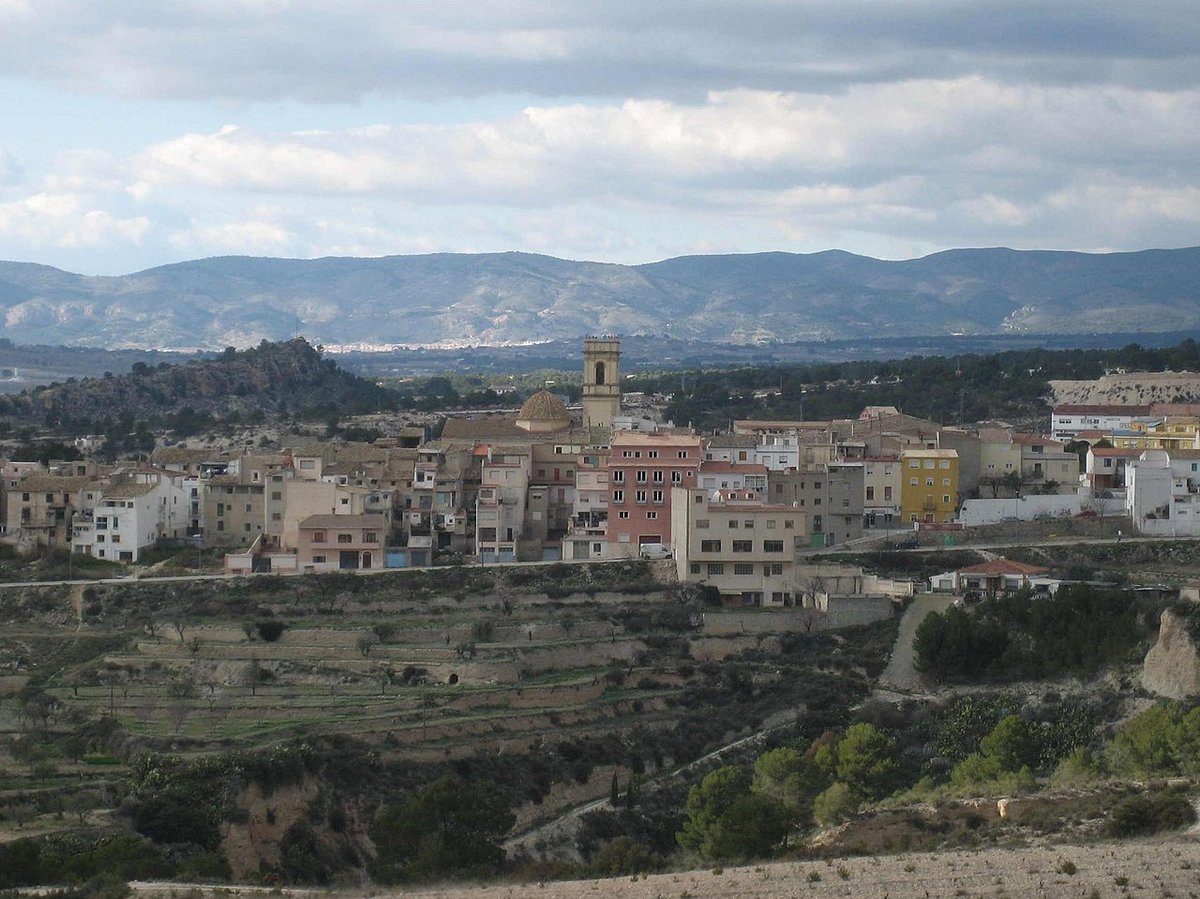
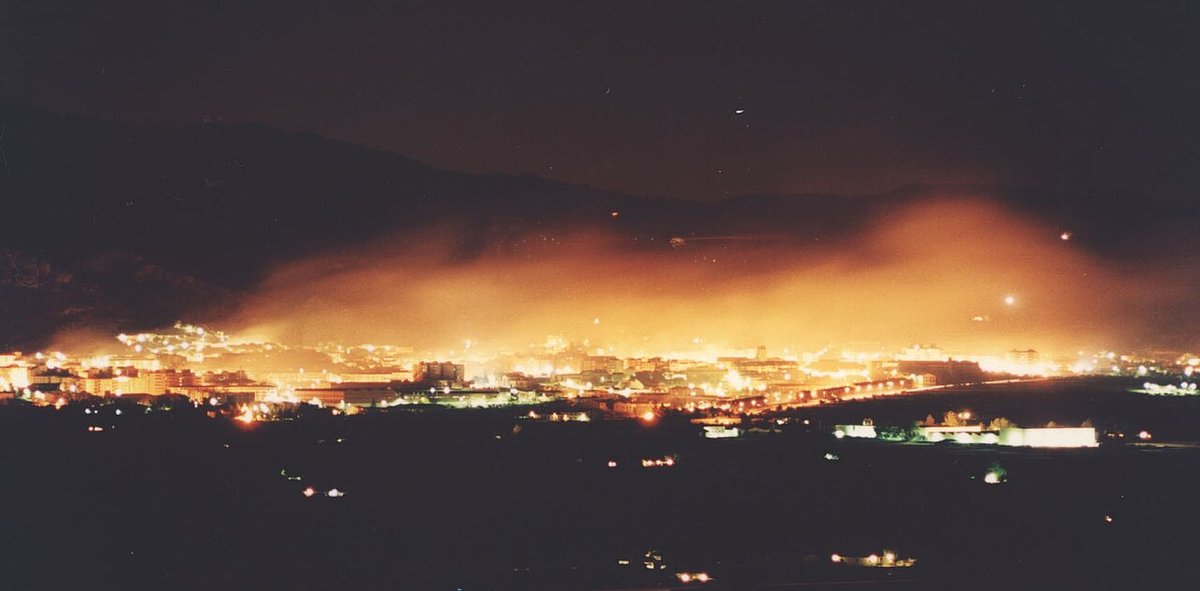
Onil has been making dolls for a century. That history shapes the character of the town. Just over 8,000 people live here, at around 700 metres above sea level, between factory buildings and open hills. At weekends the atmosphere is calm. Anyone looking for constant activity will not find it here.
This is a place that can be understood in a few hours. The streets are compact, the landmarks are close together and the surrounding sierra begins almost at the edge of town. It suits a short stop, a gentle wander and perhaps a walk into the hills.
Getting There and Parking Without Stress
The A‑7 motorway brings you close to Onil. From there, the CV‑815 climbs through pine woods until the town appears ahead.
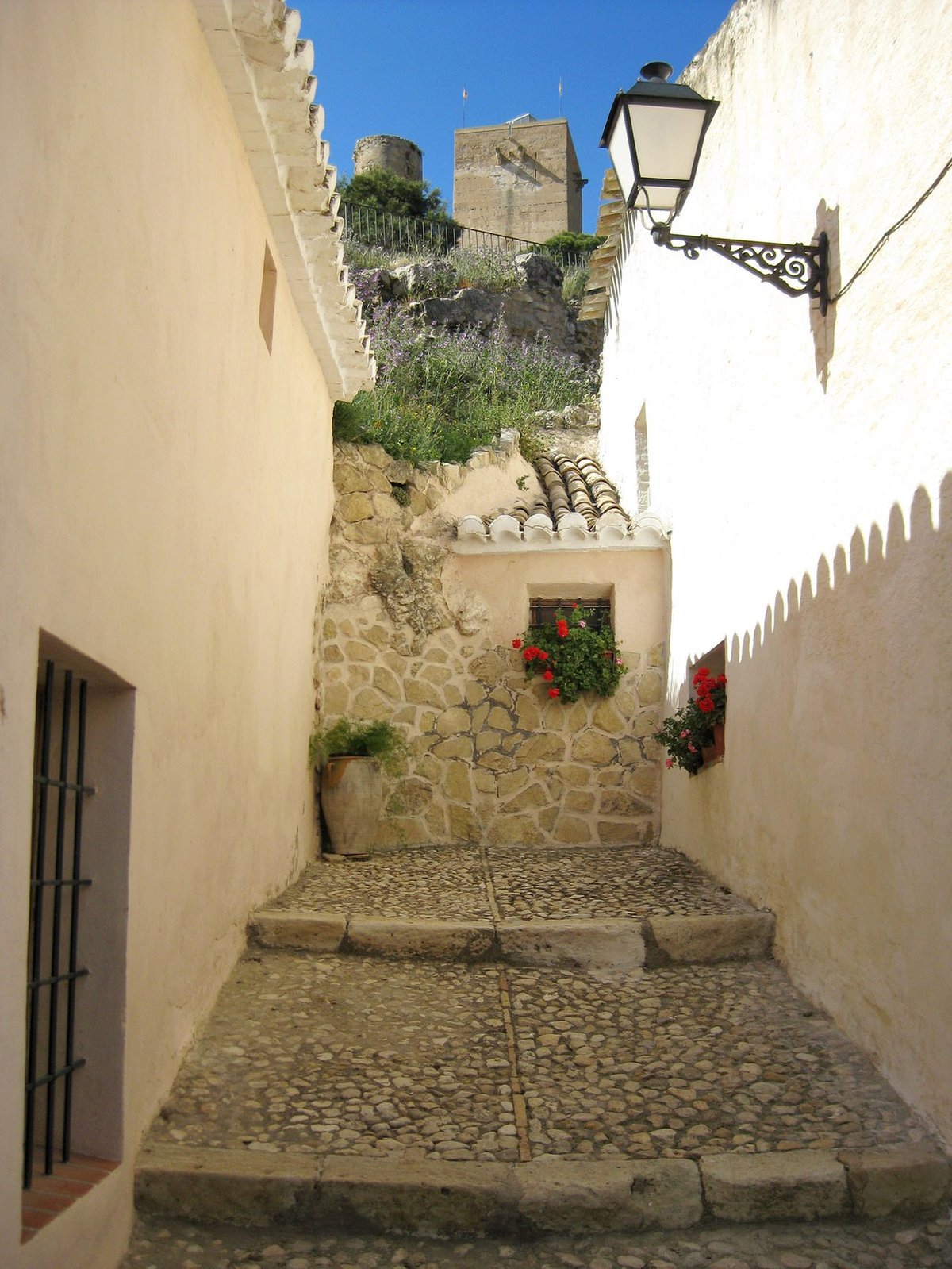
Once you arrive, it makes sense to park as soon as you see a spacious area in the upper part of town. The historic centre is a small maze of narrow streets and steep slopes. Circling in a car is more trouble than it is worth. Near the sports centre there is usually space, and from there it is only a short walk downhill to the centre.
Trying to park in the lower streets only really works if you already know your way around.
A Compact Centre with a Defensive Air
The Palacio de Dos Aguas dominates the centre and now serves as the town hall. Despite its name, it looks more like a castle than a palace, with its tiled roof and solid, defensive volume. You see its façade almost immediately from the main square. The interior opens only on specific occasions, so most visits stop at the exterior.
Plaza Mayor is simple and functional. There are benches, a bandstand and little else competing for attention. On one side stands the 17th‑century church of Santa Ana. It usually opens for worship rather than general sightseeing.
Onil’s identity is closely tied to its industry, and that becomes clear along Calle Mayor. The Museo de la Muñeca occupies an old house here. It explains how dolls were made in the town and displays pieces from different periods. For anyone interested in local industrial history, it adds context to what you see around town. For others, it is a brief stop that can be covered fairly quickly.
There are also small spaces dedicated to olive oil, the Moros y Cristianos festivities and the Reyes parades. These function more as local exhibition rooms than large-scale museums, and they often open only on specific dates.
Beneath the town hall lies an air-raid shelter from the Spanish Civil War. It is short and can be walked through in a matter of minutes when open to the public.
Taken together, these sights do not require a full day. A stroll along Calle Mayor, a look at Plaza Mayor and the Palacio de Dos Aguas, and a pause by the church of Santa Ana give a clear sense of the place.
Local Dishes with Substance
In the bars around the centre, the food is firmly rooted in the area. One of the most distinctive dishes is gazpacho onilense. Despite the name, it does not resemble the cold tomato soup many visitors associate with gazpacho. There is no tomato in this version. Instead, it uses pieces of flatbread mixed with almond, creating a hearty, filling plate.
In winter, olla de cardet appears more frequently. This is a robust stew made with cardoon and local sausages. It is the kind of dish that suits colder days in the hills.
Coca de mollitas is another common sight. This is a baked dough topped with flour crumbs, tomato and herbs. It is more substantial than it looks at first glance.
Pelotas de fríjol are dense and strongly flavoured, made from dried broad beans and spices. They are not to everyone’s taste, yet they form part of the town’s culinary tradition.
If you stop for a mid-morning coffee, it is quite normal for it to be accompanied by a simple tapa from the house.
Walking Straight into the Sierra
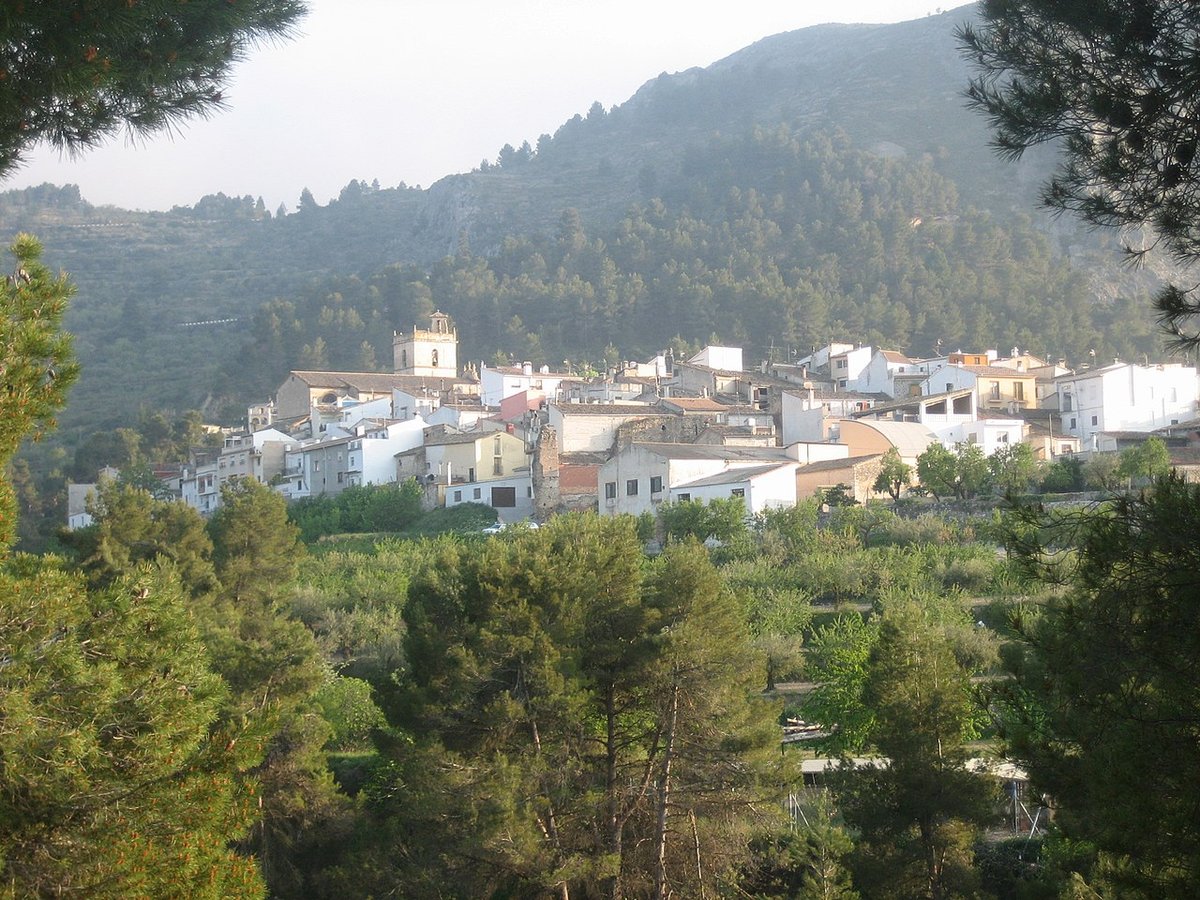
One of Onil’s advantages is how quickly you reach open countryside. The sierra begins practically at the edge of town. Marked paths climb towards the ermita de Santa Ana and continue through pine forest and areas of evergreen oak.
A popular route passes by the Fuente de la Hiedra. It involves some uphill sections but is not long. On a clear day, you can see as far as the Maigmó in the distance.
Another well-known walk circles the area of the Peñes Roges, where the rock takes on a reddish tone and stretches of low scrub alternate with open ground. The starting point is close to the sports centre.
There are not many fountains along these paths. It is better to bring water from the town before setting out.
The walks are not extreme, yet they add perspective. From above, the mix of factories, tiled roofs and surrounding hills becomes clearer. The industrial past and the natural setting sit side by side.
A Straightforward Way to See Onil
Onil does not require a complex plan. Park in the upper part of town, walk down into the centre and wander along Calle Mayor and Plaza Mayor. If the history of doll-making appeals, step into the Museo de la Muñeca. Afterwards, head uphill towards the ermita and take in the view across the valley.
The Moros y Cristianos festivities, held in late spring, transform the atmosphere. There are more people in the streets and a considerable amount of noise. Outside those dates, everything moves slowly.
Spend a couple of hours here and you will have a clear idea of what Onil is like: a small Valencian town shaped by a century of doll-making, set between pine-covered hills, unhurried for most of the year and easy to explore on foot.