Full Article
about Tibi
Quiet town known for Europe’s oldest working reservoir
Hide article Read full article
Where the light settles
The water turns golden as the sun drops behind the low hills. At the Pantano de Tibi, at that hour, almost nothing moves. A branch cracks somewhere, wind slips through the pines, a bird crosses the valley. Anyone arriving here in search of tourism in Tibi tends to pause for a while, watching how the light shifts across the old stone dam.
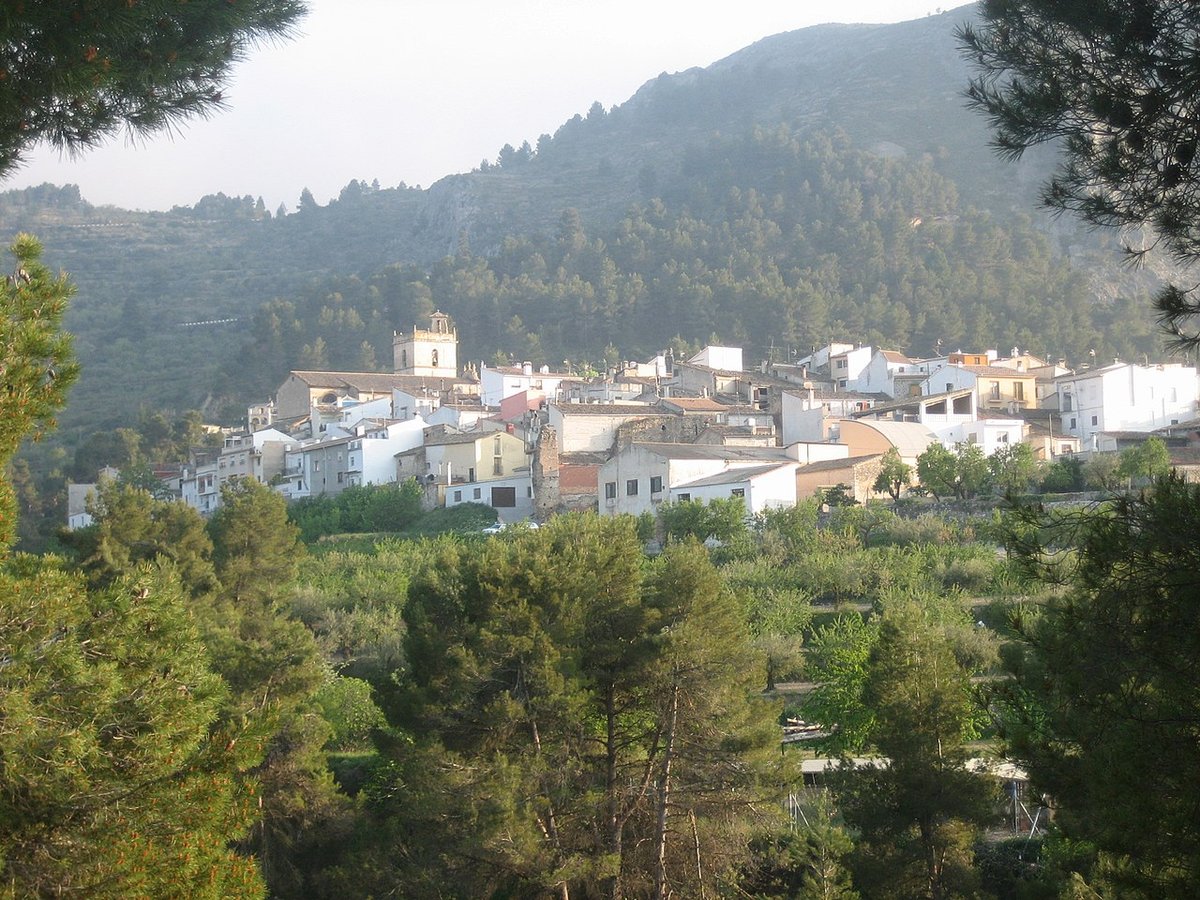
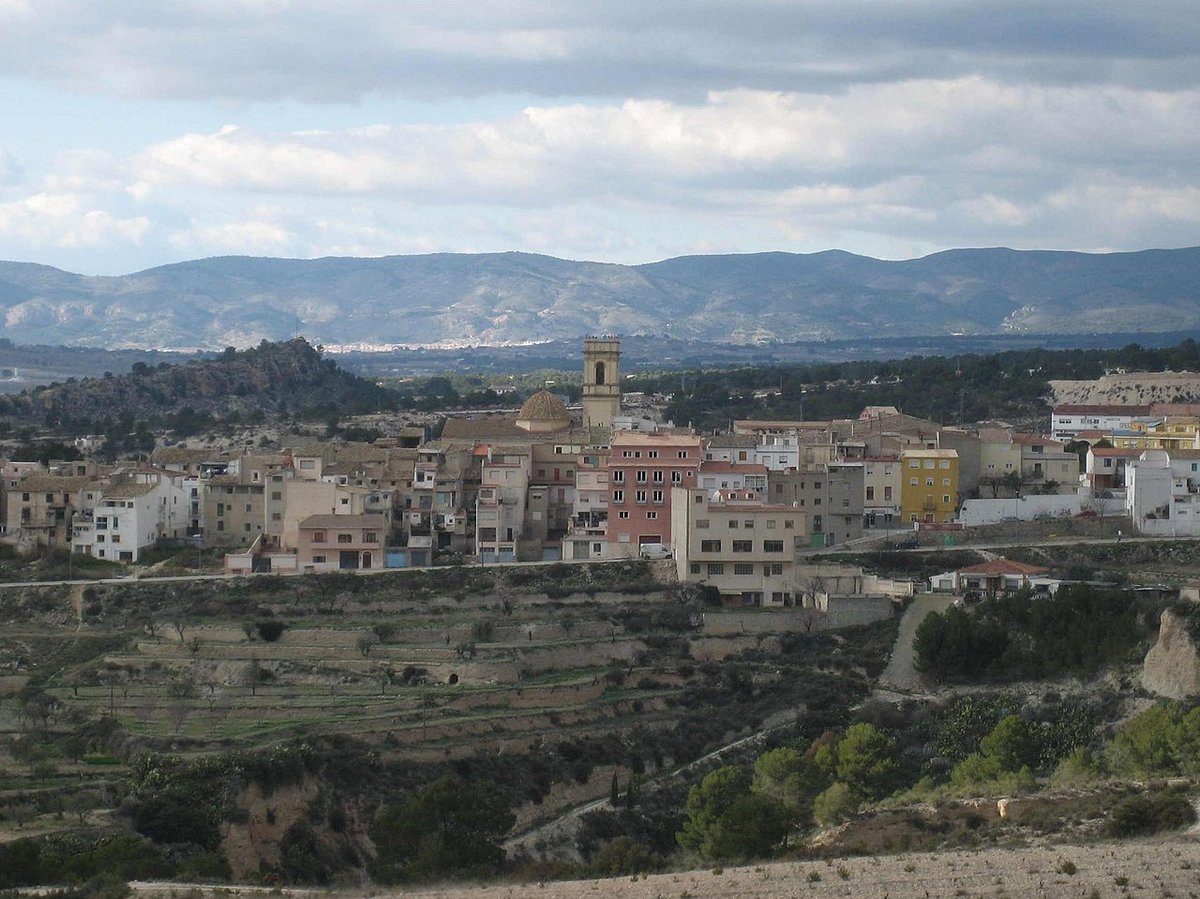
About thirty minutes from Alicante, the village sits gathered among mountains. Tibi has just over 1,700 inhabitants and follows a pace still shaped by the land, the weather and the road that climbs up from the coast. Streets are narrow, houses press close together, and the surrounding landscape carries more weight than any planned itinerary.
The Pantano de Tibi at dusk
The reservoir is the best-known feature of the municipality. It was built in the 16th century, during the reign of Philip II, and for a long time it stood among the tallest dams of its time.
From certain points along the path, the stone wall rises between dry mountains. The contrast is clear: pale rock against the deep green of the pines, especially when the sun comes in low from the side. Some areas near the dam are not always open, so it is worth checking ahead if the aim is to reach the base of the structure.
Towards the end of the day there are usually fewer people around. Cooler air drifts down from the ravine and the water settles, almost still. The scene feels suspended, as if the valley is holding its breath for a moment.
Slow streets and the village church
In the centre of Tibi, everything unfolds slowly. The bells of the Iglesia de la Transfiguración del Señor mark the hours, their sound carrying across most of the old town.
The façade keeps its baroque features, with a solid presence and little in the way of decoration. Benches nearby often fill with neighbours talking as evening approaches. Their voices echo softly, mixing with the sound of a shutter being pulled down or a car engine climbing towards the higher houses.
Walking these streets does not take long. The village is small, and within a few minutes it is possible to move from the main square to the edges of the built area, where dirt paths begin. The transition is quick and clear, from close-packed houses to open ground and rough tracks leading out into the hills.
Above the village, an open valley
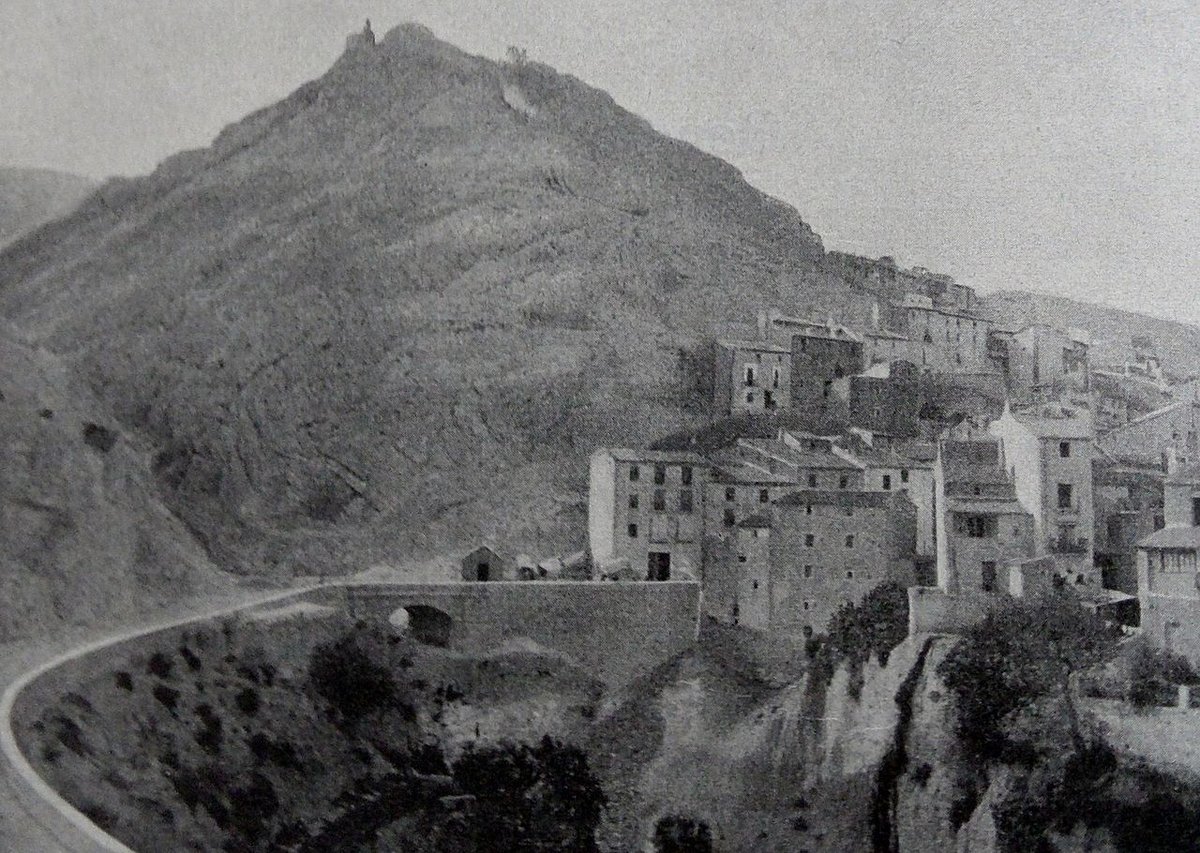
The remains of the old castle stand above Tibi. It is not a long visit. The ruins rise only a little, a few walls left behind, but the view from up there opens out widely across the valley.
The landscape has a certain roughness. Old terraces, patches of pine forest, mountains that shift in colour depending on the time of day. In the evening, light enters from the side and the relief becomes more pronounced. On clear days, the distant line of the sea can just be made out.
The path up includes some sloping sections, so it is best taken at an easy pace and with suitable footwear. It is not demanding, but it does require attention underfoot.
Paths around the reservoir
One of the most common routes in the area follows part of the edge of the Pantano de Tibi. The track alternates between wider paths and narrower trails. It is generally straightforward, although the ground can be dry and stony in places.
From the shore, the reservoir appears larger than it does from the road. As the path gains a little height, new views open up over the valley and the dam. The sense of space grows with each turn.
In summer, the heat builds quickly. Setting out early and carrying enough water is the sensible approach. Shade is limited along certain stretches, and the terrain reflects the sun.
Those looking for longer walks often head towards the nearby sierras. Some climbs involve a fair amount of ascent, but they offer a clearer sense of how the mountainous interior gradually gives way to the coastal strip when the sky is clear.
Seasons, festivals and getting there
Spring and autumn are usually the most comfortable times to explore Tibi. After rain, the hills carry the scent of thyme, and temperatures allow for unhurried walking. In summer, the sun becomes intense from midday onwards.
In August, the village becomes livelier with the patronal festivities dedicated to the Transfiguración del Señor. During those days, there is more movement in the streets and bands of music can be heard at night. Other traditional celebrations take place throughout the year, linked to the religious calendar and agricultural life.
The simplest way to reach Tibi is by car from Alicante, following the road towards Jijona and then heading inland. Public transport does exist, though services are not always frequent, so it is worth checking in advance.
For those seeking quiet, early morning is the best time to arrive. At that hour the village is still half asleep, and the air moving through the valley comes down cool from the reservoir. It is a brief moment, but it says a great deal about Tibi when nothing is in a hurry.