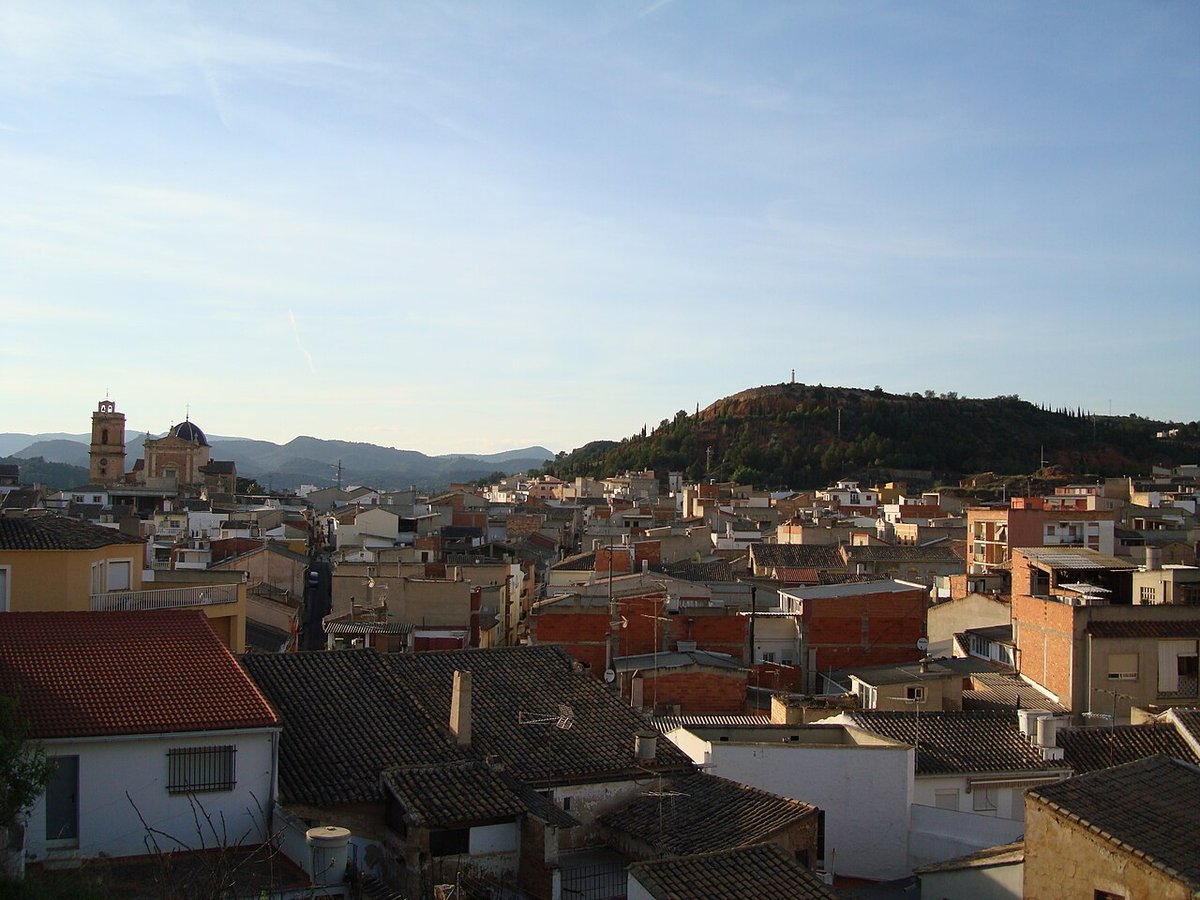
Vista aérea de Aras de los Olmos
Instituto Geográfico Nacional · CC-BY 4.0 scne.es
Comunidad Valenciana · Mediterranean Light

Aras de los Olmos

The night sky above Aras de los Olmos is so dark that the Milky Way casts a faint shadow. At 936 metres, this stone-built farming hamlet sits insid...

401 inhabitants · INE 2025
936m Altitude

Why Visit

Mountain Astronomical Observatory Stargazing

Best Time to Visit

summer

Santa Catalina Festival (November) agosto

Things to See & Do
in Aras de los Olmos

Heritage

  • Astronomical Observatory
  • Church of Nuestra Señora de los Ángeles
  • Ethnobotanical Garden

Activities

  • Stargazing
  • Hiking
  • Dinosaur Trail

Festivals
& & Traditions

Fecha agosto

Fiestas de Santa Catalina (noviembre), Fiestas de Agosto (agosto)

Las fiestas locales son el momento perfecto para vivir la autenticidad de Aras de los Olmos.

Full Article
about Aras de los Olmos

Starlight destination par excellence with astronomical observatories and mountain natural setting

Ocultar artículo Leer artículo completo

The night sky above Aras de los Olmos is so dark that the Milky Way casts a faint shadow. At 936 metres, this stone-built farming hamlet sits inside Spain’s newest Starlight Reserve, a status that bans unnecessary lighting and makes the village one of the clearest windows on the cosmos within two hours of Valencia. Locals still talk about the evening a British astronomy club arrived with three telescopes and left speechless—not by the gear, but by the silence. No traffic hum, no coastal sodium glow, just crickets and the smell of pine resin drifting up from the Arcos gorge.

A village that refuses to dress up

Aras de los Olmos won’t win any “prettiest village” contests, and it seems perfectly happy about that. Houses are the colour of dry toast, roofs sag like well-worn caps, and the main square is a patchwork of patched tarmac and stone. What you get instead of postcard perfection is continuity: the bakery still closes for siesta, the butcher knows exactly which hillside each lamb came from, and the Friday market fits on a single pavement. Walk the narrow lanes and you’ll spot a freshly restored holiday cottage next to a barn with a 1950s tractor rusting quietly outside. Nothing is staged; laundry flaps from iron balconies, and the only crowds are the village dogs arguing over territory.

The parish church squats at the top of the hill, its bell tower more functional than graceful. Inside, the temperature drops six degrees and the smell is of wax and centuries of wood smoke. There is no ticket desk, no audio guide, just a printed sheet that tells you the building survived both the 1834 earthquake and a lightning strike in 1972. Drop a euro in the box and the sacristan might appear from a side door to point out the Roman altar stone cemented into the wall—proof that people have been climbing this ridge for longer than Spain has existed.

Walking into empty country

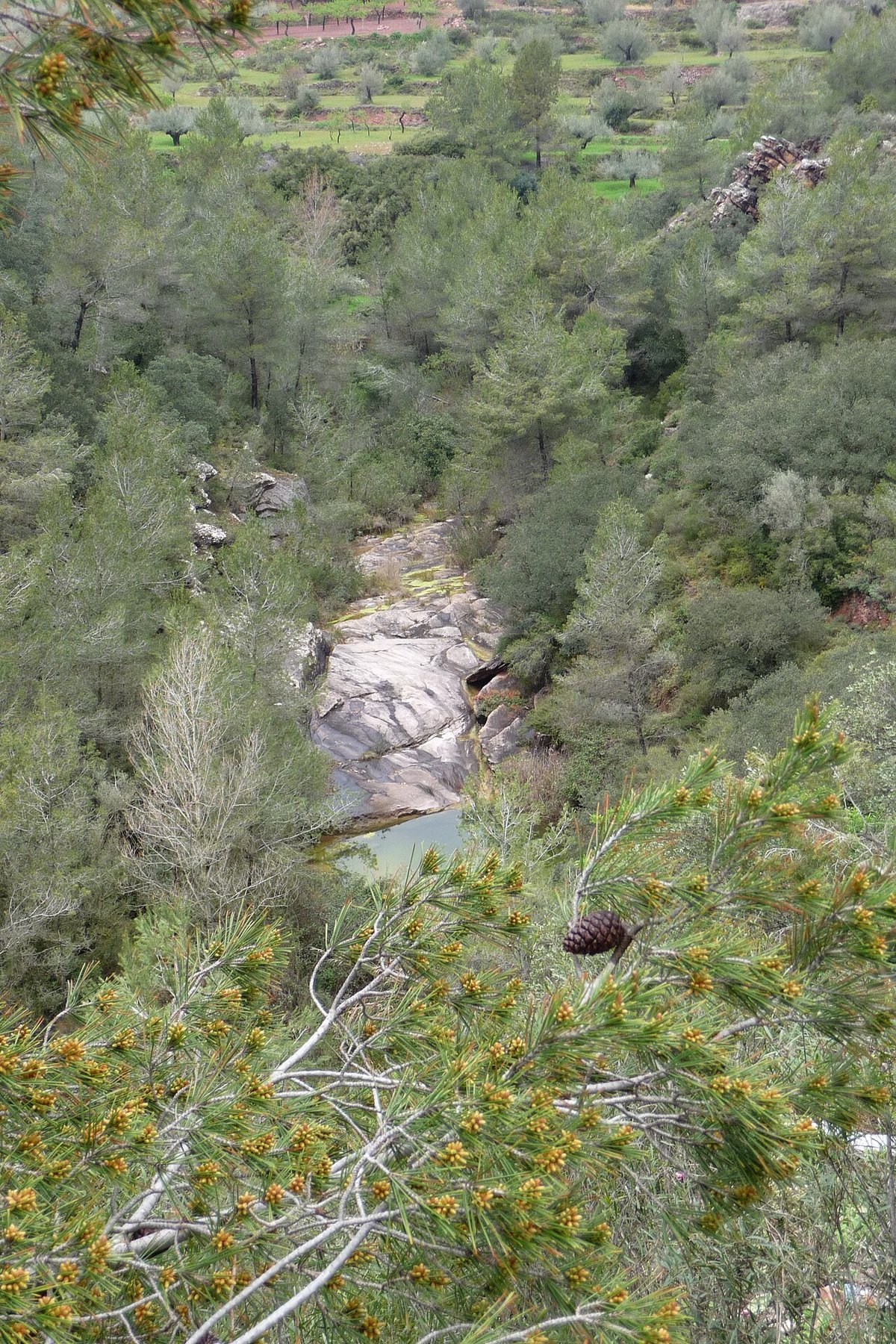
Footpaths leave the village as if escaping. The simplest loop, the 5 km Ruta de los Íberos, follows an ancient drove road to a ruined Iberian watchtower, then cuts back along the lip of the Arcos gorge. The drop is sudden: limestone cliffs fall 300 metres to a ribbon of green where griffon vultures ride thermals like lazy punctuation marks. Spring brings purple thyme and the last of the wild daffodils; autumn smells of damp mushroom and wet slate. In July the trail is oven-dry by eleven o’clock—carry water, because the next fountain is two villages away and the only shade is a single juniper that grew sideways out of the rock.

Longer routes link to the long-distance GR-10 and the Serranía de Valencia cycle ring, but signage is erratic. The tourist office (open weekday mornings inside the ayuntamiento) hands out free topo maps printed on behalf of the regional park; they are accurate but assume you can read Spanish contour lines. Mobile signal dies within five minutes of leaving the square, so download the Wikiloc files the night before. If the barman sees you studying a GPS he will, without fail, ask whether you’ve told anyone your route—lost hikers are rare but memorable.

Starlight and stomachs

Dark-sky tourism is the one thing the village has agreed to market. The observatory is a white dome behind the interpretation centre, 200 metres past the last street lamp. Sessions start at 10 pm sharp; if the sky is clear you’ll get 90 minutes of telescope time and a thimble of mistela, the local muscat liqueur. Cloudy nights are re-branded “nocturnal nature walks” and you still pay €15, so check the forecast. Bring every layer you own—even August nights can dip below 10 °C once the wind scuds across the meseta.

Food is mountain-plain rather than coastal-zing. Breakfast at the bakery means thick hot chocolate and ensaïmada eaten standing up; they close at 11 am sharp and the ATM next door is broken more often than not. For lunch Los Tornajos fires up a wood-burning stove that perfumes the whole square with smoked paprika. The menu del día is €14 mid-week and might feature ajo blanco, the cold almond-garlic soup that tastes like liquid marzipan, followed by conejo al romero—rabbit so lean it needs the rosemary. Portions are modest by British pub standards; order the truffle scrambled eggs as a starter and you’ll get three mouthfuls, but the earthy perfume lingers for hours. Vegetarians survive on tortilla and the local apricot ale brewed 20 km away in La Galana—light, faintly acidic, and easier going than the ubiquitous Estrella.

When to come, how to get here, what can go wrong

Aras de los Olmos is 104 km north-west of Valencia city. The CV-35 motorway shrinks to a single carriageway after Llíria, then corkscrews over the 1,100 m Puerto de Torrijas; in winter the pass ices quickly and the Guardia Civil close it without warning. Petrol pumps vanish after Alpuente, so fill up early. There is no railway: the weekday bus leaves Valencia’s Estació del Nord at 7.45 am, takes two hours twenty, and returns at 3 pm—fine for a rushed picnic, useless for stargazing. Accommodation totals 35 beds scattered between four cottages and the simple Hostal El Navarro; August and Easter week sell out to families from Manises and Burjassot who have been coming for three generations. English is scarce—download Spanish phrases or be prepared to mime “vegetarian” to a bemused waiter.

Rain arrives in abrupt spring cloudbursts; paths turn to greasy clay and the gorge fills with a dull roar. Summer afternoons regularly hit 34 °C, but the altitude keeps nights breathable. Winter is the secret season: bright, cold, empty. Daytime nudges 12 °C, nights drop to –4 °C, and the observatory runs aurora alerts even this far south. Book a cottage with a wood-burner—snow is rare but frost patterns the cobbles like broken glass.

Parting shot

Aras de los Olmos does not need you. The olives will be harvested whether you buy the oil or not, the vultures will circle without applause, and the Milky Way has been turning up every clear night for rather longer than package tours have existed. Turn up with realistic expectations—bring cash, a coat, and enough Spanish to order coffee—and the village repays you with a measure of silence that coastal Valencia forgot it ever owned. Miss the last bus back and you might even get the sacristan’s cousin offering the spare room, payment accepted in stories rather than euros.

Key Facts

Region
Comunidad Valenciana
District
Los Serranos
INE Code
46041
Coast
No
Mountain
Yes
Season
summer

Livability & Services

Key data for living or remote work

2024
Connectivity5G available
HealthcareHospital 30 km away
EducationElementary school
Housing~5€/m² rent · Affordable
CoastBeach 18 km away
Sources: INE, CNMC, Ministry of Health, AEMET

Official Data

Institutional records and open data (when available).

  • Escudo de los Martínez de Raga de la Masía Benacatazera
    bic Monumento ~5.5 km
  • Yacimiento icnológico de Vizcota
    bic Zona paleontológica ~6.7 km
  • Emblema de Jesús y María, año 1629, de la masía de Benacatazara
    bic Monumento ~5.5 km
  • Escudo de la familia del Santo Oficio Polo
    bic Monumento ~0.3 km
  • Emblema de Jesús de Aras de los Olmos
    bic Monumento ~0.3 km
  • Escudo Real de Aragón y Valencia
    bic Monumento ~0.3 km
Ver más (10)
  • Emblema de Jesús y María de Pedro Cubas
    bic Monumento
  • Escudo de la Plaza del Olmo 7
    bic Monumento
  • Emblema Jesús y María con leyenda
    bic Monumento
  • Escudo de la calle Caballeros 14 y 16A
    bic Monumento
  • Escudo de los Martínez de la Raga
    bic Monumento
  • Emblema de Jesús y María de 1693
    bic Monumento
  • Escudo Casa Abadía
    bic Monumento
  • Escudo del año 1624
    bic Monumento
  • Torre del Cortijo
    bic Monumento
  • Castillo de Cabrera
    bic Zona arqueológica

Planning Your Visit?

Discover more villages in the Los Serranos.

View full region →

More villages in Los Serranos

Traveler Reviews