Full Article
about Benagéber
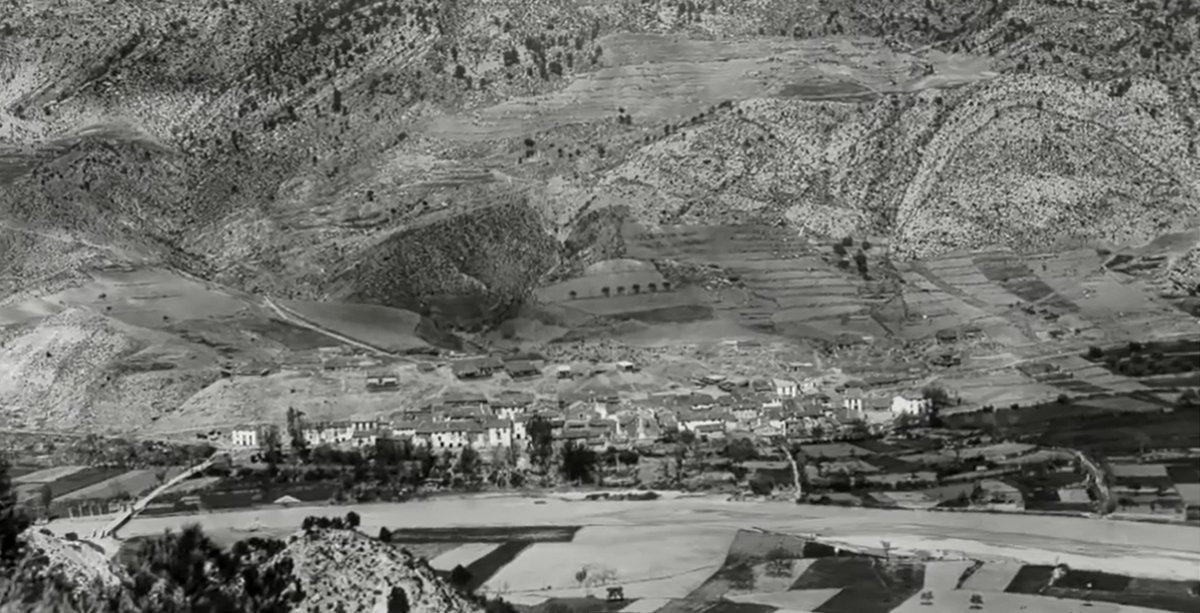
Municipality shaped by its reservoir and the relocation of the original village, rich in forestland.
Hide article Read full article
A Small Stop in Los Serranos
Some places appear almost by accident. You are driving through the comarca of Los Serranos, linking bend after bend between pine forests, and then a small settlement comes into view, seemingly there out of necessity rather than design. Benagéber is very much that kind of place.
This tiny village in the interior of the Comunidad Valenciana has around 170 residents. The most constant sound is often the wind moving through the pines. There are no crowds, no queues, and no sense that anything is trying to impress.
You do not come here to tick off landmarks. The centre can be explored in a short, unhurried walk, without the feeling that you have missed something essential. Benagéber works better as a base for understanding the landscape that surrounds it: hills, ravines and a clear sense that you are far from the Mediterranean coastline that many people associate with Valencia.
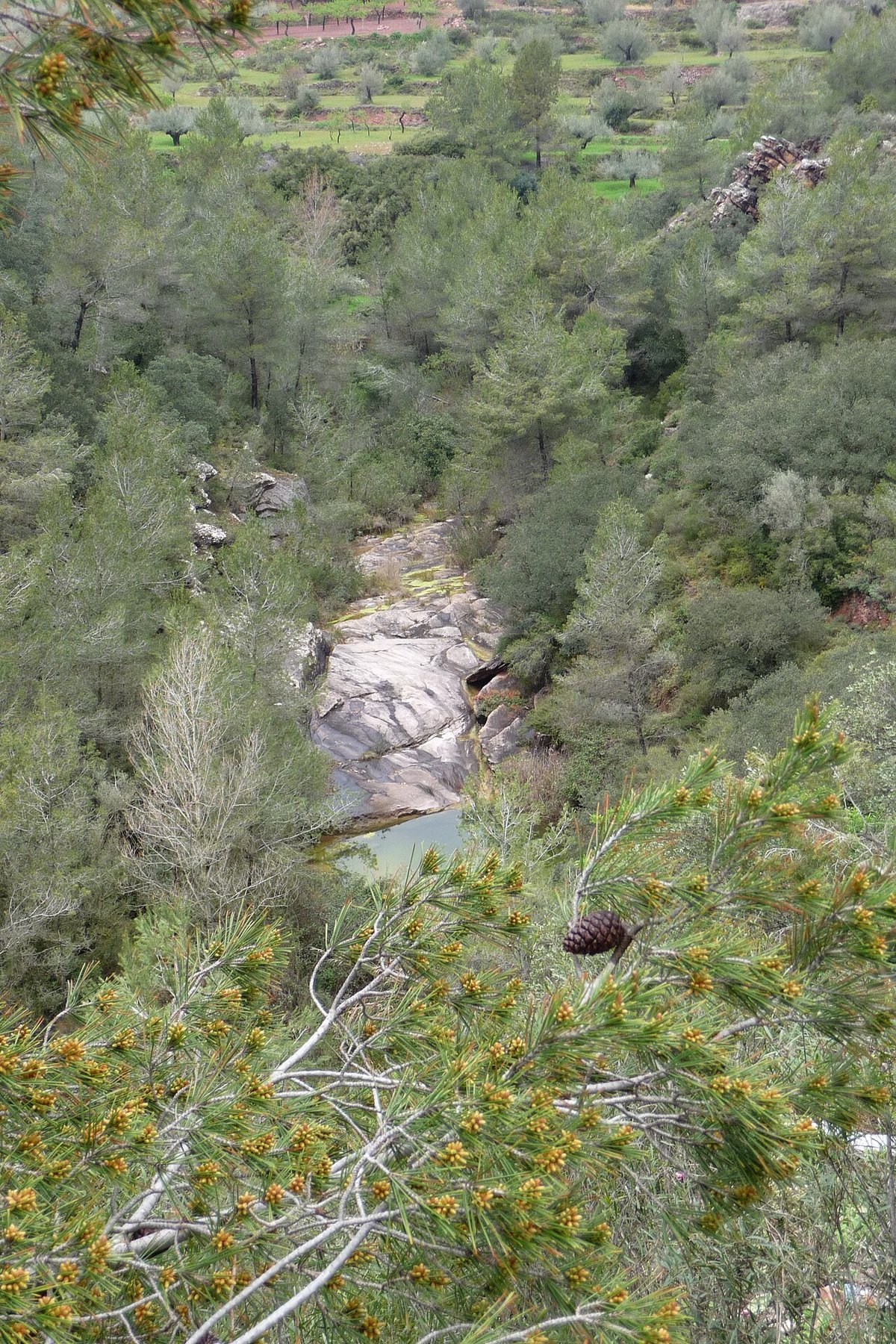
Once outside the village, the terrain takes over. Pine woods, holm oaks and slopes that rise and fall as if someone has crumpled the map. On clear days, from some of the higher points, you can make out mountains that already belong to other provinces, towards Teruel or Cuenca. There is no formal viewpoint, no panels or platforms. Just the kind of roadside high point where you pull over for a moment and look out in silence.
A Village Without Ornament
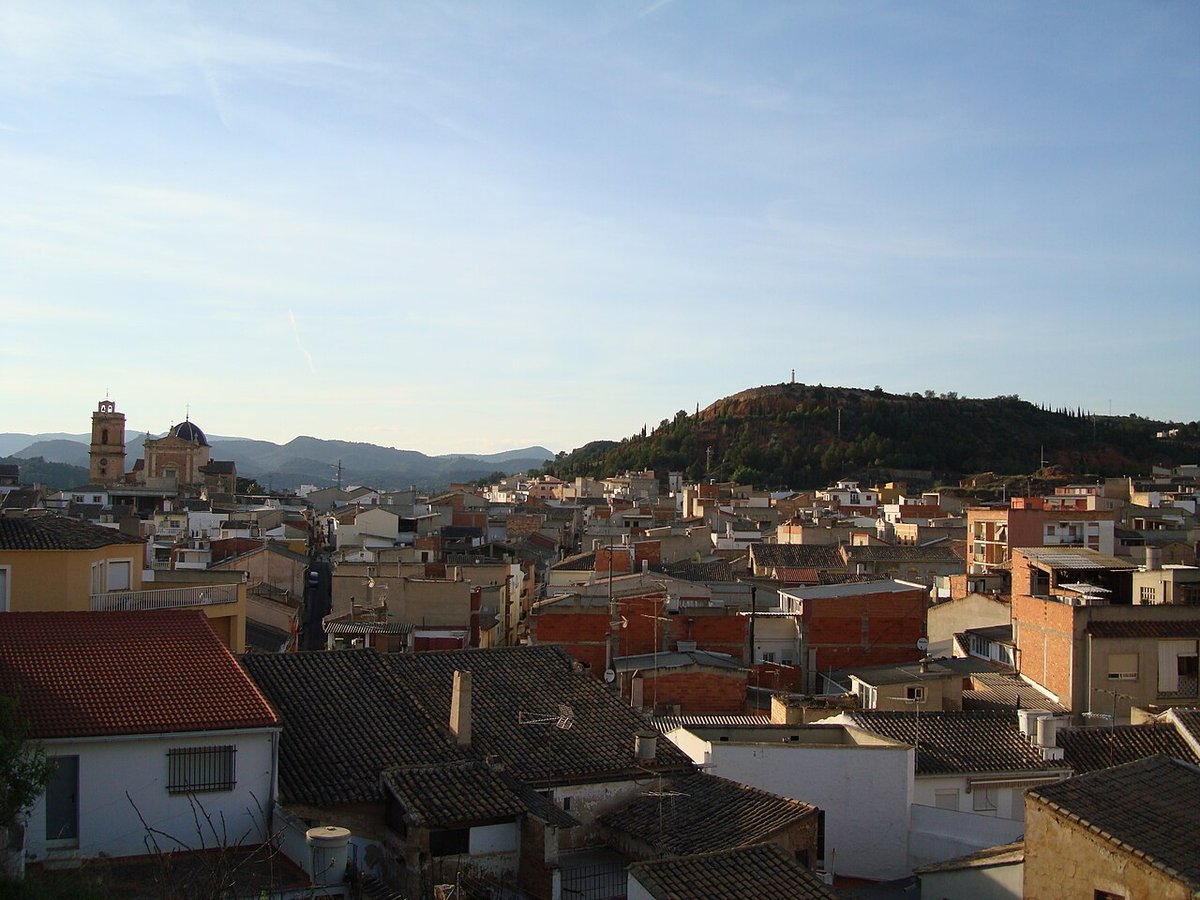
The heart of Benagéber has the practical feel of a mountain settlement. Stone or masonry houses, simple façades and streets that adapt to the slope as best they can. Nothing monumental, nothing theatrical. It feels like a place built to be lived in rather than photographed.
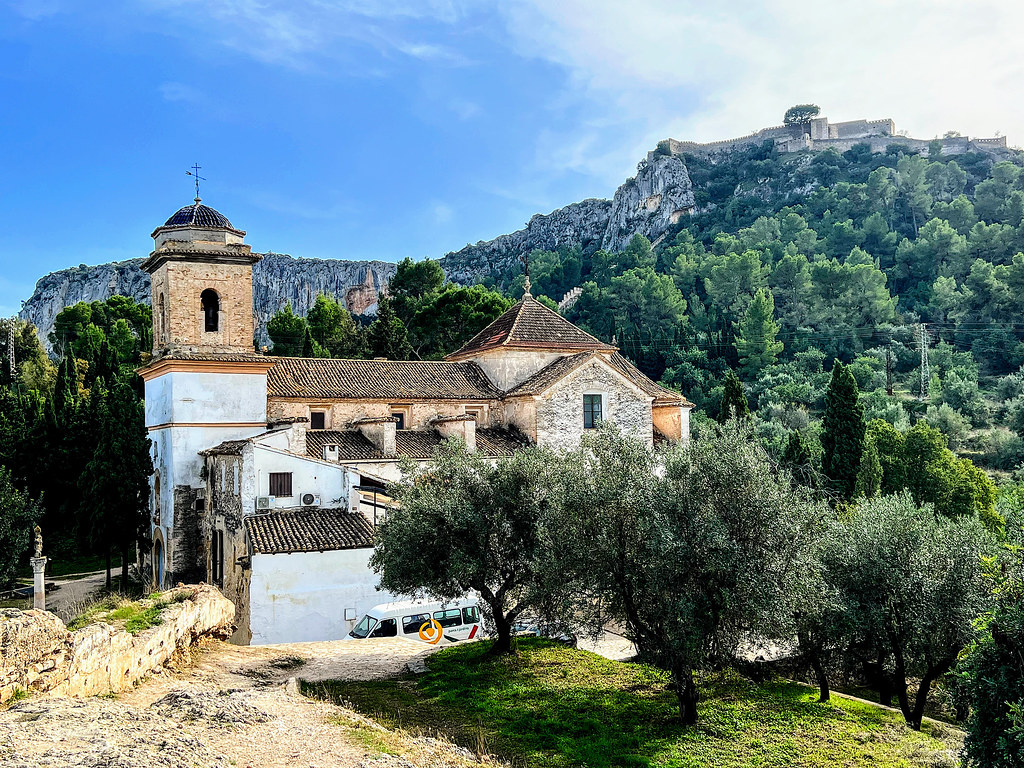
The parish church, dedicated to the Asunción, is one of the few buildings that slightly break the uniformity of the centre. Even so, it is neither large nor especially striking. It fits comfortably with the rest of the village, which has always maintained a fairly sober relationship with this sort of thing.
Step beyond the last houses and you begin to see dry-stone walls, former cultivated fields and the occasional olive or almond tree still standing, even if no one tends it much now. The contrast between what was once agricultural land and what has since returned to scrub and woodland is visible across the area. It gives the surroundings a layered feel, where past and present sit alongside each other without explanation boards or curated routes.
The scale of everything encourages you to slow down. A short stroll along the streets is enough to understand the rhythm of the place. There is no background noise beyond the natural kind, and no pressure to move on quickly.
Water Among the Pines
In Benagéber, the true focal point lies beyond the village itself. The nearby embalse changes the mood of the landscape. Suddenly, a broad sheet of water appears in a setting that is dry for much of the year.
At dawn and towards the end of the afternoon, the reservoir is usually calm. It is not unusual to see birds flying overhead or moving along the quieter stretches of shoreline. The water introduces a different colour and texture to the scenery, breaking up the browns and greens of the hills.
For those who enjoy walking, forest tracks and paths head into the pinewoods, skirting ravines or edging closer to the water. The routes are not presented as a polished natural park experience. Signage is not always perfect, and paths can look deceptively similar. It is sensible to carry a map or a track and to take your time. This is the kind of terrain where the good path and the less good one resemble each other until you have been walking for a while.
Mountain biking follows the same logic. Long tracks, dust in summer and the occasional climb that forces you to get off and push. Nothing manufactured, nothing smoothed out. The experience feels direct and unfiltered, in a positive sense.
Beyond the practicalities, what stands out is the sense of space. The reservoir and surrounding hills absorb sound. Even when you are active, walking or cycling, there is a persistent impression of distance from busier parts of the region.
Festivities on a Village Scale
The main fiestas are concentrated in summer, around August, when many people with family roots here return for a few days. The atmosphere changes noticeably. There is more movement in the streets, long family gatherings and a village that feels livelier than usual.
The celebration of the Asunción continues to mark the local calendar, with religious events and activities organised by the residents themselves. For visitors unfamiliar with Spanish traditions, the Asunción refers to the Feast of the Assumption in mid-August, an important date in many towns and villages across the country.
Semana Santa is also observed, although on a small scale and very much centred on the community. Rather than large processions or elaborate displays, the emphasis is on participation and continuity.
More than major events, what comes across is a rhythm where fiestas serve mainly as moments of reunion. People return, meet again, and share time together. The calendar still feels local rather than designed for outsiders.
The Road In
From the city of Valencia, the journey takes roughly an hour and a bit, depending on how you approach the comarca. The usual route is to follow the A‑3 towards the area of Requena and then continue along quieter roads into the interior of Los Serranos.
As you leave the main road behind, the bends begin. Pine forests close in, and the sensation of moving away from the coast becomes clear. The Mediterranean image of Valencia fades, replaced by inland hills and open views.
It is worth taking the drive at an easy pace. Villages like Benagéber make more sense when approached without hurry. Driving slowly, pausing at a high point along the way and accepting that time moves differently here is part of the experience.
Benagéber does not try to compete with better-known destinations. It does not need to. Its appeal lies in its scale, its restraint and the landscape that surrounds it. A small settlement in Los Serranos, shaped by hills, water and a long agricultural past, where the wind in the pines often has the final word.