Full Article
about Domeño
New town after relocation due to the reservoir, featuring a striking artificial waterfall
Hide article Read full article
Domeño: el pueblo que se mudó de sitio
Llegar a Domeño es como encontrarte con un amigo que ha cambiado de piso. Reconoces la cara, la voz, pero algo en el entorno te dice que esto no es exactamente donde lo habías visto antes. El nombre es el mismo, la gente también, pero las calles son nuevas. La clave está en eso: el Domeño original está bajo el agua.
Para entenderlo hay que hablar del pantano de Loriguilla. Cuando lo construyeron, al antiguo pueblo no le quedó más remedio que recoger sus cosas y subir la cuesta. Lo hicieron con una naturalidad que aún hoy sorprende. Te lo cuentan como quien te dice que un día llovió mucho: "El pueblo se iba a inundar, así que nos mudamos". Y punto.
Un pueblo rehecho desde cero
La historia parece de película, pero fue lenta y burocrática. Primero se fueron unas familias, luego otras, hasta que el casco histórico quedó vacío. Lo demolieron y el agua hizo el resto.
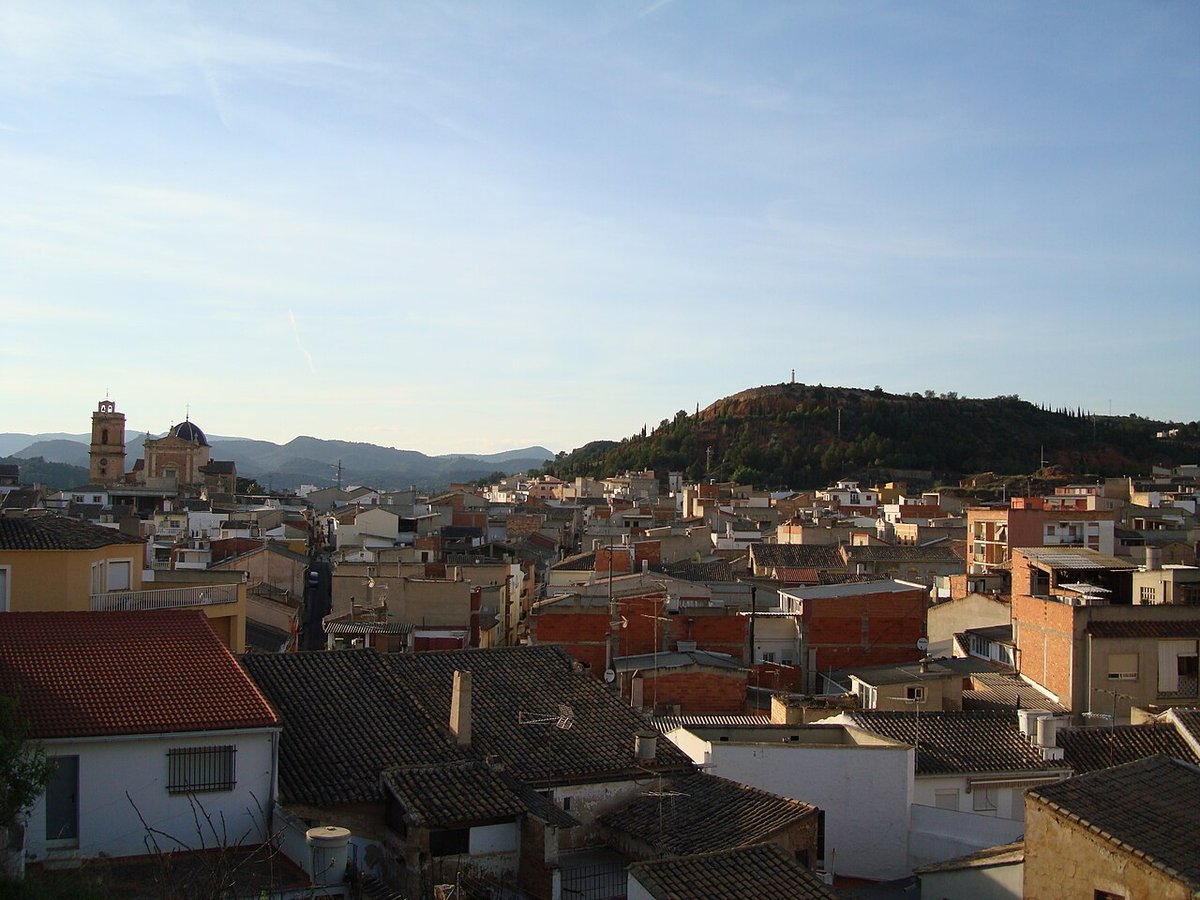
El Domeño de hoy está unos kilómetros más arriba. Tiene esas calles anchas y funcionales de los pueblos planificados, con casas bajas y fachadas sin demasiada historia escrita en las piedras. Hay un par de bares donde a media mañana ya se oye el runrún de las conversaciones, y una iglesia moderna que sirve de referencia.
A simple vista parece un pueblo serrano más. Hasta que recuerdas que todo esto –las aceras, la plaza, los árboles– tiene apenas unas décadas. Es esa sensación rara: un lugar con raíces profundas pero plantado en tierra nueva.
La colina del pueblo viejo
A un paseo corto del núcleo actual está lo que llaman Domeño Viejo. Quedan los cimientos del antiguo asentamiento y las ruinas de su castillo.
La subida son unos tres kilómetros por pista. Se hace bien andando, con una pendiente constante pero nada salvaje. Arriba te encuentras con los restos de una fortaleza de origen islámico, rehecha después en épocas más revueltas. Quedan trozos de muralla y un espacio abierto desde donde se entiende por qué construyeron aquí: se ve todo.
Desde ese mirador natural también se ve perfectamente la lámina de agua del pantano. Esa vista lo explica todo sin palabras. El silencio aquí es distinto; no es la paz del campo, sino el vacío que queda después de un cambio grande.
Pateando la Peña Cortada
Cerca de Domeño pasa uno de los senderos famosos de la zona: la ruta de la Peña Cortada. Aquí es donde te topas con un acueducto romano literalmente partido por la mitad de la roca.
La obra cruza un barranco con unos arcos que imponen aún hoy. Lo interesante no es solo verlo, sino caminar por dentro del canal tallado en la piedra –de ahí el nombre– y preguntarte cómo diablos lo calcularon hace dos mil años.
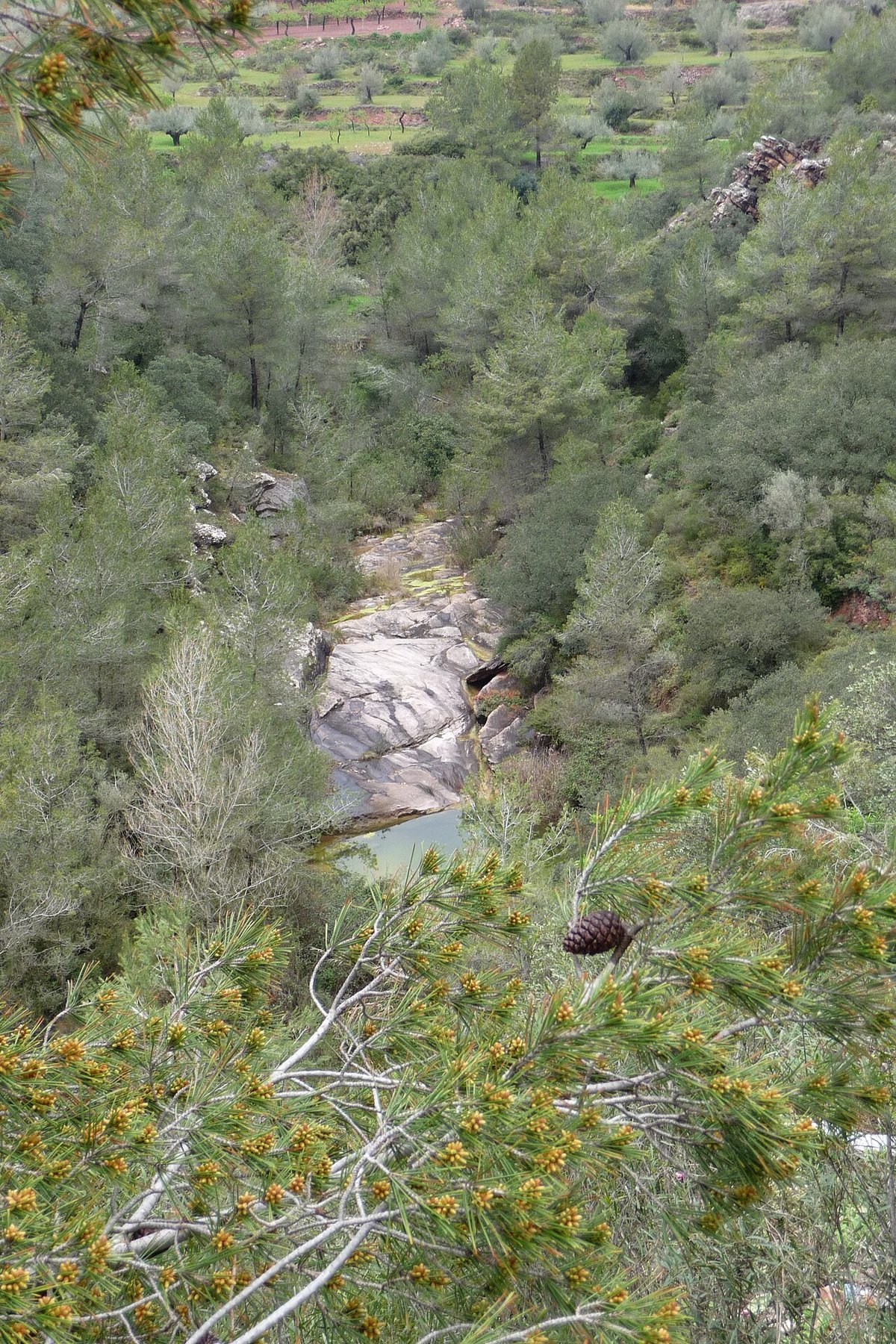
El camino no es un paseo urbano. Hay tramos de tierra suelta, alguna piedra movediza y pasos estrechos junto al cortado. No hace falta ser montañero, pero sí llevar calzado que agarre y agua si hace calor.
Un destino para quien le interese el cambio
Domeño no va a ganar ningún concurso de pueblo más bonito de la Comunidad Valenciana. No tiene casco histórico medieval ni callejones fotogénicos llenos de buganvillas. Si buscas eso, probablemente te quedes frío.
Lo que tiene es otra cosa: la historia reciente escrita en el paisaje. Es ver cómo una comunidad cargó sus recuerdos en camiones y empezó otra vez unos metros más arriba.
Los más mayores te lo resumen con pragmatismo levantino: "Había que subir, pues se subió". La dimensión real del traslado solo te golpea cuando estás allí arriba, mirando al pantano.
¿Merece una visita? Depende. Si te mueve entender cómo se transforma un territorio –pantanos, pueblos desplazados, ruinas con vistas al agua– entonces sí. Funciona bien si lo combinas con la ruta del acueducto o un paseo por los cerros cercanos. Luego puedes sentarte un rato en la plaza del nuevo Domeño a escuchar cómo suena la vida aquí ahora. En una mañana lo ves casi todo, pero te llevas algo menos común: la sensación clara de por qué este pueblo sigue existiendo, aunque su primer solar esté sumergido bajo treinta metros de agua tranquila