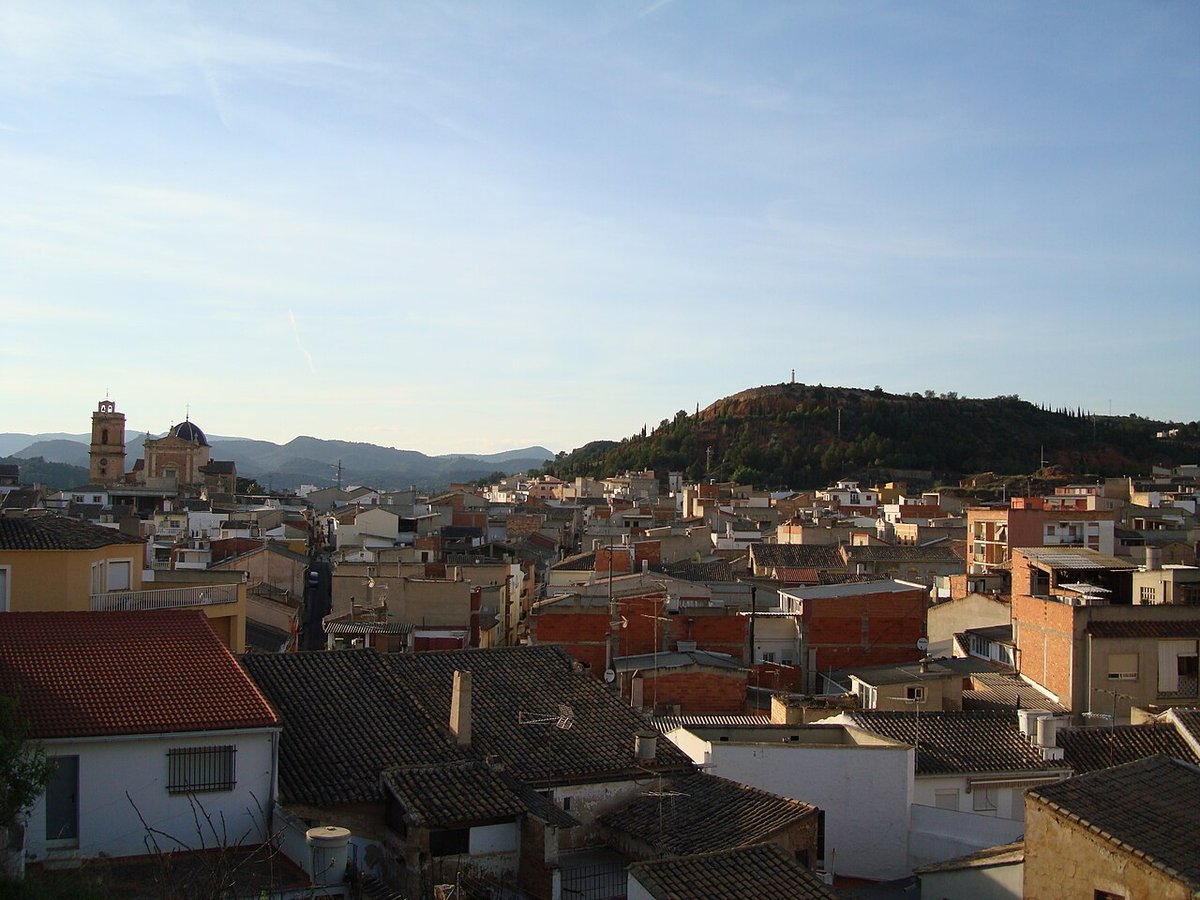
Vista aérea de La Yesa
Instituto Geográfico Nacional · CC-BY 4.0 scne.es
Comunidad Valenciana · Mediterranean Light

La Yesa

The church bell strikes seven, but darkness has already swallowed the narrow lanes of La Yesa. At 1,040 metres above sea level, night falls early h...

246 inhabitants · INE 2025
1040m Altitude

Why Visit

Mountain Church of Nuestra Señora de los Ángeles Mountain hiking

Best Time to Visit

summer

Virgen del Carmen fiestas (July) agosto

Things to See & Do
in La Yesa

Heritage

  • Church of Nuestra Señora de los Ángeles
  • Hermitage of San Juan

Activities

  • Mountain hiking
  • Rural tourism

Festivals
& & Traditions

Fecha agosto

Fiestas de la Virgen del Carmen (julio), Fiestas de Agosto (agosto)

Las fiestas locales son el momento perfecto para vivir la autenticidad de La Yesa.

Full Article
about La Yesa

High-mountain town with a cool climate and holm-oak forests

Ocultar artículo Leer artículo completo

The church bell strikes seven, but darkness has already swallowed the narrow lanes of La Yesa. At 1,040 metres above sea level, night falls early here between November and February—sometimes before the farmers have finished bringing their goats down from the higher pastures. The only light comes from windows where wood smoke drifts from chimneys built tall enough to clear the valley's crosswinds, and from the petrol station on the CV-35, whose fluorescent glow seems almost indecent against the black mass of the Serranía.

This is Spain stripped of Costa associations. No promenades, no beach bars, no British pubs serving Sunday roasts. Instead, La Yesa offers something increasingly rare: a village that functions for its own residents first, visitors second. The 230 people who live here year-round have seen their population decline by half since the 1960s, yet the place refuses to become a museum. Washing still hangs between stone houses. Old men still gather at the Bar de la Plaza to argue about football and almond prices. The municipal noticeboard advertises a forthcoming blood donation session alongside lost hunting dogs.

The Altitude Changes Everything

Drive up from Valencia on a July afternoon when the coast is baking at 38°C, and the temperature drops a degree every few minutes. By the time you reach La Yesa's single main street, the air carries a mountain sharpness that makes Valencians reach for jackets they haven't worn since April. Summer nights require blankets here—an almost shocking concept after sweating through Mediterranean evenings. The altitude shapes daily life in ways that become apparent quickly: bread rises differently, tomatoes need longer to ripen, and the local football pitch sits at an elevation higher than any Premier League stadium.

Winter arrives with proper intent. Frost patterns the stone walls most mornings from December through February, and when snow comes—perhaps two or three times each winter—the village can become temporarily isolated. The road from Barracas gets closed first, then the CV-35 becomes treacherous beyond Alpuente. Locals keep supplies in, just in case. The old houses, built from the limestone they stand on, have walls a metre thick that maintain an even temperature whether it's blazing outside or the cierzo wind is bringing ice down from Aragón.

Walking Through Layers of Stone and Time

The best approach to understanding La Yesa involves leaving the village proper. Take the track that starts behind the cemetery, where a hand-painted sign indicates "Masía de la Umbria - 3.2km". Within minutes, the sounds of human settlement fade, replaced by wind through Aleppo pines and the occasional clank of a goat bell. The path follows an ancient route, its stones polished smooth by centuries of mule traffic. Dry-stone walls terrace the hillsides, their construction so precise that some have stood for three hundred years without mortar.

These walls tell the real history of the Serranía. Each represents back-breaking labour to create agricultural land from mountainside, allowing wheat and almonds to grow where nature intended scrub. The abandonment happened gradually—fields too small for modern machinery, young people drawn to city wages, older farmers unable to maintain terraces that need rebuilding every generation. Now brambles reclaim the work of countless hands, though you'll still find the occasional plot tended by someone in their seventies whose family has worked it since the 1700s.

Higher up, the path opens to reveal the full scale of the landscape. La Yesa sits in a natural amphitheatre, surrounded by ridges that stretch towards the Alto Túria and beyond. To the north-east, the peak of Muela de San Juan rises to 1,391 metres, its limestone cliffs home to griffon vultures that circle on thermals with wings that span nearly three metres. Bring binoculars and patience—raptors don't perform to schedule.

The Kitchens That Time Forgot (In the Best Way)

Food here follows mountain logic: substantial, warming, designed to fuel bodies that spent daylight hours on steep slopes. The local restaurant—there's only one open regularly—serves cocido de mondongo on Thursdays: a tripe stew that requires four hours of slow cooking with chickpeas, morcilla, and mountain herbs. It's the kind of dish that makes vegetarians despair and everyone else grateful for Spanish portions.

The village's one shop doubles as bakery, arriving each morning with bread that carries the faint taste of the wood-fired oven. Buy a loaf still warm, add some local honey (produced from hives that spend summer higher than most British peaks), and you understand why elaborate breakfasts never caught on here. In autumn, when the weather's right, wild mushrooms appear: rovellonas, níscalos, and the prized trompetas de la muerte that locals know grow best under pine needles after September rains.

Meat comes from animals that grazed within sight of the village—no mystery about provenance when you've seen the pigs wandering the lanes. The embutidos reflect this: morcilla that's almost black with blood and spices, chorizos air-dried in caves whose constant temperature predates refrigeration, and a local version of longaniza that's flavoured with mountain rosemary rather than the usual paprika-heavy seasoning of lower regions.

When the Village Remembers How to Celebrate

August transforms La Yesa. The population swells as families return—grandchildren who've grown up in Valencia or Barcelona, elderly residents collected from city flats where they've been staying with children. The fiesta programme, photocopied and taped to every lamppost, reads like a social history: the running of young bulls through streets too narrow for cars, the paella contest where neighbours compete using wood from their own mountain, the Saturday night dance that continues until the sun rises over the opposite ridge.

These aren't tourist events. Visitors are welcome, certainly, but no one's adapting traditions for Instagram. The bulls are real, the risks apparent, the wine poured from barrels made in nearby Titaguas. English isn't widely spoken, though the Valencian dialect here carries enough similarities to Castilian Spanish that communication flows with wine and goodwill. The key is timing: arrive for the weekend of August 15th, book accommodation early (there are three rental houses and little else), and accept that sleep becomes optional.

Winter celebrations operate on a different scale. Christmas Eve mass brings out the village's entire Catholic population—perhaps sixty people in a church designed for two hundred. The priest drives over from Arcos de las Salinas, his journey time depending on snow conditions. Afterwards, families share turrón and mistela in homes where logs burn in hearths that have warmed the same stones for centuries. It's intimate, quiet, almost monastic compared with coastal Spain's winter tourism.

The Practical Truth

Getting here requires commitment. From Valencia, the CV-35 motorway turns into the A-23 at Ademuz, then it's forty minutes of winding mountain roads where petrol stations disappear and phone signal becomes intermittent. Car hire is essential—public transport involves a bus that runs three times weekly, timing its arrival with the market in nearby Chelva. Winter driving means checking weather forecasts and carrying snow chains, even if the hire company looks dubious about Spanish mountain conditions.

Accommodation options remain limited. Casa Rural La Parra offers three bedrooms in a restored house whose walls are decorated with agricultural implements that probably still work. El Rincón de Yesa provides simpler rooms above the village bar, where Saturday night noise continues until the last customer leaves. Booking requires Spanish phone calls—email responses arrive slowly, if at all. Prices hover around €60 per night, breakfast included if you're lucky, though "included" might mean coffee and toast with the owners' family.

The village shop opens limited hours: 9-11am and 5-7pm, closed Sundays and Thursday afternoons. Stock up in Chelva or Barracas before arrival. Mobile reception works on some networks but not others—Vodafone seems reliable, EE less so. WiFi exists in the library, open Tuesday and Thursday evenings, password available from the ayuntamiento during their two-hour morning office window.

La Yesa won't suit everyone. Nightlife means the bar closes when the last customer leaves, usually before midnight. Shopping involves what you can carry. Rain means mud that sticks to everything. But for those seeking Spain beyond the familiar narratives, where mountain silence speaks louder than flamenco and the rhythms follow seasons rather than tour operators, this village at Spain's roof offers something increasingly precious: a place that remains stubbornly, authentically itself.

Key Facts

Region
Comunidad Valenciana
District
Los Serranos
INE Code
46262
Coast
No
Mountain
Yes
Season
summer

Livability & Services

Key data for living or remote work

2024
Connectivity5G available
HealthcareHospital 21 km away
Housing~5€/m² rent · Affordable
CoastBeach nearby
Sources: INE, CNMC, Ministry of Health, AEMET

Official Data

Institutional records and open data (when available).

  • Emblema de Jesús de Alpuente
    bic Monumento ~6.2 km
  • Yacimiento icnológico de Corcolilla
    bic Zona paleontológica ~6.2 km
  • Emblema de Jesús de La Yesa
    bic Monumento ~0.1 km
  • Escudo de la Casa Abadía
    bic Monumento ~0.1 km
  • Escudo calle Iglesia, 20-22
    bic Monumento ~0 km
  • Escudo de la calle Chelva, 14
    bic Monumento ~0.2 km
Ver más (4)
  • Escudo Avenida Reino de Valencia
    bic Monumento
  • Escudo Real de Aragón y Valencia
    bic Monumento
  • Emblema de Jesús y María 1564
    bic Monumento
  • Emblema de Jesús de 1576
    bic Monumento

Planning Your Visit?

Discover more villages in the Los Serranos.

View full region →

More villages in Los Serranos

Traveler Reviews