Full Article
about Losa del Obispo
Farming village on the road to the sierra with an active cooperative
Hide article Read full article
Early Light in Los Serranos
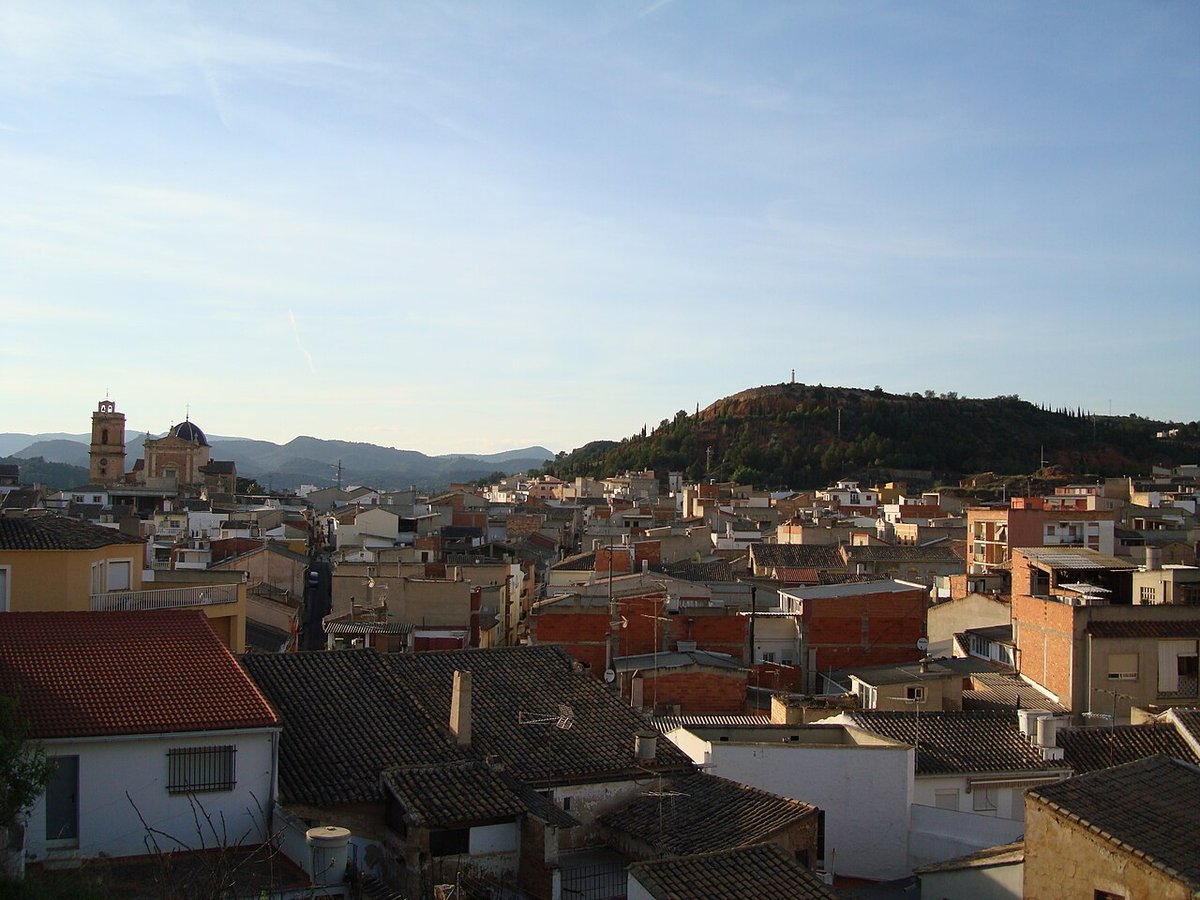
At first light, when the sun slips low between the rooftops, Losa del Obispo sounds mostly of birds. Swifts cut quickly across the square and the scent of freshly watered herbs drifts out from a few inner courtyards. The village lies around fifty kilometres from Valencia, at the entrance to the comarca of Los Serranos, yet at that hour distance feels irrelevant. The streets are still, shutters half raised, and the occasional conversation bounces softly off stone façades.
This is not a place of grand monuments or headline sights. What stands out are masonry houses, doorways with worn lintels and walls that hold on to that mix of limewash and dust left by passing years. Everything sits at a human scale. In the centre, the parish church recalls the historic link with the bishopric of Valencia, which gave the municipality its name. It is a sober building, without elaborate decoration, blending into the calm proportions of the surrounding streets.
There is a sense that Losa del Obispo is best approached without a checklist. It does not demand attention. It reveals itself gradually, in textures, sounds and small details.
Streets Without a Map
The old centre can be explored without a map. The streets are short and often slope gently up or down, bending slightly so that you slow your pace without realising. Corners open onto small spaces where light pools briefly before shifting again.
As the morning advances, more sounds filter in. A metal door rolls open. A car engine crosses the square. Someone calls out from a window in greeting. The quiet of dawn gives way to the everyday rhythm of a working village.
Arriving early is worthwhile if the aim is to wander at ease. In summer, once midday approaches, the heat settles between the walls and lingers. Walking becomes heavier, the air thicker. In winter the pattern reverses. The low afternoon light stretches long shadows along the narrowest streets, sharpening the outlines of balconies and door frames.
There is no single focal point to gather around. Instead, the experience lies in moving slowly, noticing the variations in stonework, the way houses adapt to the slope, and the subtle changes in colour as the day unfolds.
Fields, Dry Stone and Almond Blossom
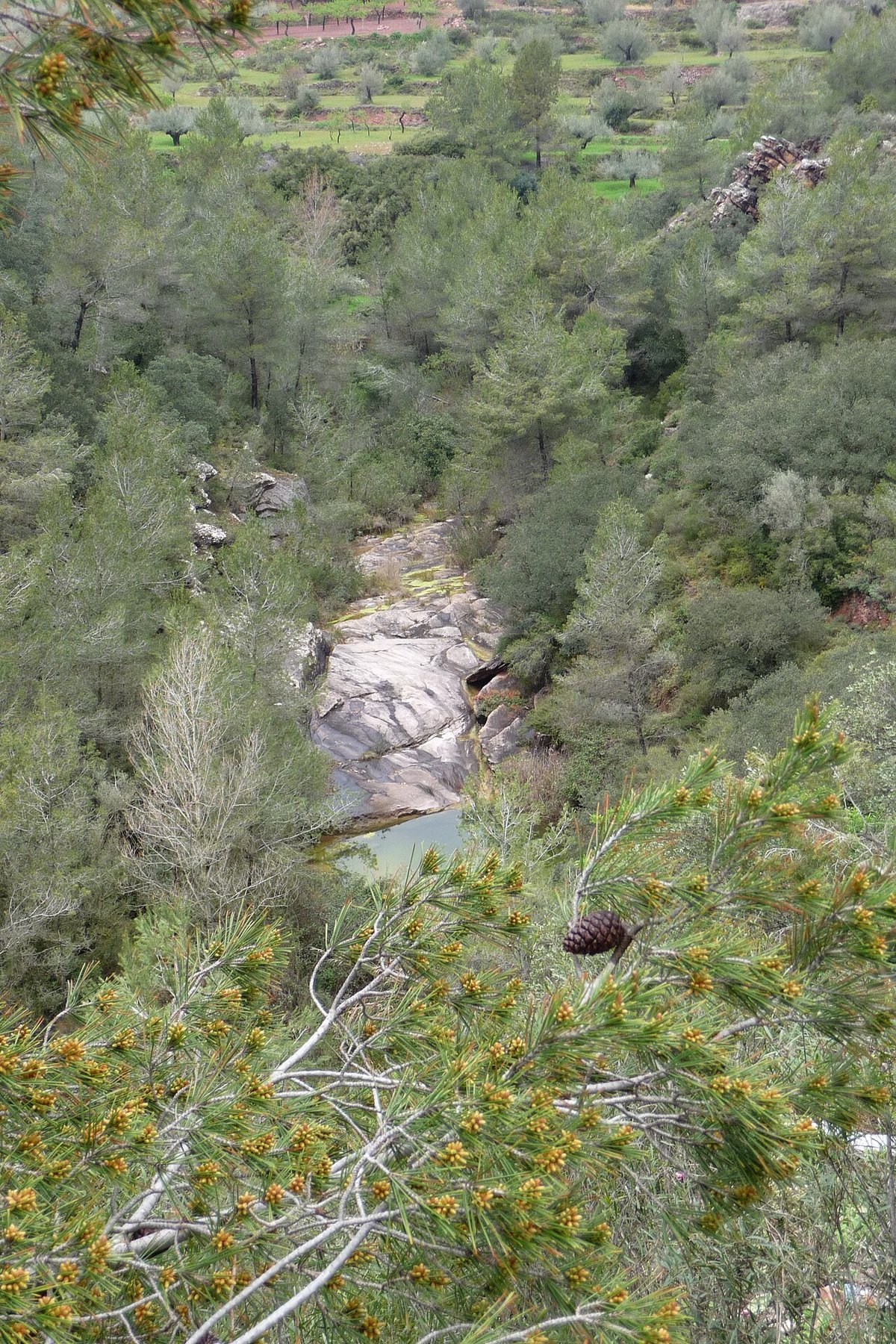
Step beyond the last houses and the landscape opens quickly. Gentle hills roll outwards, shaped by dry farming and divided into plots of almond and olive trees. The view shifts markedly with the seasons. In February and March, when the almond trees blossom, white and pale pink patches appear across the darker earth, catching the eye from a distance.
Among the fields stand dry stone walls, marking old terraces carved from the slopes. Many remain upright even where the land is no longer cultivated. Wells and small agricultural buildings are scattered here and there, reminders of a time when almost all work was done by hand and water had to be carefully managed.
Several rural tracks begin on the outskirts of the village, offering straightforward walks into this agricultural landscape. Not all of them are signposted, so it is sensible to carry water and to take the sun seriously during the hottest months. Shade can be scarce once you leave the compact streets behind.
The surrounding countryside explains much about daily life in Losa del Obispo. Agriculture has shaped both the terrain and the habits of those who live here. Even for visitors, it provides the clearest context for understanding the village’s scale and pace.
Everyday Rhythm and Home Cooking
Life in Losa del Obispo remains closely tied to farming and to neighbouring towns within Los Serranos. During the week the atmosphere is steady and unhurried. At weekends there is more movement, especially from people who keep a family house in the village or who drive out from Valencia to spend the day.
In local kitchens, dishes continue to reflect the agricultural calendar. Rice cooked with seasonal vegetables appears regularly. When temperatures drop, more substantial stews take their place. Game features during the months when it has traditionally been hunted. These are straightforward recipes, the kind that shift slightly from one household to another, depending on what is available and on family custom.
Food here is less about display and more about continuity. The ingredients and methods echo the landscape outside, reinforcing that close link between field and table.
San Bartolomé and the Festive Calendar
The annual cycle of celebrations centres on San Bartolomé, usually held at the end of August. During those days the rhythm of the village changes. More people fill the streets, music carries into the night and religious events move along the main thoroughfares. The scale remains that of a small community, but the atmosphere becomes livelier and more outward-facing.
Christmas and Semana Santa, Holy Week in the run-up to Easter, also bring back local customs. Some are discreet, observed without spectacle, yet they continue to draw together neighbours and families who return to the village for these dates. The effect is less about attracting outsiders and more about reaffirming shared ties.
These moments in the calendar highlight a different side of Losa del Obispo. The same streets that feel hushed in early morning take on a communal energy, shaped by tradition and familiarity.
Getting There and Choosing the Moment
From Valencia, the drive takes a little over an hour, depending on the route chosen towards Los Serranos. The approach to Losa del Obispo is straightforward, and it is generally possible to park without much difficulty in streets close to the centre.
Spring and autumn tend to offer the most comfortable conditions for walking in the surrounding countryside. Temperatures are milder and the light softer, whether across almond blossom or over recently turned soil. Summer brings intense heat from midday onwards, making early starts or late afternoon outings the more practical choice.
Losa del Obispo does not compete for attention. Its appeal lies in small shifts of light, in the quiet presence of stone and field, and in a daily routine still connected to the land. For those willing to slow down, the village and its surroundings provide a clear sense of place at the gateway to Los Serranos.